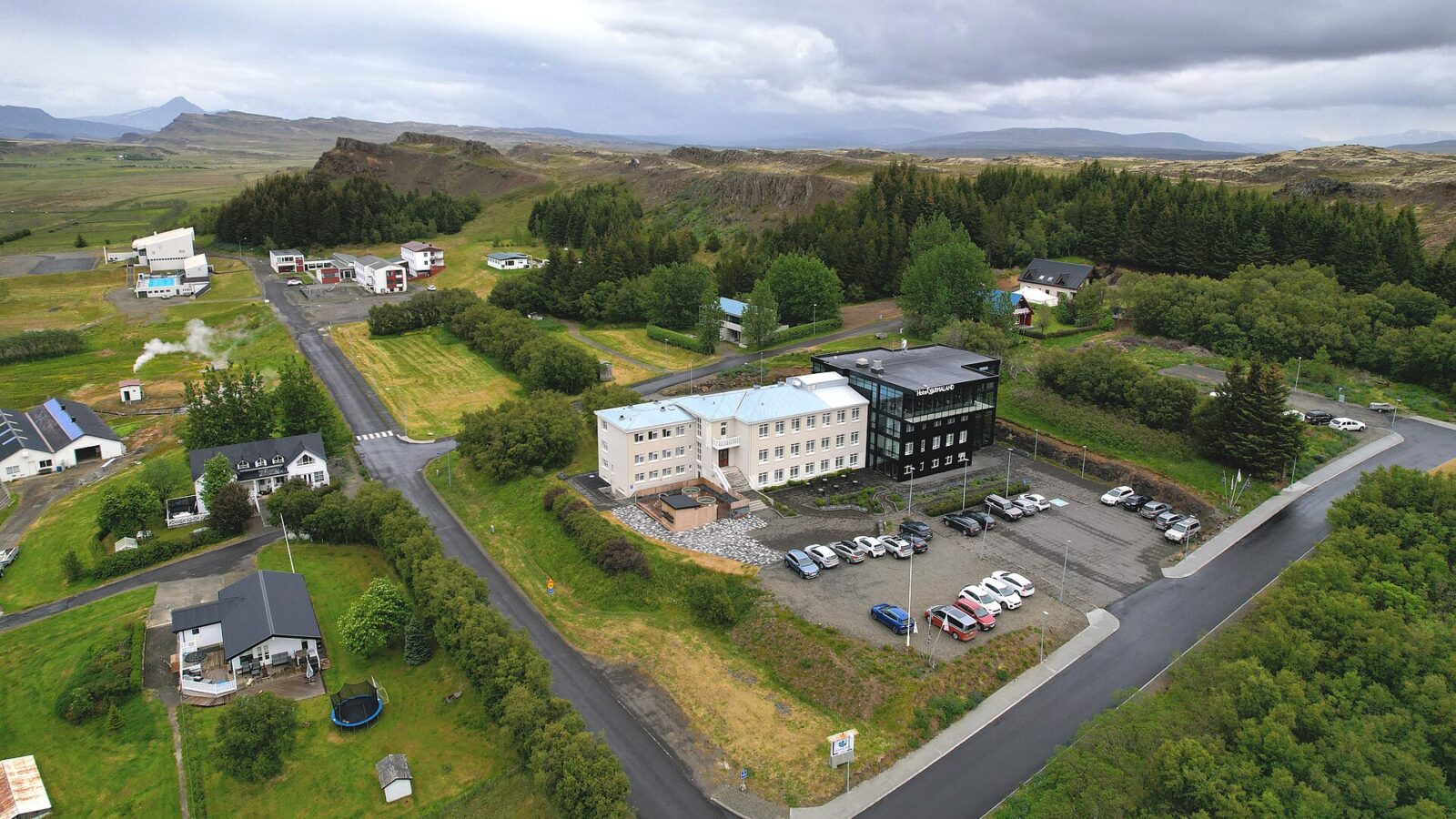
In West Iceland, Deildartunguhver stands out as the most voluminous hot spring in Europe, producing 180 liters of water every second at a temperature of 97°C (207°F). Found in the Reykholtsdalur valley within Skorradalshreppur municipality, Deildartunguhver’s high output makes it a key natural feature and a vital resource for the surrounding region.
This geothermal giant is more than only a single bubbling spring, it covers an area of about 50 meters, with the main upwelling boiling up from below a five-meter clay embankment known locally as Hverahóll or Laugarhóll. The spring derives its name from the nearby farmstead, Deildartunga, and the area is under formal protection.
The significance of Deildartunguhver extends beyond geology. Its hot water is channeled via pipelines to communities up to 64 kilometres away. Both Borgarnes (34 km) and Akranes (64 km) rely on its thermal waters for heating homes and filling pools. In Borgarnes, some of this geothermal water is even piped directly into the local swimming pool’s steam bath, while water from Deildartunguhver also supports greenhouse agriculture in its own region.
A further distinction lies in Deildartunguhver’s botany. The spring is home to Struthiopteris fallax, the only endemic fern in Iceland, which is native solely to this hot spring and does not occur elsewhere in the world. The special conditions close to the spring have enabled this protected species to survive and evolve in isolation.
Situated along the Silver Circle route in Borgarbyggð, Deildartunguhver offers both a geological marvel and a glimpse at a rare fragment of Iceland’s unique natural heritage.
Sources
- Wikidata
- Wikipedia (English)
- Wikipedia (Icelandic) in Icelandic
Image: Steinninn / Wikimedia Commons (CC BY 4.0) · licence, original (resized) Illustrative image.
Facts last reviewed 18 October 2026. Published 19 October 2026.