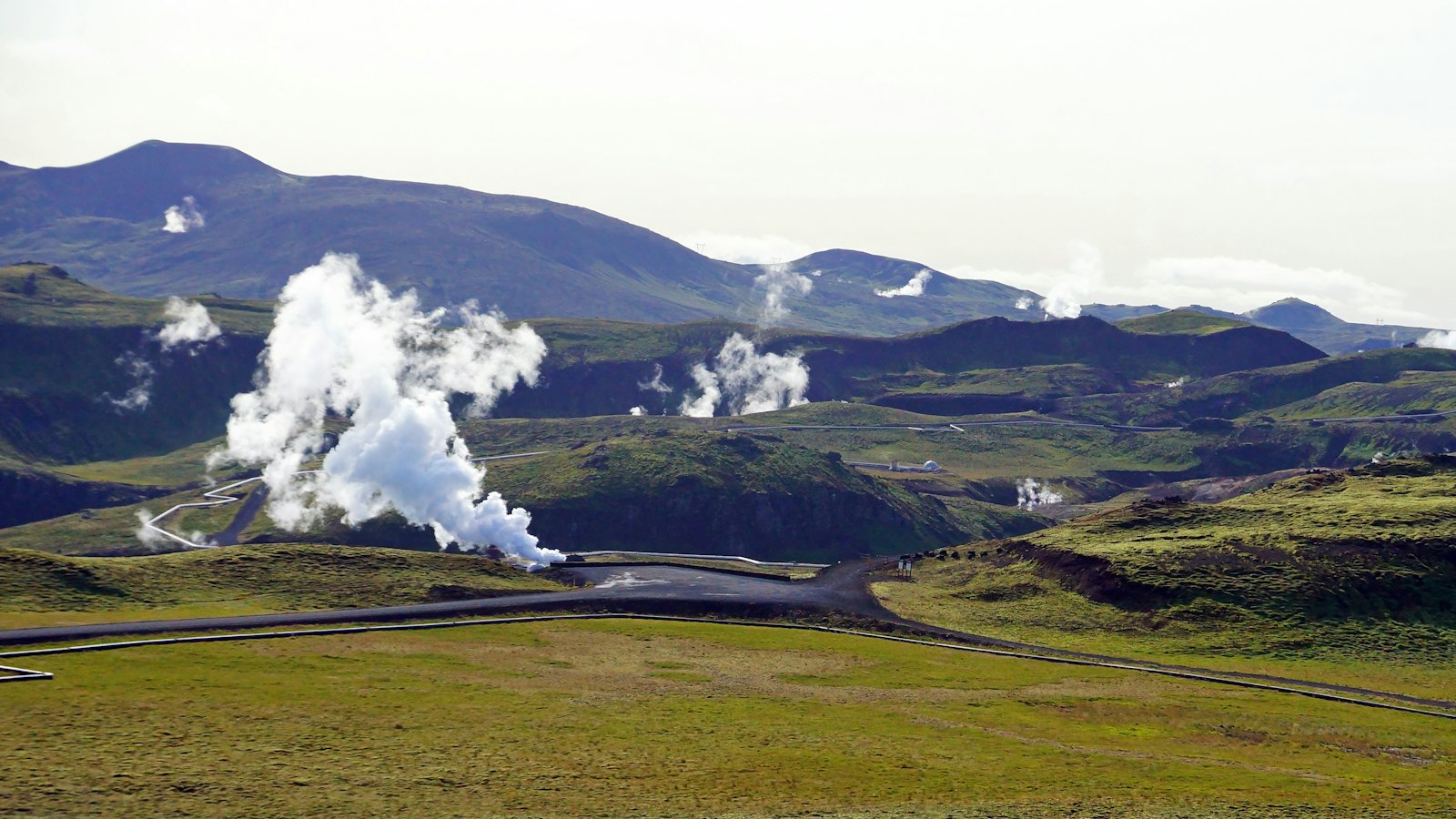
The area known as Þvottalaugarnar holds an important chapter in Reykjavík’s past. Located in Laugardalur, now a popular recreational area, these geothermal pools were once central to daily life for many locals. For generations extending into the 20th century, houswives and working women of Reykjavík gathered here to undertake the demanding task of washing laundry using the naturally warm waters.
The pools, situated in what was once Laugamýri, land that belonged to the ancient Laugarnes farm, attracted people from the developing town. Wastewater from the pools flowed through the Laugalækur stream to the sea at Kirkjusandur. Laugavegur, Reykjavík’s main thoroughfare, traces its name to the track used by women labouring with loads of washing on their backs until a usable road was completed in 1889.
Improvements in the 19th century reflected changing attitudes toward workers’ welfare. In 1833, a shelter was erected to protect women from harsh winter weather, spurred by Regner C. Ulstrup, the local sheriff, after he was moved by their hardship. Although that first shelter was destroyed in a storm in 1857, significant progress came in 1887 when the philanthropic Thorvaldsensfélagið society funded a more robust laundry house, later gifted to the town.
As Reykjavík modernized, use of the pools declined. The introduction of piped drinking water to homes after 1909 and, later, the harnessing of geothermal water with Laugaveitan’s operation in 1930, signalled the end for Þvottalaugarnar as a practical facility. Today the springs themselves are dry, but their legacy is preserved by educational signs and memorials in Laugardalur, including Ásmundur Sveinsson’s 1958 sculpture “Þvottakona,” which honours the laundry women whose work shaped the city’s communal life.
Sources
- Wikidata
- Wikipedia (Icelandic) in Icelandic
Facts last reviewed 18 October 2026. Published 19 October 2026.