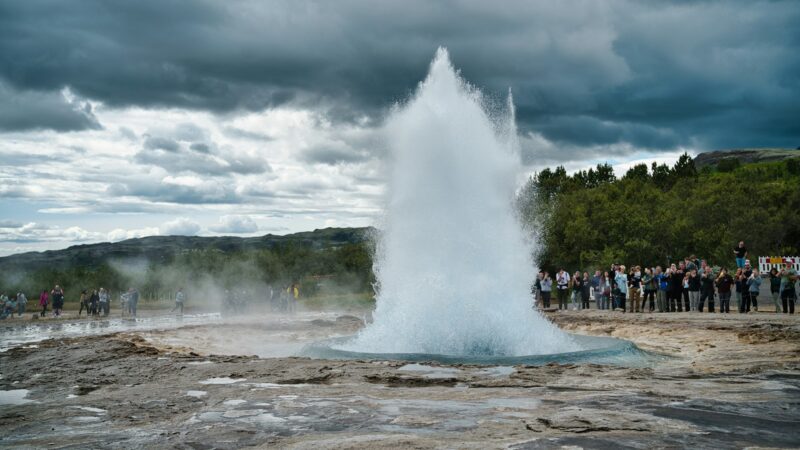
In the heart of South Iceland, Strokkur geyser delivers remarkable eruptions every few minutes, drawing attention to the dynamic nature of the island’s geothermal terrain. Found in the municipality of Hrunamannahreppur, Strokkur sits within the Geysir geothermal field in the Haukadalur valley, a region celebrated for its concentration of hot springs, fumaroles, and geysers.
Strokkur is a fountain-type geyser, its Icelandic name translating to “churn.” Its eruptions, which reach heights typically between 15 and 20 metres, sometimes soar as high as 40 metres. Strokkur’s display is notably regular, erupting every 6 to 10 minutes, an unusual frequency among the world’s natural geysers.
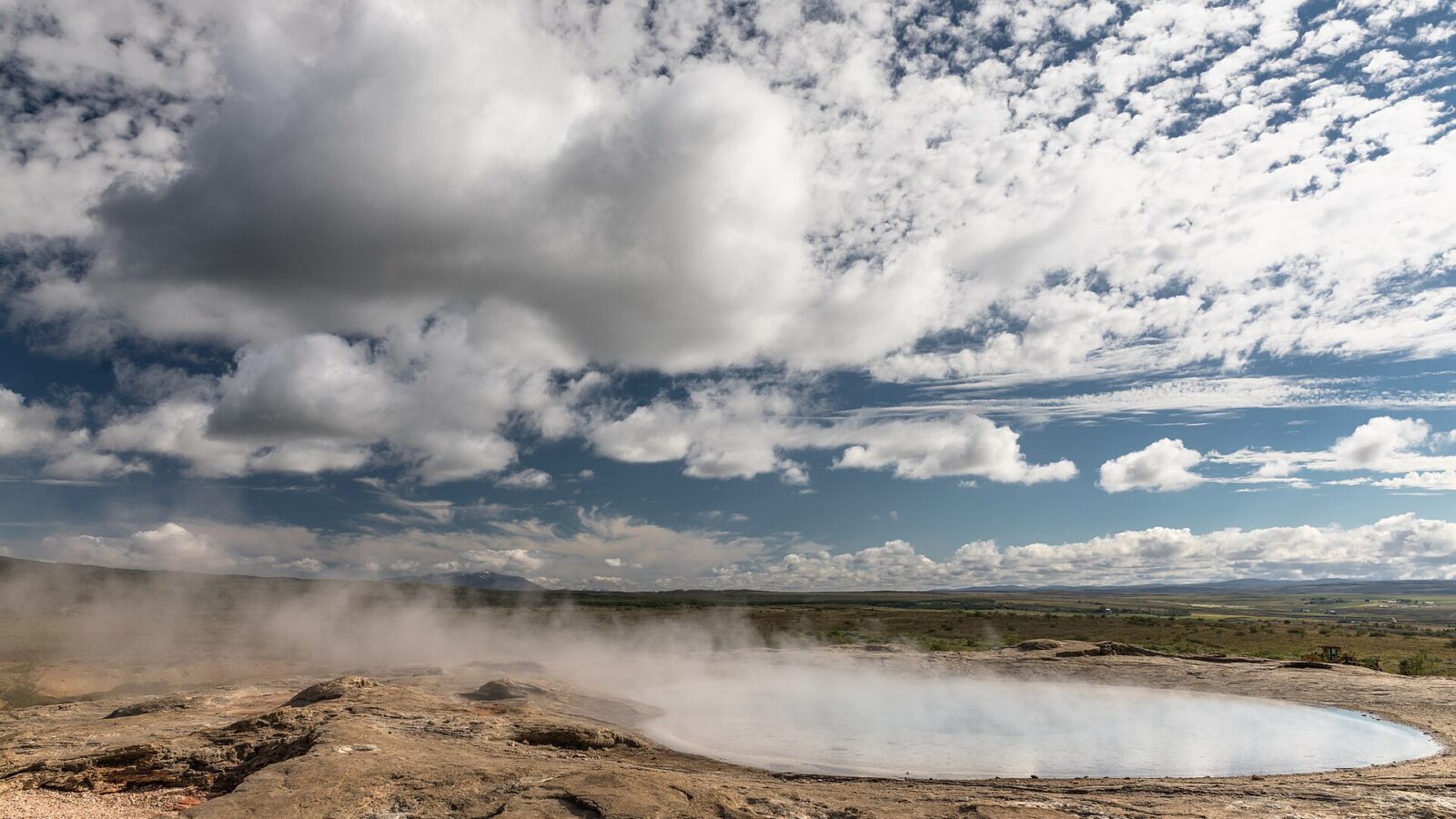
The Geysir geothermal field is a landscape shaped by both nature and the community. Nearby is the Great Geysir, after which all others are named, just 50 metres from Strokkur. The surrounding area is dotted with other features such as mud pools and smaller geysers. This activity makes the region a significant natural site within South Iceland (Suðurland), positioned beside the Hvítá River and east of Reykjavík.
Strokkur’s history traces back to 1789, when an earthquake unblocked its natural conduit and allowed it to erupt. The geyser’s activity fluctuated throughout the 19th century, with one eruption in 1815 reportedly reaching up to 60 metres. The early 20th century saw another blockage, but in 1963, a community effort restored Strokkur’s eruptive flow on the advice of the Geysir Committee, reestablishing its status as one of the area’s primary active geysers.
Today, Strokkur remains a focal point for geoscientists and visitors alike, offering a vivid demonstration of geothermal power and the interplay of geology, history, and Icelandic culture. Its enduring activity highlights the uniqueness of Iceland’s natural environment in international eyes.
Sources
- Wikidata
- Wikipedia (English)
- Wikipedia (Icelandic) in Icelandic
Image: Markus Trienke / Wikimedia Commons (CC BY-SA 2.0) · licence, original (resized) Illustrative image.
Facts last reviewed 18 October 2026. Published 19 October 2026.