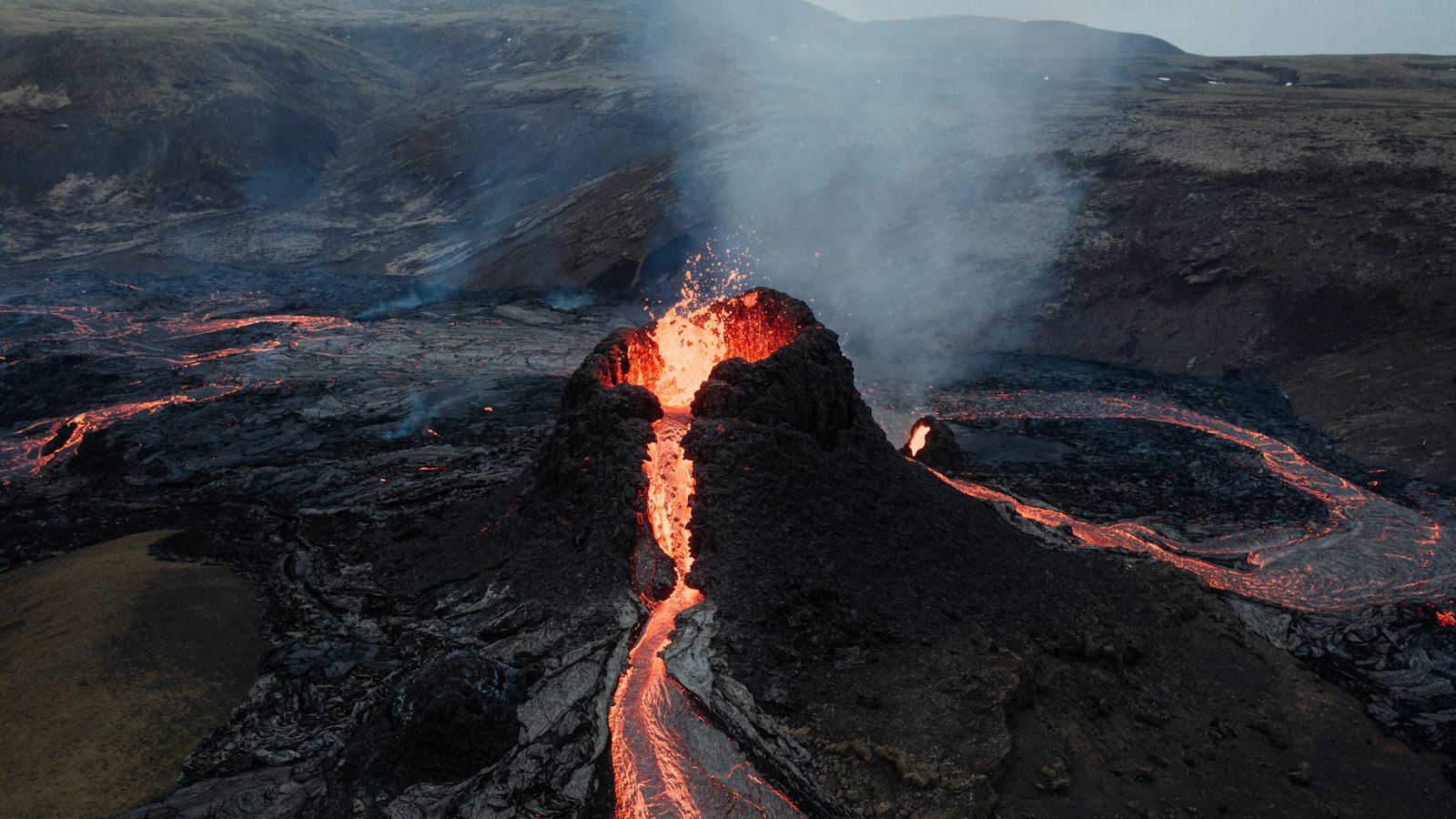
Under the Hallmundarhraun lava field in western Iceland lies Surtshellir, a cave shaped by volcanic forces more than a thousand years ago. Located about 60 kilometres from the town of Borgarnes, Surtshellir reaches close to a mile in length and descends to a depth of around 40 metres below the surface.
This cave was formed in the early years of Iceland’s settlement, during a significant effusive eruption at the north end of the Prestahnúkur volcanic system. During this event, vents near the Langjökull glacier released lava which would ultimately conceal 240 square kilometres of previously farmed land beneath layers that can reach or exceed 20 metres in thickness. Surtshellir is one of a series of passageways left behind as molten rock drained away from the Hallmundarhraun field, some extending over 50 kilometres to the west.
A cave of myth and archaeological intrigue
Surtshellir takes its name from Surtr, the fire giant in Norse mythology said to bring about the end of the world with his blazing sword. The cave’s name was recorded in the medieval ‘Book of Settlements’ (Landnámabók), which also recounts the journey of Þorvaldur holbarki Þorðarson, who ventured across the highlands to recite a ritual poem dedicated to the giant believed to dwell within Surtshellir.
For generations, stories thrived about outlaws who used the cave’s labyrinth as a hideaway, living off stolen livestock. However, research within the cave has revealed something more complex. Archaeological excavations in the early 21st century uncovered animal bones and structures. These finds, once thought to mark the presence of criminals, are now interpreted as evidence of ritual activities carried out by Icelanders before the year 1000, spanning roughly 65 to 100 years prior to Christianisation.
Shifting landscapes and fragile wonders
Surtshellir’s tunnels shift in size, with the roof rising up to 10 metres in places and narrowing to just a few metres at the extremes. The most westerly section, known as Íshellir or ‘Ice Cave’, features a permanent icy floor and dramatic natural ice sculptures. Large openings in the cave ceiling, some formed several centuries ago, reveal how these structures are always subtly changing. Fallen lava blocks now cover much of the ground beneath these skylights, evidence of the cave’s gradual collapse.
Centuries of visitors have left their own impact. Surtshellir, once decorated with fragile formations known as lavacicles and lava stalagmites, has lost many of these features due to both vandalism and the simple passage of visitors.
Superstitions about ghosts and the cave’s connection to Surtr himself continued well into the modern era. Hallmundarhraun’s underworld remains a place where history, geology and Icelandic legend remain forever intertwined.
Sources
- Wikipedia
- Wikipedia (Icelandic) in Icelandic


