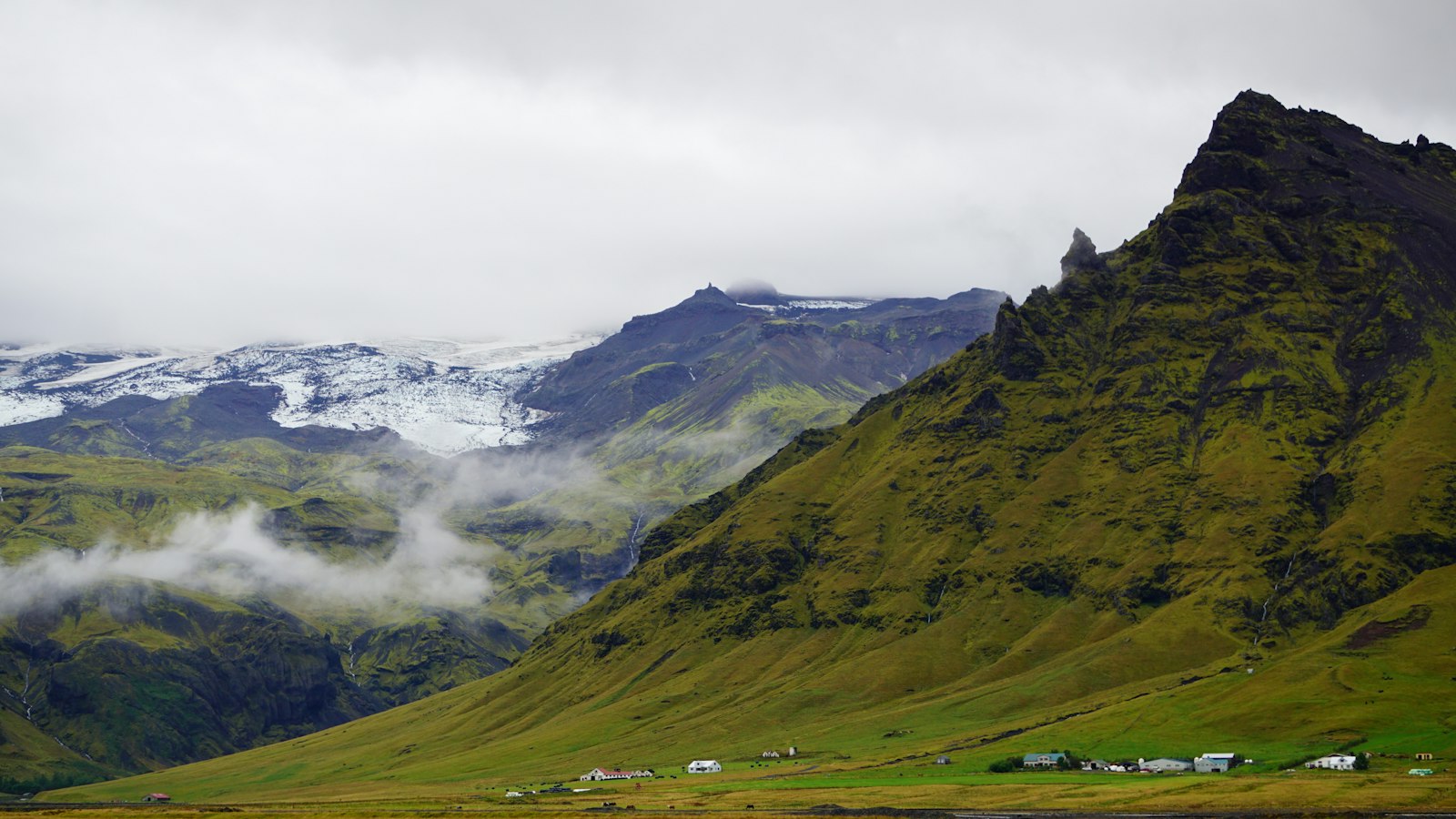
Between glacial giants in south Iceland, a unique mountain valley known as Þórsmörk spreads beneath the highlands. Its name is drawn from the Norse god Þór (Thor), a mythic presence in Iceland’s story. This area, bordered by the formidable Tindfjallajökull and Eyjafjallajökull glaciers, is steeped in layers of both cultural tradition and striking natural processes.
A landscape shaped by ice and warmth
While much of southern Iceland is marked by chill and sparse vegetation, Þórsmörk enjoys a surprisingly mild microclimate. The reason lies in its geography: the valley is boxed in by glaciers and high mountains, offering a natural barrier that retains warmth and shields the region from most storms. This results in weather typically warmer and calmer than elsewhere on the south coast.
The river Krossá, born of glaciers, carves through the valley, its cold waters dividing Þórsmörk from neighbouring Goðaland. Krossá is unpredictable, its channels shifting, making river crossings hazardous. A bridge for walkers spans the torrent, an essential link where the current’s danger has claimed lives in the past.
Thanks to the sheltering mountains and fast-running rivers, the valley has become a haven for diverse plant life. Moss, ferns and birch trees spread across the land, with vegetation thriving under protection from livestock, first achieved when grazing was officially banned after overgrazing and the 1918 Katla eruption had degraded the woodlands. Since then, birch forests have steadily reclaimed ground under the stewardship of land conservation agencies.
Folklore and history in the green valley
Settlement in Þórsmörk reaches far back: according to Landnámabók, a medieval Icelandic text, an early settler named Ásbjörn Reyrketilsson dedicated his lands here to the god Þór. For centuries, the valley served both as pasture and as a place for wood-gathering by farmers from adjacent regions. The cessation of grazing, along with state-led reforestation efforts, has given today’s Þórsmörk its characteristic green and wooded appearance.
Þórsmörk’s access and walking routes have drawn generations of outdoor enthusiasts. It anchors renowned trails like the Laugavegur trek to Landmannalaugar, and offers walks to sites such as the Stakkholtsgjá canyon and the volcanic pass of Fimmvörðuháls. From its ridges, views across the land endure even in harsh weather, a reminder of the harsh yet hospitable nature of these landscapes.
In 2010, the calm of Þórsmörk was disrupted when Eyjafjallajökull erupted. The area was blanketed in thick volcanic ash, delaying the return of the full complexity of its plant life for many months. Yet, as so often in Iceland, the balance between destruction and renewal eventually tilted toward recovery.
Sources
- Wikipedia
- Wikipedia (Icelandic) in Icelandic


