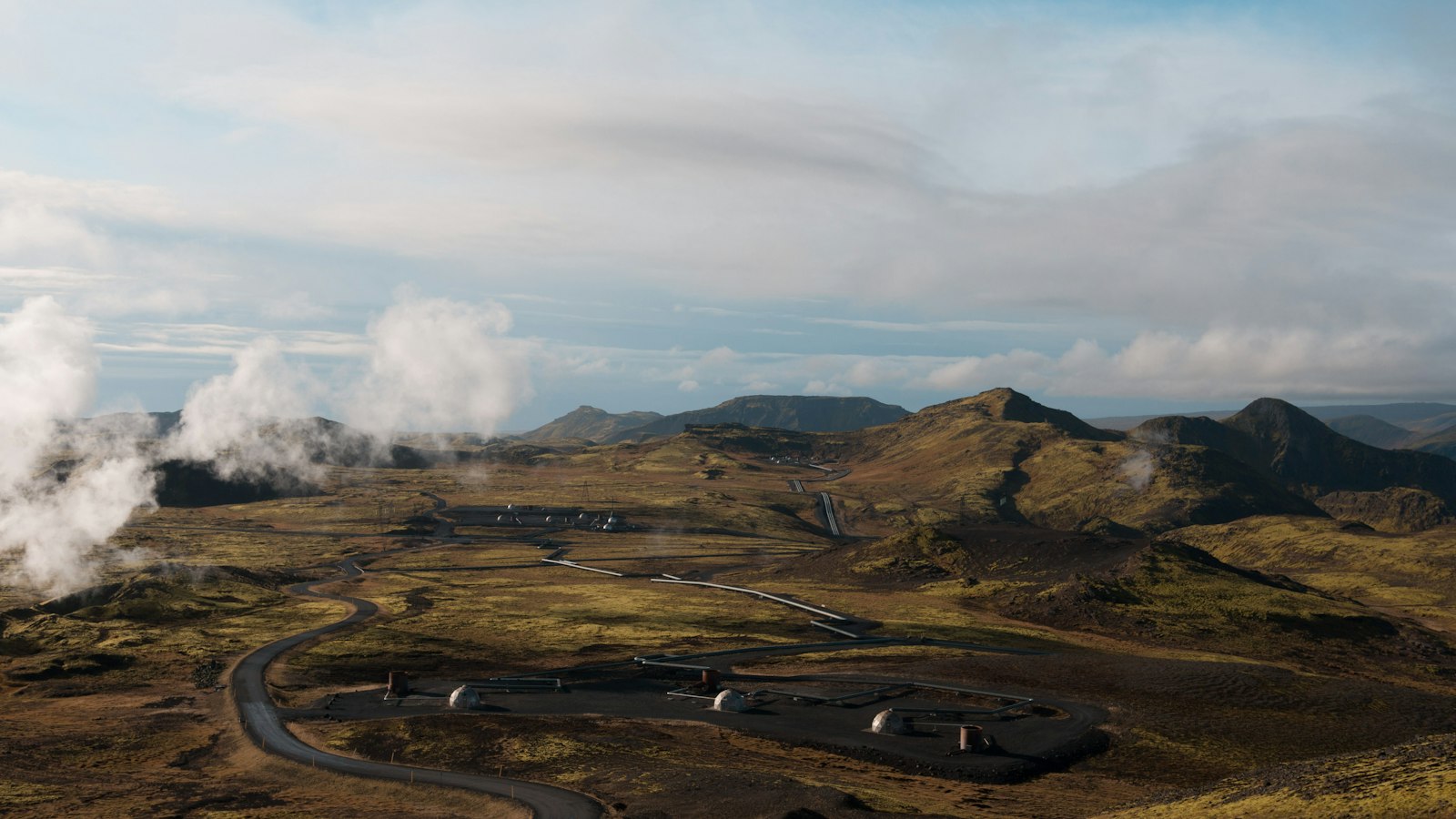
In a country where geothermal heat powers daily life, the quest to unlock even more energy from deep below the surface has taken an ambitious leap. The Iceland Deep Drilling Project (IDDP), launched in 2000, is an ongoing effort to explore the energy potential of extremely hot fluids found far beneath Iceland’s rifted landscape. This initiative is a collaboration between the National Energy Authority and several of Iceland’s main energy companies, joined under the name Deep Vision.
The IDDP’s primary purpose has been to assess whether supercritical hydrothermal fluids, fluids beyond the point where liquid and steam can be distinguished, can supply much larger amounts of energy than typical geothermal wells. This means drilling far deeper than standard practice, aiming for depths beyond 4,000 metres where temperatures above 400 °C become accessible. Iceland’s unique geology, at the juncture of diverging tectonic plates and the Mid-Atlantic Ridge, makes it one of the few places such experiments are possible.
Unexpected encounters with magma
Geothermal drilling is always a journey into the unknown, and the IDDP’s first well proved just how unpredictable it can be. In 2009, while boring at Krafla, north Iceland, drillers unexpectedly punctured a magma reservoir at only 2,100 metres. Such a direct encounter is rare, only once before had a geothermal well, in Hawaii, struck magma. Unlike the Hawaiian attempt, which was abandoned, Iceland’s drillers continued. Cold water introduced into the near-1,000 °C borehole created the world’s first operational Magma-EGS (Enhanced Geothermal System), theoretically powerful enough to produce 36 megawatts of electricity, though mechanical issues kept it from being hooked up to the grid.
Deeper into the crust
The project’s second phase returned to the Reykjanes Peninsula in southwest Iceland, where geothermal boreholes have been drilled since the 1950s. By extending a 2.5-kilometre borehole (originally made in 2004), the IDDP pushed to a final depth of 4,659 metres by January 2017, making it Iceland’s deepest borehole to date. Researchers recorded a temperature of 427 °C and a pressure of 340 bars at the bottom. Fluid samples confirmed they had reached the sought-after supercritical conditions. The rocks were permeable, like a sponge, allowing water to flow and heat up to extraordinary levels.
Beyond its energy goals, the project also advances scientific understanding of deep-earth processes. Collaborations with international universities have used the wells to investigate black smoker hydrothermal vents, mineral-spewing fissures found thousands of metres underwater that support unique microscopic life. These studies in Iceland’s deep boreholes offer windows into extreme earth environments rarely accessible on land.
As Deep Vision and its partners continue to study and refine these pioneering drilling techniques, Iceland holds a front-row seat in the global effort to make geothermal energy more efficient, and perhaps revolutionise the way we use the earth’s internal heat.


