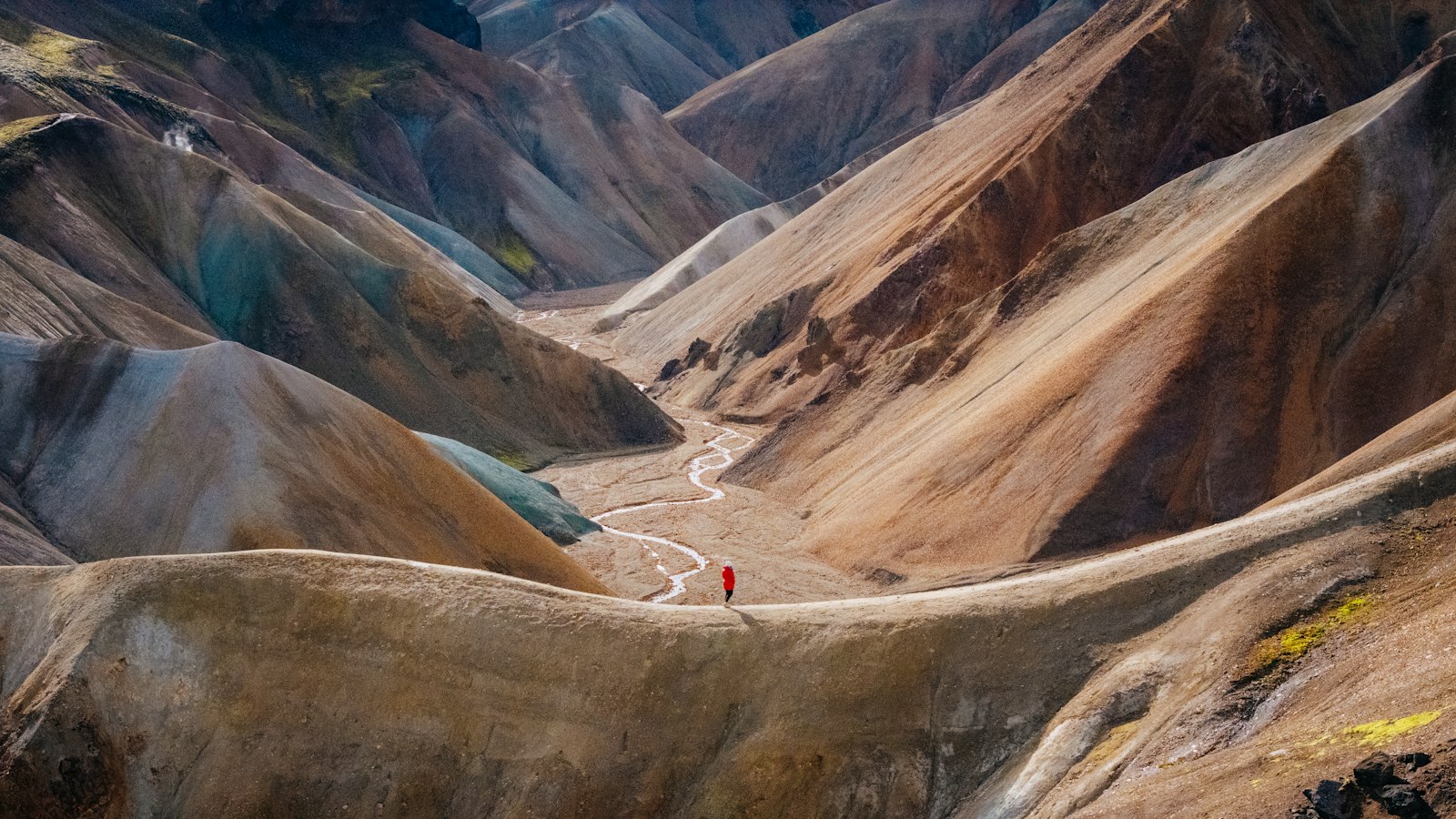
Rising to 1,223 metres, Prestahnúkur stands in Iceland’s Western Volcanic Zone, to the west of Langjökull glacier and its smaller part, Geitlandsjökull. Covered at times in deep snow and encircled by rugged fissures, this rhyolite mountain is more than a striking geological feature: it holds centuries-old stories and a landscape marked by past eruptions and mysterious geothermal forces.
Volcanic history under ice and lava
Prestahnúkur’s central peak is a rhyolite tuya, a type of volcano shaped by eruptions entirely beneath ice during the last Ice Age. Its age is estimated at either around 89,000 or 60,000 years. The mountain and its surrounding lava fields were shaped rapidly from a single source of magma, giving the rhyolite rock an unusually high silica content for Iceland, near 77 percent. Though the rock was once exported for construction, mining activities here have ended.
Lava flows trace a dynamic volcanic history across the surrounding highlands. To the north, the Hallmundarhraun lava likely erupted between 782 and 860 CE, with its flow stretching far beyond Eiríksjökull. The Jökulkrókur lava to the west is between 1,800 and 4,500 years old. Nearby, lava from the Geitlandshraun field dates to about 8,900 years ago, and ancient flows lie beneath ice north of the volcano.
Fissures, geothermal energy and uncertain activity
The fissure swarm connected to Prestahnúkur extends up to 80 kilometres north and south, reaching under glaciers such as Þórisjökull and Geitlandsjökull-Langjökull, while its width can reach 20 kilometres. Fissures from this system overlap with others in the region, sometimes vanishing beneath recent shield volcano lava. The swarms contain unusual formations including tuyas and tindars, volcanic ridges formed by eruption through ice. One geothermal area, found on the volcano’s northern flank, points to magma chambers beneath the surface, with hot springs and seismic activity observed. Yet no dyke intrusions have been confirmed, leaving its current activity status unproven.
Priests, haunted valleys and reputation
The Icelandic name Prestahnúkur means “peak of the priests.” According to 17th-century lore, two priests undertook a risky expedition from Húsafell into the highlands, venturing behind the glacier Þórisjökull into the notoriously haunted Þórisdalur valley. Legends painted the valley as a haunt for ghosts and outlaws. The priests found no such threats, but their safe return turned them into local heroes, and the name of the peak recalls their journey.
Sources
- Wikipedia
- Wikipedia (Icelandic) in Icelandic


