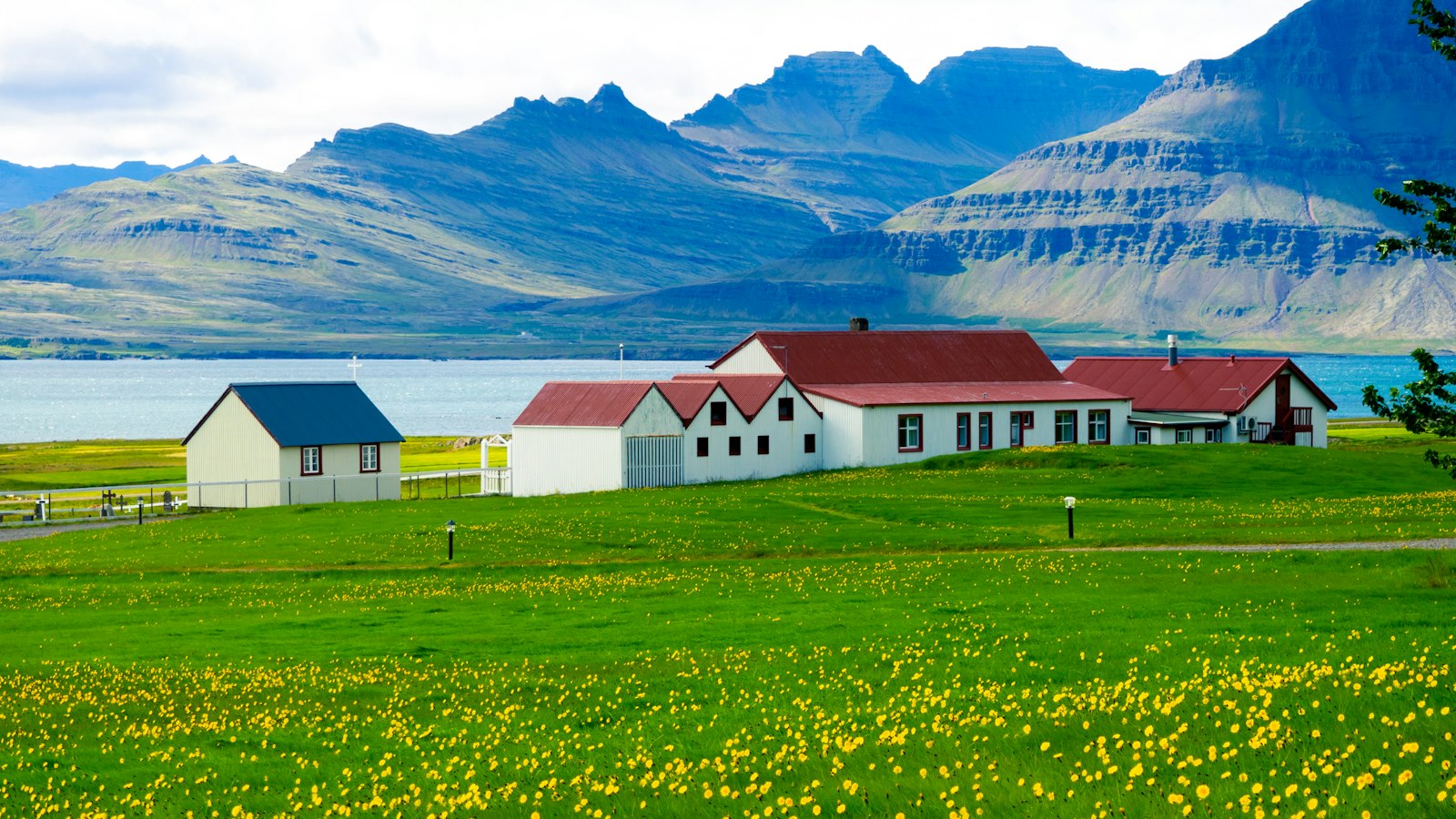
Along the northern edge of its namesake fjord, Eskifjörður has served as both a trading post and a hub for seafaring livelihoods in eastern Iceland for over two centuries. Home to just over a thousand residents, this small port town in the Fjarðabyggð region stands as a testament to the intertwined fortunes of fishing, trade and settlement in Iceland’s remote Eastfjords.
Origins along the fjord
Eskifjörður’s early status as an official market town emerged in 1786, when it was recognised among a select few trading sites after Iceland ended its former monopolistic trading system. By the turn of the 19th century, the arrival of the Danish company Örum & Wulff anchored Eskifjörður’s economic foundation, as a trading house rose beside the fjord in 1798. Not long after, in 1802, local commerce gained new ground when Kjartan Þórlaksson, the first Icelandic merchant to settle there who was not Danish, began doing business from the town.
While Eskifjörður’s population fluctuated several times over the 20th century, the late 1800s and early 1900s brought steady growth, aided especially by the wave of Norwegian-led herring ventures. By 1960, the town was home to more than 1,700 inhabitants, before settling at around 1,045 today.
Fisheries, heritage and community life
Today, Eskifjörður’s economy centres on fisheries and fish processing, but commerce and local services continue to play crucial roles. The town’s identity is shaped by the sea, with maritime heritage woven into daily life. The region’s police headquarters has also operated from Eskifjörður since the mid-1800s, and it was the administrative centre of its own district for much of the 20th century.
A walk through the town reveals physical reminders of its connection to the ocean. A sculpture along the main road, crafted by Ragnar Kjartansson, honours those lost at sea. Nearby, the Maritime Museum of East Iceland occupies a commercial building erected in 1816, where artefacts from local fishing, seafaring, and bygone industries are displayed.
Distinctive to Eskifjörður is the stone collection begun in the 1970s by Sören Sörenssen and Sigurborg Einarsdóttir. This privately gathered trove includes more than a thousand stones, polished and cut, most from eastern Iceland’s unique geological tapestry.
Community spirit remains strong in the town, further expressed through local groups, cultural associations, and landmarks like the First Free Church in Iceland, built here in 1884.
Eskifjörður joined neighbouring towns Neskaupstaður and Reyðarfjörður in 1998, forming the larger municipality known as Fjarðabyggð, an area stretching along the intricate inlets of the east coast. Amid these fjords, Eskifjörður stands as a living archive of maritime Iceland and the resilience of its people.
Sources
- Wikipedia
- Wikipedia (Icelandic) in Icelandic


