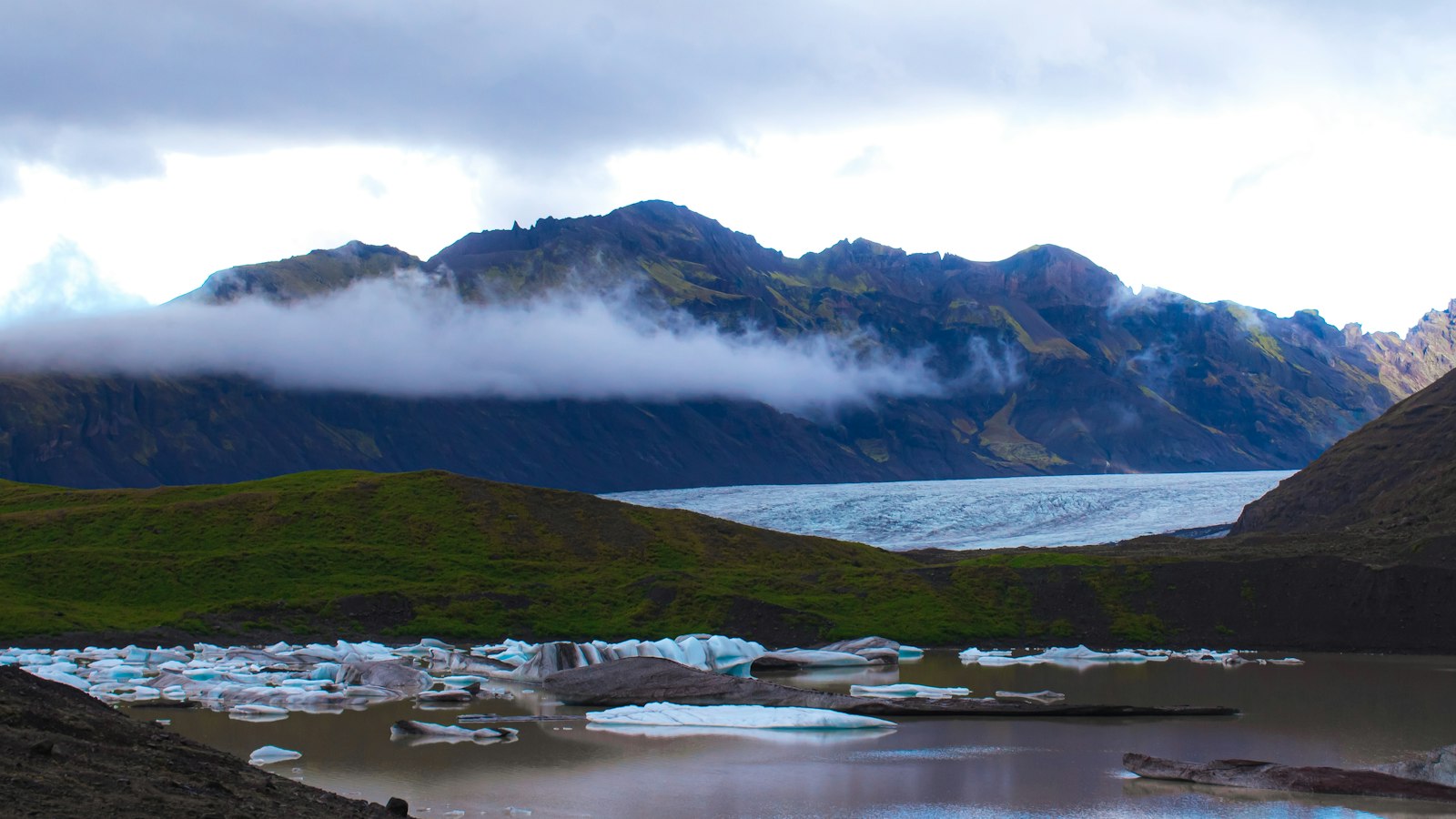
Akrafjall, a prominent volcanic mountain of western Iceland, stands east of the town of Akranes, perched on a peninsula between the fjords of Borgarfjörður and Hvalfjörður. Its twin summits and deep valleys reflect the dramatic natural forces and rich history that have shaped the region.
Glacial valleys and volcanic origins
The landscape of Akrafjall reveals a complex past. Basalt, a volcanic rock formed from lava, dominates the mountain’s geological makeup. At its highest point, Geirmundartindur rises to 643 metres. Across the Berjadalur valley, which was cut by glacial action, stands Háihnúkur, the second summit at 555 metres. The Berjadalur valley itself cuts into the mountain from the west, shaped by ancient glaciers. The river Berjadalsá flows through this valley, further illustrating how water and ice have sculpted the terrain over millennia.
Traces of old ocean activity, such as wave-cut ledges, suggest that Akrafjall may once have stood as an island during the last ice age or immediately after, isolated as glaciers retreated and sea levels shifted.
Life on the cliffs and in local legend
Beyond rock and ice, Akrafjall serves as an important home for birdlife. The cliffs support extensive nesting of great black-backed gulls and Icelandic fulmar. People from the region have long collected thousands of gull eggs every summer, a tradition that continues to this day.
Akrafjall also appears in local folklore, notably in the story of Árnes Pálsson. In 1756, this well-known outlaw took shelter on the mountain to avoid capture. When a search party was organised, Pálsson reportedly joined their ranks, helping them look for himself. Only after a fruitless day did the party realise he had outwitted them. Ultimately, he was not permanently successful, he was captured in 1764.
From the slopes of Akrafjall, the panoramas stretch far: on clear days, one can see from the Reykjanes Peninsula to the distant Snaefellsjökull glacier, crossing the wide expanse of Faxaflói Bay. The mountain remains a defining feature for western Iceland’s communities and continues to draw people for the stories and the nature it shelters.
Sources
- Wikipedia
- Wikipedia (Icelandic) in Icelandic


