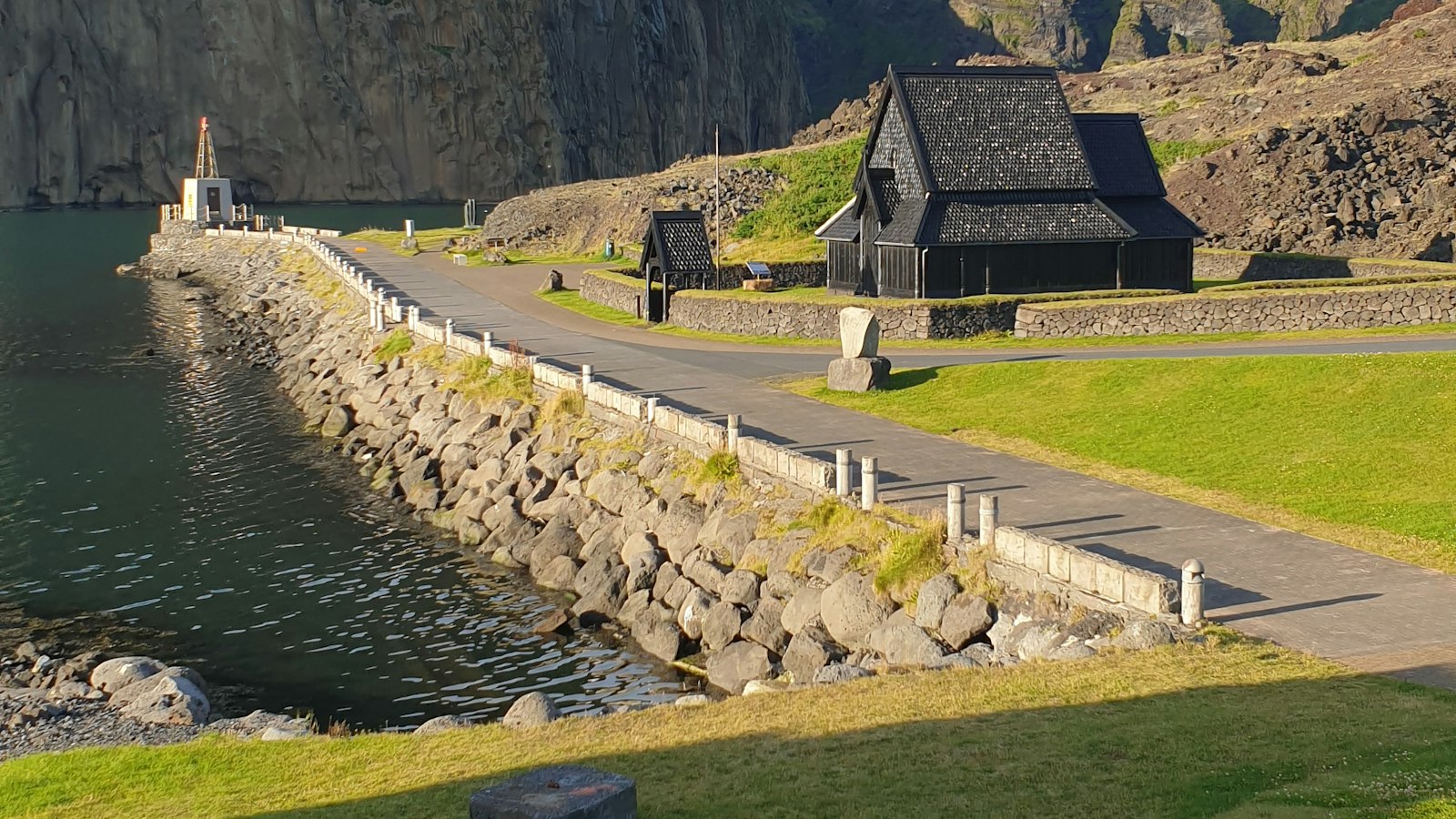
Högna Sigurðardóttir emerged from the volcanic isles of Vestmannaeyjar with a vision that would influence modern architecture far beyond her native Iceland. Born in 1929, she charted an unconventional course early in life, opting to study architecture in Paris, a city renowned for artistic innovation. There, she not only became the first Icelander admitted to the École des Beaux-Arts in 1949, but also established her professional career, an uncommon undertaking for an Icelandic woman at the time.
Upon graduating in 1960, Högna quickly distinguished herself back home by designing a residential building in Vestmannaeyjar, marking the first time a structure in Iceland was designed by a woman. Although Halldóra Briem had been the first Icelandic woman to study architecture, Högna was the one to shatter the professional barrier. The house, located at Bústaðabraut 11, stood until destroyed by a volcanic eruption in 1973, a fate mirroring the island’s tempestuous geology.
Architecture deeply rooted in land and legacy
Throughout her long career, Högna maintained close ties to Iceland, completing several major projects in Reykjavík, Kópavogur, and Garðabær. Her approach set her apart: she favoured raw materials like exposed concrete, wood, and stone, and often added elements referencing traditional Icelandic turf houses. Nowhere is this more visible than in her celebrated residence at Bakkaflöt 1 in Garðabær. Constructed between 1965 and 1968 for artists Ragnheiður Jónsdóttir and Hafsteinn Ingvarsson, the building merges modernist ideas with local heritage, blurring the boundary between structure and its natural setting. Bakkaflöt was later chosen as one of the hundred most notable buildings of the twentieth century in Northern and Central Europe, and granted protected status in 2009.
Her method went beyond exteriors. Högna often designed interiors, custom furniture, and even pieces as specific as flowerpots, creating a unified spatial experience. Her brutalist style, defined by its unapologetic use of concrete, carried warmth and comfort through thoughtful layering of textures such as iron, hardwood, and leather. Many of her Icelandic houses featured rooftop gardens, a nod to both environmental sensitivity and Icelandic roots.
Recognition from Reykjavík to Paris
Högna’s reputation was not bound by Iceland’s shores. In 1967, she and French architect Adrien Fainsilber received first prize for a university development on the outskirts of Paris, an achievement celebrated by Icelandic media. Her accolades spanned decades and countries, including awards from the Akureyri Art Museum for her unique influence on Icelandic architecture. She was also recognised by the French Academy of Architects and honoured with the Knight’s Cross of the Icelandic Order of the Falcon.
Through persistent creativity and a bold voice, Högna Sigurðardóttir redefined the possibilities of Icelandic design, leaving an indelible imprint on modern architecture. She died in Reykjavík in 2017, but her archive remains with the Reykjavík Art Museum, a testament to her enduring impact.
Sources
- Wikipedia
- Wikipedia (Icelandic) in Icelandic


