In the heart of Vatnajökull National Park, Svartifoss stands as one of Iceland’s most recognisable waterfalls. Framed by formations of dark stone, the name Svartifoss means “black waterfall” in Icelandic and hints at the striking basalt columns that make this site memorable.
The waterfall tumbles over a semicircle of rock pillars, each one shaped by ancient volcanic forces. These columns, predominantly hexagonal, form a natural amphitheatre that rises 15–20 metres high and stretches 30 metres across the southern border of the Skaftafell plateau. Such orderly stonework has long fascinated visitors as well as geologists, who value Svartifoss as a vivid display of columnar basalt.
An ancient river of fire, frozen in form
Svartifoss’s characteristic columns emerged about 300,000 years ago. Back then, molten rock surged over the landscape, filling a long-empty riverbed in the Skaftafell region. As the lava cooled gradually, the solidifying material contracted, causing vertical splitting. This slow process gave rise to the thick, geometric columns that crowd around Svartifoss today.
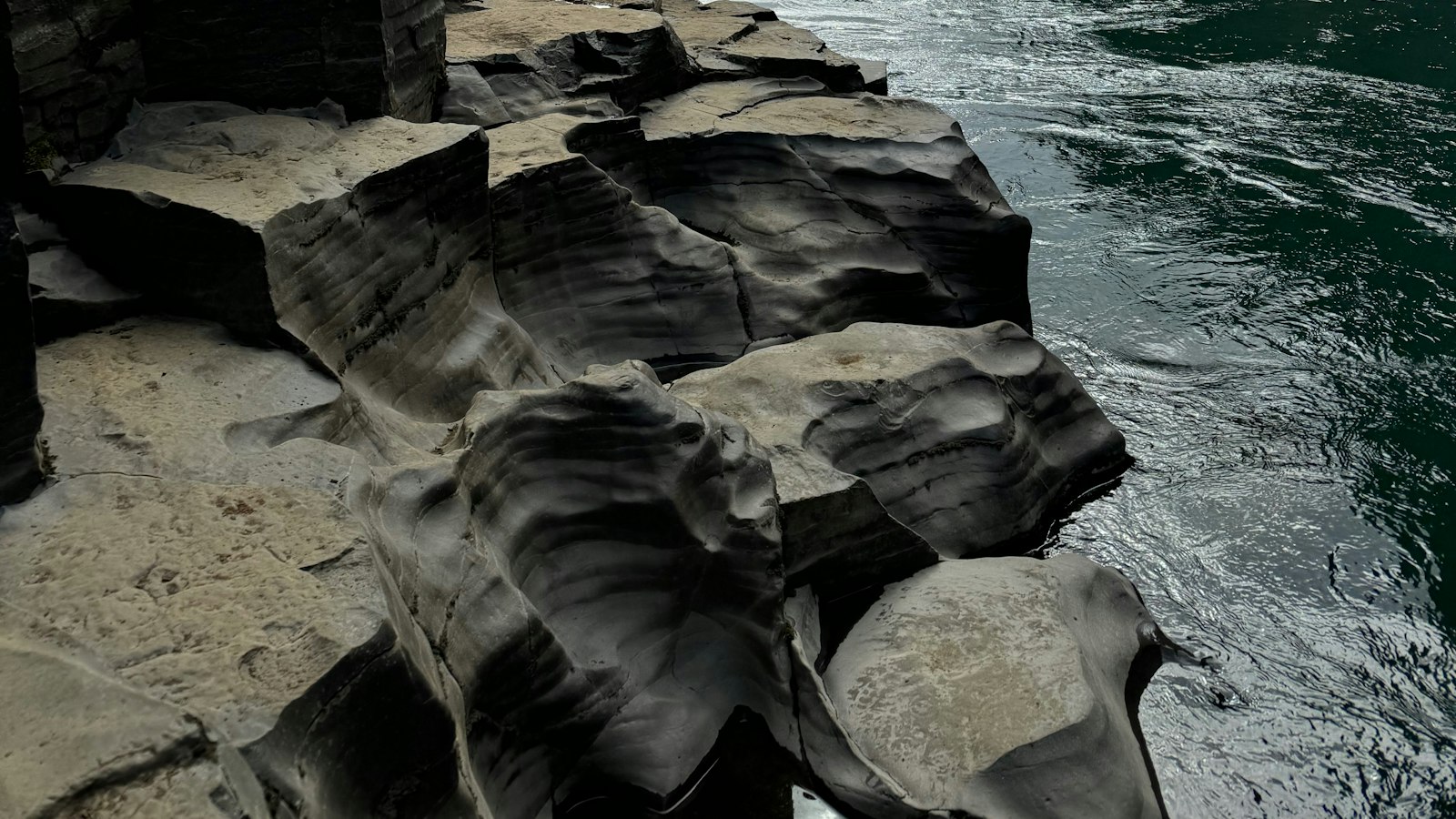
The careful order of the columns is further revealed in their surface details. Fine grooves, running horizontally along the rock faces, record how cracks spread as the lava cooled stage by stage. In certain spots, circular rings and radiating patterns are preserved, marking the final movements of molten material as it solidified. Viewed close-up, the rock shows intricate networks of crystal, especially plagioclase, which form thin layers and lend extra strength and detail to the formation.
From geology to Icelandic design
More than a natural curiosity, the architecture of Svartifoss has shaped major landmarks in Iceland. Guðjón Samúelsson, one of the country’s notable architects, saw inspiration in the columns for some of his most prominent designs. The soaring facade of Hallgrímskirkja church in Reykjavík echoes the clustered forms of Svartifoss, while the ceiling of Iceland’s National Theatre and even Akureyri Church also reflect shapes first crafted by ice age lava and cooled rock.
The basin of the waterfall itself remains rugged, its angular stones regularly refreshed as sections detach faster than the water can round their edges. In this ongoing process, Svartifoss stands as both a monument to Iceland’s fiery past and a wellspring for its artistic imagination.
Sources
- Wikipedia
- Wikipedia (Icelandic) in Icelandic


