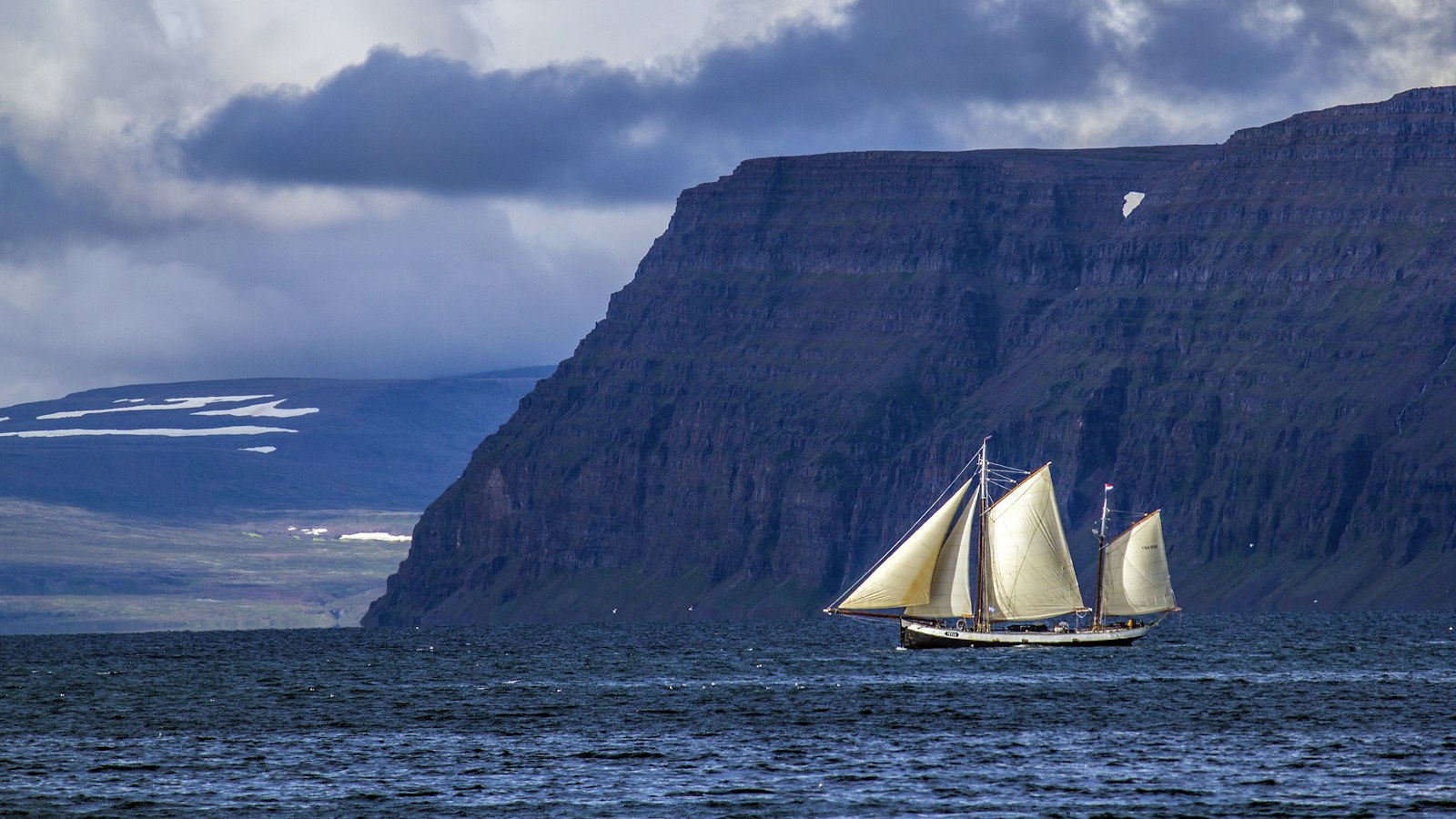
Along the lengths of the Icelandic coastlines, the story of maritime rescue is inseparable from the vessels that braved the North Atlantic. Among these, the ship María Júlía occupies a unique place in Iceland’s history, blending science, rescue, and national conflict into a single oak hull.
Built for Iceland’s harsh seas
Launched in 1950 from Frederikssund in Denmark, María Júlía was constructed from oak and represented a significant investment for its time, costing 1.5 million Icelandic krónur. Funding came in part from search and rescue organisations in the Westfjords, reinforcing the ship’s purpose to safeguard those who made a living from the sea.
The vessel’s name is a tribute to María Júlía Gísladóttir of Ísafjörður, who in 1937 made a substantial donation for the creation of a rescue ship. This act of generosity would be commemorated for decades as the ship carried her name into Icelandic waters.
Science and conflict at sea
María Júlía was outfitted not just for emergencies, but also with a laboratory for fish scientists and oceanographic survey work, making it Iceland’s first dedicated marine research ship. Its dual roles show the overlap between daily life, scientific progress and national needs in a country reliant on the ocean.
The ship came armed with a 47 mm cannon, a necessity during its patrol duties. From 1958 to 1961, María Júlía found itself in the thick of the first Cod Wars conflict, a heated period during which Iceland asserted formal control over its fishing grounds against British vessels. Despite the tensions, the vessel’s most lasting impact was in rescue: during nearly two decades of service with the Coast Guard, its crew is credited with saving close to 2,000 lives.
After leaving the Coast Guard in 1969, the ship adapted to civilian life as a fishing vessel, working from harbours in Patreksfjörður and Tálknafjörður. Attempts were made to sell the ship abroad, but in 2003 it was acquired instead by two Westfjords museums aiming to restore it as a moving museum that could connect coastal communities through shared history.
Preservation and future debates
Restoration attempts have carried María Júlía from port to port: Patreksfjörður, Bolungarvík, Þingeyri, and Ísafjörður. Progress was slow, hindered by lack of funds. In 2018, a novel idea was proposed by a local official: to sink the vessel in shallow water, making it an accessible site for scuba divers. Yet in 2022, the Icelandic government approved financial support for repairs, a turning point in the effort to preserve this historical ship.
In March 2023 María Júlía was towed by the modern coast guard vessel ICGV Þór to Akureyri for much-needed repairs, with hopes that it might again play a role in Icelandic cultural life, this time as a living reminder of the nation’s relationship with the sea.
Sources
- Wikipedia
- Wikipedia (Icelandic) in Icelandic


