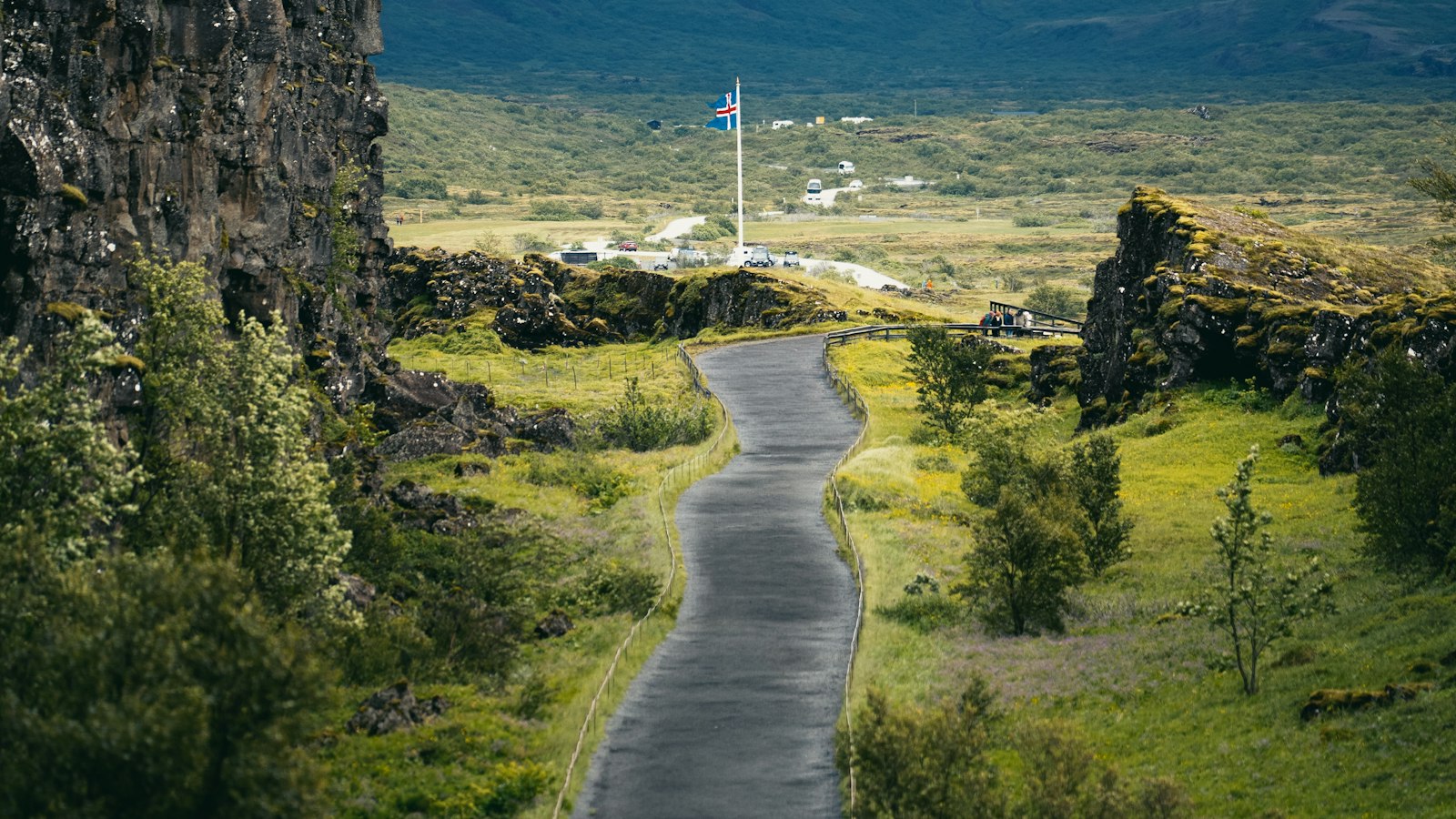
Far in the North Atlantic, perched between Greenland and mainland Europe, Iceland is a land where ice and fire shape not just the landscape but also its national story. Its stark beauty and distinct society have arisen from centuries of challenge and adaptation, all on an island defined by its geographic and cultural edges.
Land between continents
Iceland sits on the Mid-Atlantic Ridge, the meeting point of two tectonic plates. This location fuels frequent volcanic eruptions and a diverse terrain made up of lava fields, mountains, glaciers, and rivers that wind their way to the ocean. Most of the island’s landmass lies just below the Arctic Circle, yet the Gulf Stream brings relatively mild temperatures for such northern latitudes. Despite this, its climate remains cool through summer and many areas receive polar weather.
At 103,000 square kilometres, Iceland is the second largest island in Europe after Great Britain, but with a population of nearly 396,000 (as of June 2026), it is also one of the continent’s most sparsely populated countries. More than a third of Icelanders live in or near the capital, Reykjavík.
Settlement, language and identity
The story of Iceland’s human habitation may have begun with Irish monks, according to medieval manuscripts, but the first permanent Norse settler recorded is Ingólfr Arnarson in 874. For centuries after, migrants arrived mainly from Scandinavia and the British Isles. As these settlers claimed the fertile areas, the need for order led to the founding of the Alþingi parliament in 930, often recognised among the world’s oldest working legislatures.
During the early settlement period, much of the land was forested, but clearing for grazing saw the forests shrink, causing erosion and reducing available farmland. Icelanders shaped their pastoral society around livestock, and changes in climate later made growing crops such as barley nearly impossible.
The island’s name has evolved over time. Early visitors gave it labels like Snæland (meaning “Snowland” in Old Norse) and Garðarshólmur, before the current name was inspired by Flóki Vilgerðarson, who, according to legend, named it after seeing a fjord filled with sea ice.
From isolation to influence
Over the centuries, Iceland has experienced foreign rule, beginning under Norway following civil unrest in the thirteenth century, and later Denmark through a personal union. Iceland officially became part of the Danish realm in 1814. Lutheranism became the state religion after 1550, imposed from Copenhagen.
The centuries brought both hardship and ingenuity. Epidemics like the Black Death, natural disasters, and piracy ravaged the population. In the wake of the Second World War, prosperity grew through the fishing industry and industrialisation, aided by international development programmes. Today, the country enjoys a strong welfare system with universal education and healthcare, and stands out for its high degree of social cohesion, extensive union membership, and peaceful society.
Modern Icelanders speak Icelandic, preserving a language deeply connected to their storied past while embracing cultural innovation and international cooperation. The nation joined NATO without maintaining a standing army, relying instead on a coast guard and police units for its defence. From medieval assemblies under open sky to recent years of creative economic adaptation, Iceland’s society is built on both continuity and adaptability.
Sources
- Wikipedia
- Wikipedia (Icelandic) in Icelandic


