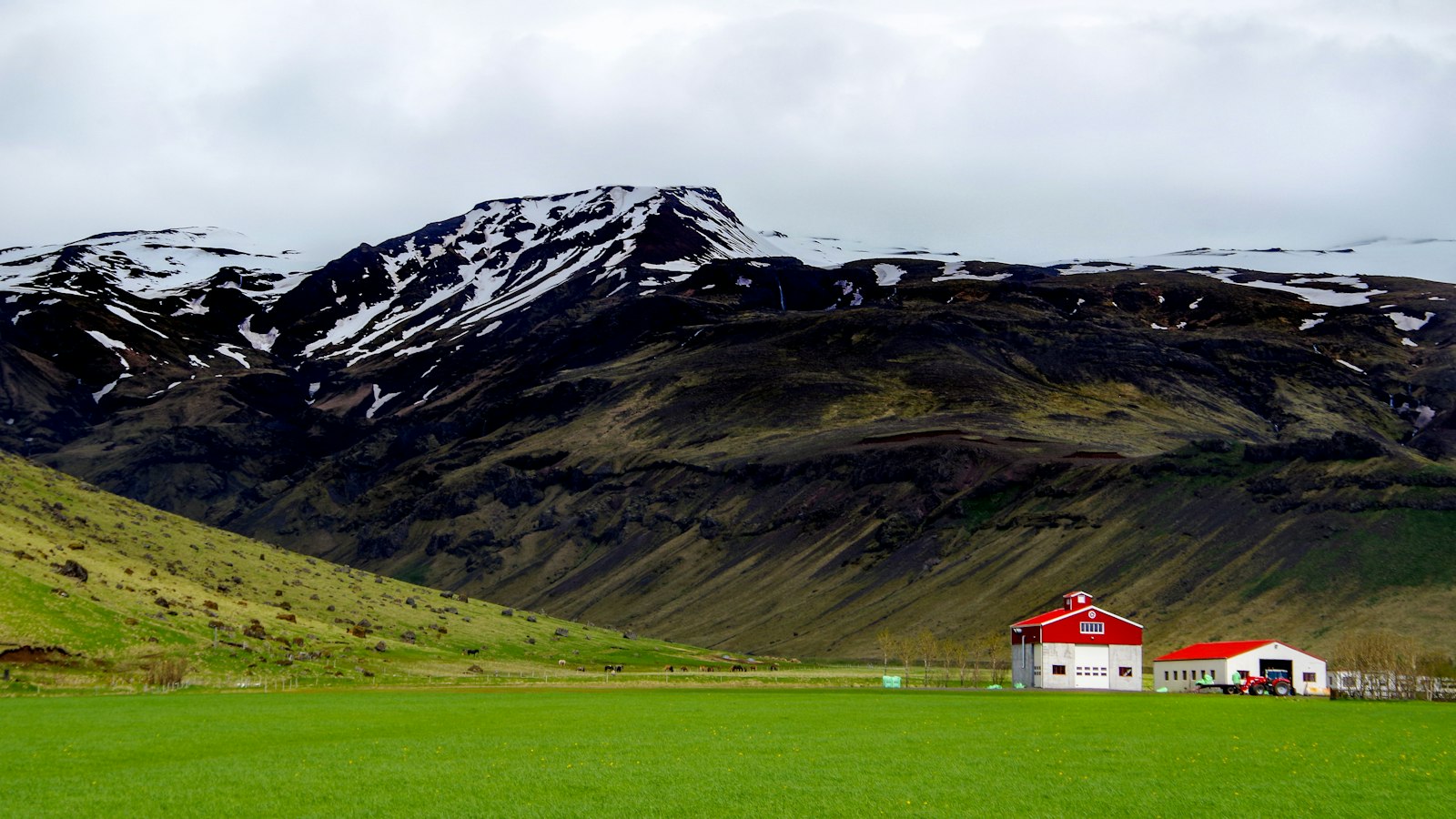
In the windswept farming estate of Húsafell, deep in western Iceland, rests an object that has inspired reverence, rivalry and legend: the Húsafell Stone. This slab of basalt, weighing 156 kilograms (346 pounds), stands not only as a measure of physical power but also as a testament to the enduring role of tradition in Icelandic rural life.
A gate, a legend and a measure of strength
The stone’s original purpose was pragmatic rather than ceremonial. In the mid-1700s, Reverend Snorri Björnsson constructed a sheep and goat pen from local materials, installing this heavy slab as the pen’s gate. Icelanders know it as Kvíahellan, meaning “pen slab.” It kept livestock safely inside, but over time the stone achieved a status far beyond its initial function.
According to stories passed down through generations, the daughter of Snorri, Guðný Snorradóttir, once hoisted the stone, cementing its mythic status. Though details grow hazy with time, the tale reflects the stone’s transformation from an agricultural tool to a symbol of resilience and strength.
The folklore of lifting and carrying
In Icelandic tradition, three stages of prowess are associated with this weighty rock. Those able to simply raise the stone off the ground are spared the label of “amlóði” (weakling). To lap it and stand up with it is to rise above the “hálfsterkur” (half-strong) category. The ultimate test, hoisting it to the chest and transporting it around the pen’s perimeter, a distance of about 34 metres, marks an extraordinary feat. The accomplishment is not formally linked to “fullsterkur” (full-strong) status, but it remains an elite challenge in strength athletics.
The stone’s tough dimensions, coupled with the lack of handles, make gripping and lifting it deceptively difficult. This trial compresses the chest, limiting breath and demanding not only raw muscle, but also endurance.
From rural pen to global competition
Through the late twentieth century, the Húsafell Stone moved from rural obscurity to world recognition. Icelandic strongmen such as Jón Páll Sigmarsson and Magnús Ver Magnússon put the stone and its lore on the map. In the late 1980s and 1990s, the stone featured in formal strength contests, including the World’s Strongest Man and Iceland’s own national championship.
Replicas, often heavier or lighter, now appear in strength contests worldwide. The stone’s original form, however, remains the standard, its dimensions and weight unchanged, offering a direct connection to its home in Húsafell.
Records continue to fall. The longest distance carried using the original Húsafell Stone, recorded at 109.95 metres (three full circuits of the pen), was set by Paddy Haynes in 2025. This feat, and others before it, highlight the stone’s ongoing role as a litmus test for the strongest of the strong. More than forty men have completed this challenge in official competitions, and only a handful of women, led by Hannah Linzay, have matched the feat.
Today, the Húsafell Stone endures as a relic of Icelandic resourcefulness and the almost mythological allure of physical testing, bridging a rural past with a global culture of competition.
Sources
- Wikipedia
- Wikipedia (Icelandic) in Icelandic


