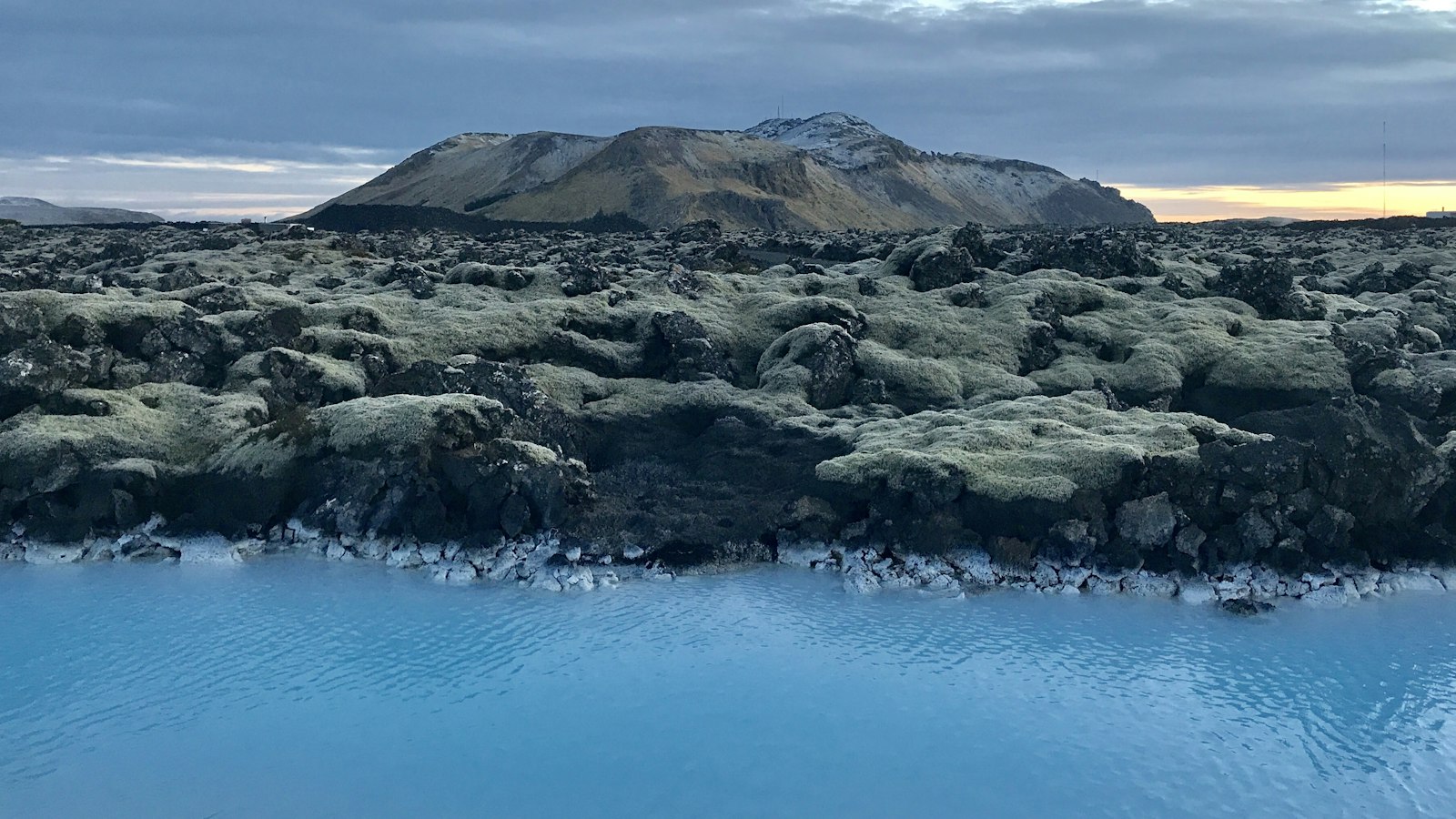
Vífilsfell is a distinctive hyaloclastite ridge located in southwest Iceland, standing 655 metres above the volcanic plateau of Hellisheiði. What seems from a distance like a typical Icelandic mountain is actually a complex volcanic relic, layered with geological evidence of glacial periods, eruptions and the impact of water and fire.
Layers of volcanic history
This mountain marks the northernmost extent of the Bláfjöll mountain range, itself a product of tectonic activity underlying the south-west corner of the island. Vífilsfell sits directly atop the fissure system of Brennisteinsfjöll, a region shaped both by subaerial and subglacial volcanism. Its form and composition were set during the last Pleistocene glaciation, also known as the Weichselian, when thick ice sheets covered Iceland’s landscape.
Vífilsfell’s geological origins include at least two subglacial eruptions. At its top, the summit exposes hyaloclastic, meaning tuff-like, rock, while some researchers detail pillow lavas and welded scoria elsewhere on the mound. The stack of volcanic features here points to periods when lava erupted under ice or water, then met the open air as the glacier thinned. Directly under Vífilsfell lies a flat-topped volcanic formation called the Northern Bláfjöll tuya, believed to have formed in a deep, englacial meltwater lake. Vífilsfell itself, by contrast, appears to have formed under a much thinner glacier based on its volcanic products.
A name from Iceland’s settlement age
The origin of the mountain’s name, Vífilsfell, ties it to a significant period in Icelandic history. It refers to Vífill, one of the freed slaves of Ingólfur Arnarson, traditionally recognised as Iceland’s first permanent settler. According to the medieval Landnámabók, Vífill is said to have travelled from his farm at Vífilsstaðir (near present-day Hafnarfjörður) to the summit of Vífilsfell, about 20 kilometres away, to observe weather conditions before heading to fish off the Seltjarnarnes peninsula.
Surrounding Vífilsfell, the landscape is marked by a series of lava fields formed during more recent volcanic activity in the Holocene era. The most recent major eruption nearby produced the Svínahraunsbruni lava field from the Brennisteinsfjöll volcanic system around the year 1000, coinciding with a nationwide debate over religious conversion at Iceland’s Alþingi.
Today, the area around Vífilsfell features remnants of ancient eruptions as well as active quarries, where quarrying of hyaloclastite and basalt continues. The mountain stands as a physical document of glacial and volcanic processes, as well as a silent witness to the human stories woven into Iceland’s landscape.
Sources
- Wikipedia
- Wikipedia (Icelandic) in Icelandic


