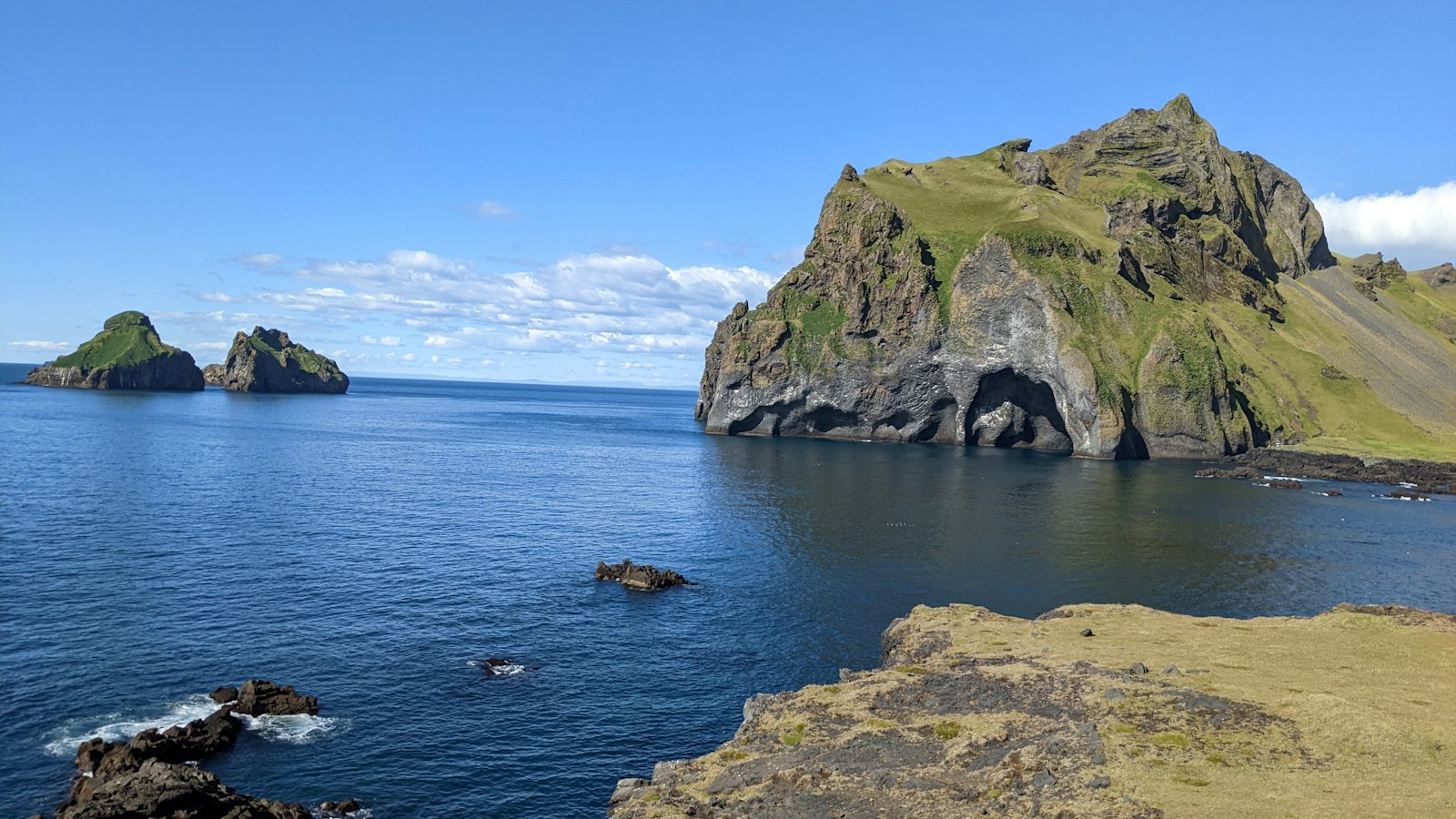
Vestmannaeyjar, often called the Westman Islands, rise just off Iceland’s southern coast. The archipelago covers around 16.3 square kilometres and consists of 18 islands and dozens of sea stacks, carved by relentless North Atlantic waves and born from volcanic activity that continues to shape its story.
A landscape formed by fire and water
The islands occupy a region where the earth is restless. Geological evidence shows that eruptions over the past 10,000 to 12,000 years created Vestmannaeyjar’s jagged forms. Heimaey, the largest at 13.4 square kilometres, is the only one inhabited year-round. In 1973, the volcano Eldfell erupted unexpectedly, forcing a month-long evacuation and destroying part of the town as a new 200-metre-high mountain appeared almost overnight. The dramatic event saw residents and authorities redirecting 6.8 billion litres of seawater to halt advancing lava, saving part of Heimaey’s community and harbour.
Another of the islands, Surtsey, emerged from the ocean during a four-year eruption that began in 1963. This geologically recent addition provides scientists with a living laboratory for studying how ecosystems take hold on new land.
People, survival and the sea
Life in Vestmannaeyjar has often meant adapting to nature’s extremes. Early records say Norse settlers named the islands after “Westmen” (Gaels from Ireland and Scotland), following a saga of fatal retribution for a blood feud in the ninth century. Settlement here continued, though harsh times, most dramatically in 1627 when pirates raided Heimaey, abducting about half its residents, left a lasting mark. Centuries later, the community turned to fishing, harvesting rich cod and haddock stocks offshore. Modern Heimaey now counts over 4,500 people, both preserving old traditions and welcoming change.
A unique aspect of daily life is the close bond between residents and the teeming seabird colonies on the islands’ cliffs. Each spring, puffins arrive in vast numbers. Local people sometimes guide lost chicks, known as “pysjur” in Icelandic, to safety if they become stranded in the town’s lights. Over thirty bird species nest on the islands, while the surrounding waters remain vital fishing grounds.
Climate, wind and culture
Vestmannaeyjar’s weather is mild for its northern latitude, thanks to the ocean, though fierce storms are common. Stórhöfði, a promontory at Heimaey’s southern tip, recorded Iceland’s highest wind speed at 61 metres per second.
Heimaey is also the stage for Þjóðhátíð, one of Iceland’s largest outdoor festivals, held annually since 1874. Thousands gather each summer for music and celebration, marking both the endurance and spirit that define these islands.
Sources
- Wikipedia
- Wikipedia (Icelandic) in Icelandic


