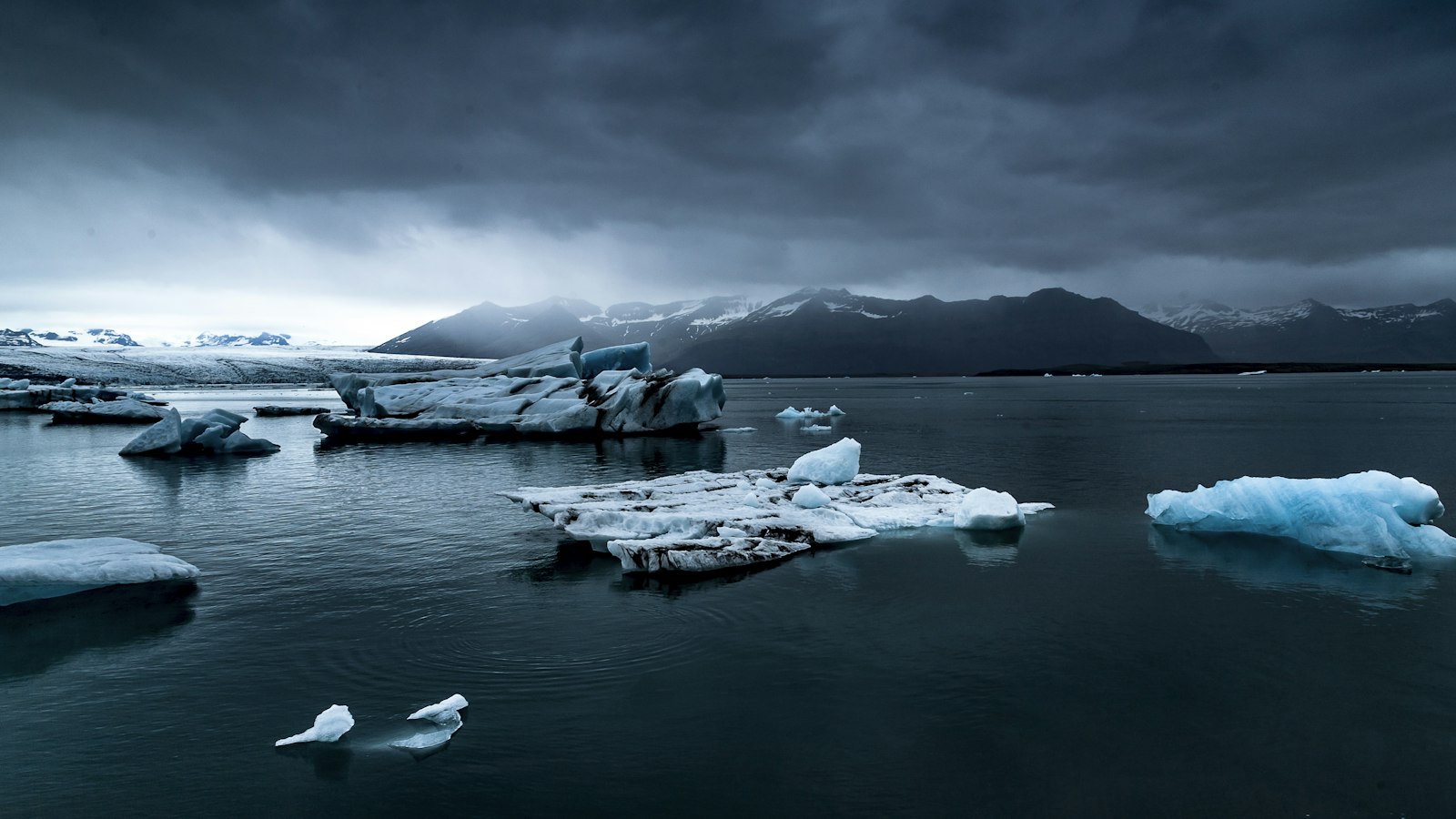
In southeastern Iceland, Vatnajökull, the “Glacier of Lakes”, stretches across approximately 7,700 square kilometres, making it the largest glacier in the country and the second largest ice cap by volume in Europe. This colossal ice mass envelops landscapes, volcanoes, and even history beneath its thick, shifting surface.
A glacier of extremes
Vatnajökull’s average ice thickness is around 380 metres, but in some places the ice plunges to depths of 950 metres. For most of its area, the glacier rises between 1.4 and 1.8 kilometres above sea level. Iceland’s highest peak, Hvannadalshnjúkur, ascends from Vatnajökull’s southern fringes, reaching 2,109.6 metres.
The ice cap is not a silent presence. Under Vatnajökull are several of Iceland’s most powerful volcano systems, including Grímsvötn, Öræfajökull, Bárðarbunga, and others such as Gjálp and Þórðarhyrna. This region, straddling tectonic boundaries and warmed by a mantle plume, is a hotspot for what geologists call glaciovolcanism: the interaction of fire and ice beneath the glacier’s heavy mass. Volcanic eruptions here have often triggered sudden, dramatic glacial floods known as jökulhlaup, releasing vast quantities of water; in 1934, one such event unleashed 15 cubic kilometres over just a few days.
The glacier itself is constantly changing. Observations indicate a long period of shrinking since the 1930s, with shifts in both the size and make-up of the ice. Recent decades have seen local air temperatures fluctuate, with January 2025’s average as cold as -1.09 degrees Celsius and December’s average reaching just under one degree above zero.
Human stories and cultural significance
Vatnajökull is more than geology and weather. In centuries past, it was sometimes called Klofajökull, meaning “Cleft Glacier,” a nod to the deep cuts visible in its surface. In modern history, it made headlines in September 1950 when a small airline crew crash-landed on the ice and survived, trekking 34 kilometres to safety after signalling for help. Such episodes highlight both the harshness and the fascination the glacier holds.
Vatnajökull’s presence is also felt in culture beyond Iceland. Its stark landscapes have served as the stand-in for Siberia in a James Bond film and featured in productions like “Game of Thrones” and “Interstellar.” The outlet glacier Breiðamerkurjökull and its terminal lake, Jökulsárlón, have become cinematic icons.
Today, Vatnajökull and its many outlet glaciers are protected as part of Vatnajökull National Park, established in 2008. These glaciers reach outward in all directions, such as Svínafellsjökull and Skaftafellsjökull, giving rise to rivers, shaping valleys, and sustaining stories of both Icelandic life and global imagination.
Sources
- Wikipedia
- Wikipedia (Icelandic) in Icelandic


