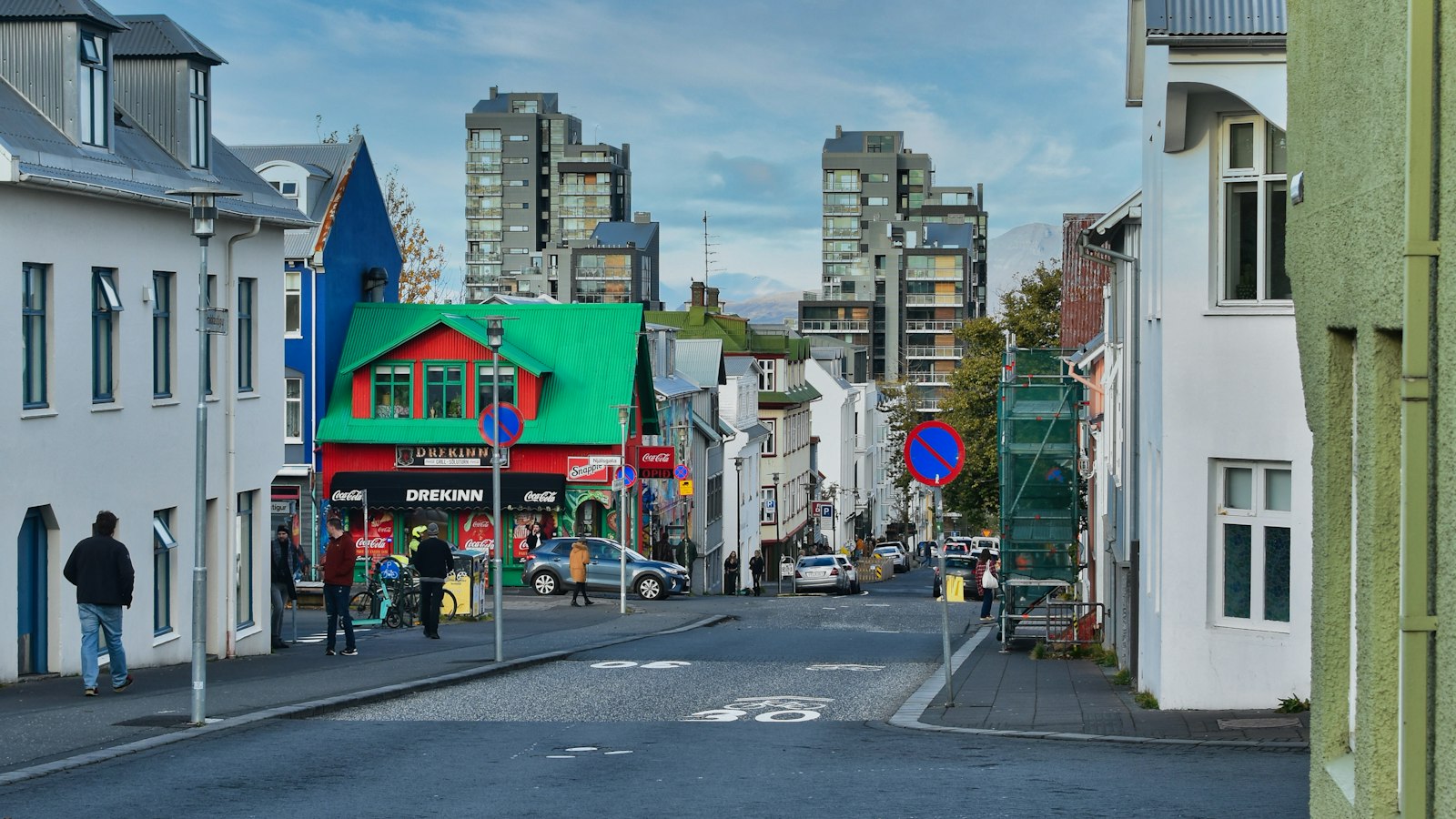
For those accustomed to major differences in regional accent, Icelandic presents a surprising uniformity. Unlike many languages, varieties of Icelandic speech across the country differ only slightly, with dialect distinctions in sounds being minimal. This unusual unity reflects a long-standing tradition and the island’s isolation.
A closer look at consonants and vowels
The sound system of Icelandic is remarkable for several reasons. Both monophthongs (single vowel sounds) and diphthongs (vowel glides) form part of everyday speech, while the consonants offer a complex range of options. Many consonants can be produced as voiced or voiceless, and Icelandic is one of the few languages where a clear distinction between aspirated and non-aspirated plosive consonants is central, rather than a strict division of voiced versus voiceless. In this way, Icelandic shares a feature with languages such as Faroese, Danish and Standard Mandarin.
Preaspiration, where a burst of breath occurs just before certain voiceless stops, is common in Icelandic. This type of sound is rare globally. Other features, such as only using a contrast in length for consonants (but not vowels), place Icelandic at odds with many other European tongues.
One hallmark of Icelandic words is that main stress falls on the first syllable. Whether pronounced by an east fjord fisherman or a Reykjavík student, this rhythm is nearly always present.
Sound alternation and subtle distinctions
Determining exactly how many individual consonant sounds (phonemes) exist in modern Icelandic can be difficult. This is partly due to regular shifts and transformations that sounds undergo depending on their position within words or phrases.
A single consonant letter can represent several different sounds. For example, the letter ‘g’ might denote a hard [k], the fricative [x], a voiced [ɣ], or even a [j], depending on its placement. Voiced consonants habitually devoice at the end of a word before a pause, a process that also reaches sonorants.
Among fricatives, the Icelandic letters þ (thorn) and ð (eth) show different patterns according to their spot in the word. In native words, these sounds are considered offshoots of the same underlying phoneme. Unusually, Icelandic also features voiceless forms of sounds that elsewhere in the world are nearly always voiced, such as certain nasals and liquids.
Distribution rules and phonetic variety
Restrictions shape where various sounds can appear. In the case of velar and palatal consonants, each group occupies its own slot depending on the neighbouring vowels and consonants. Glottal sounds like [h] occur at the beginning of words before vowels, or in particular consonant combinations.
Certain clusters and allophones evoke debate among linguists, with some suggesting extra phones such as the glottal stop [ʔ] or velarised lateral variants. These can act as subtle markers in formal speech or function as transitional sounds in everyday conversation.
In sum, the subtle balance of shifts, alternations and constraints within Icelandic speech hints at the history and independence of the language. It preserves both archaic traces and surprising twists, distinguishing it in a global context.


