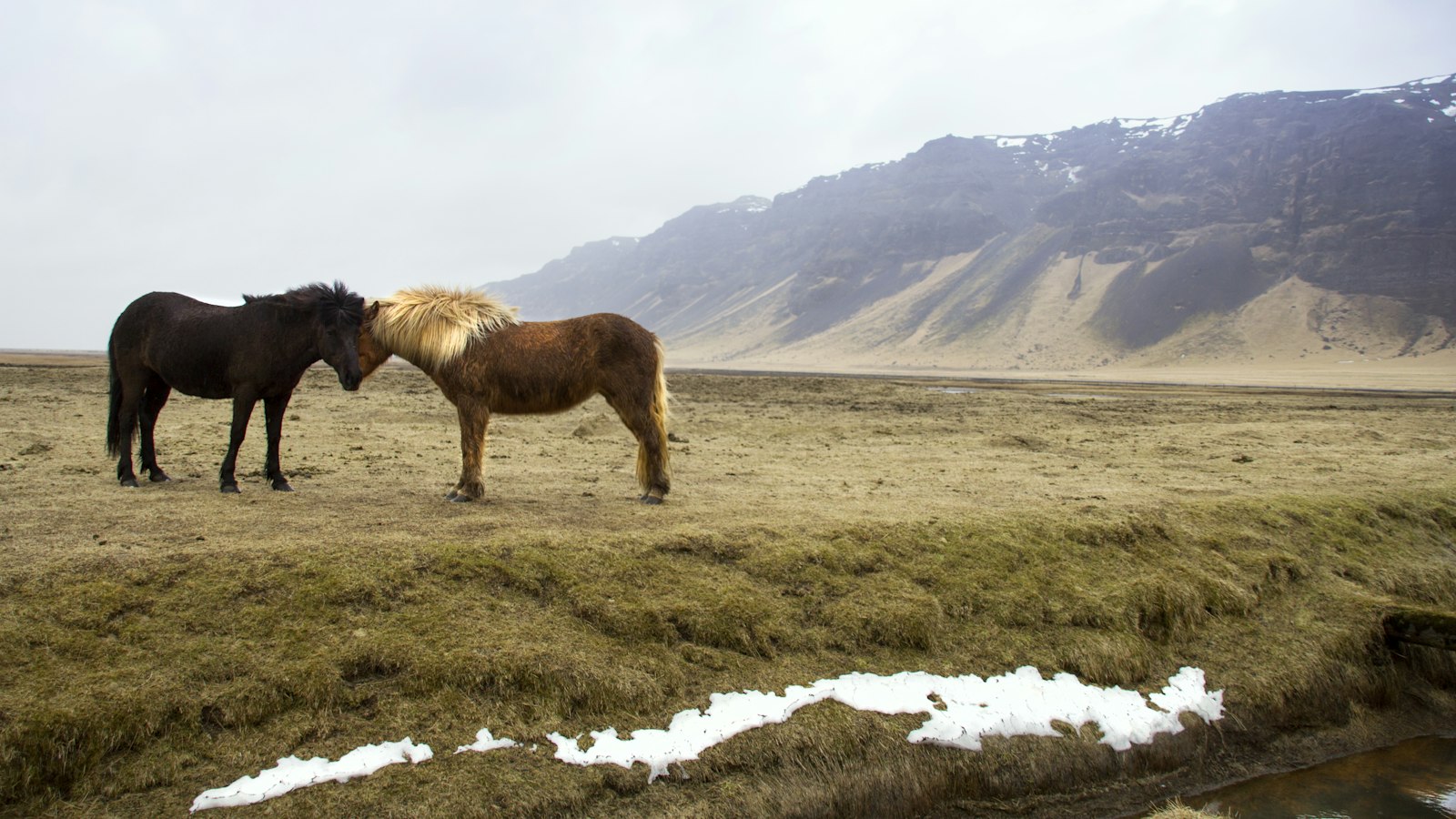
In the heart of North Iceland, where the land meets the sky with little to break the horizon, Vallhólmur emerges as both history and living tradition. Sometimes called Hólmurinn, this vast plain sits in the middle of Skagafjörður. Its story is written in river sediment and old seawater, its surface an ancient seabed resurrected by centuries of deposition from the Héraðsvötn river.
To the east, the flat terrain is drawn up by the Héraðsvötn and Húseyjarkvísl rivers; to the west, it presses against Vindheimamelar, a place familiar to those who know Icelandic horses. Northward, the expanse stretches into what’s called Eylendið, though sometimes that name is given to the entirety of both regions, a sign of the land’s subtle, shifting definitions.
Landscapes shaped by water and time
Remarkably flat and grassy, Vallhólmur’s only real relief comes from two gentle hills: Skiphóll, a mound described as reminiscent of an overturned boat, and Vallholt. The area around Vallholt itself is historically notable, sheltering two similarly named farms: Syðra-Vallholt (South Vallholt) and Ytra-Vallholt (Far Vallholt). Nearby, the spring called Vallalaug is often mentioned in Iceland’s saga literature, including the Sturlunga saga, linking this quiet region to turbulent medieval events.
Other working farms have dotted the plain: Vellir and Langamýri among them. Some farms in the east have long been deserted, yet documents show they once belonged to Akrahreppur, an indication that at some time the course of Héraðsvötn may have shifted further west, redrawing both boundaries and livelihoods.
Horse racing and rural enterprise
Animal husbandry and grass farming once defined daily life here. Vallhólmur grew thick with grass, supporting a pellet plant for many years, turning hay into fuel for Iceland’s livestock. Today, the plant has closed, leaving in its wake layers of recent agricultural history atop much older geology.
But it is horses that gather communities. At Vindheimamelar, a gravel-strewn area at the north end of Reykjatunga í Tungusveit, local riding clubs, Stígandi and Léttfeti, established a race track in 1969. This track, together with competitive facilities at Vallabakkar in Vallhólmur, became the setting for both regional and national equestrian tournaments. Today, it is widely known among Icelandic horse enthusiasts as a place of gathering, competition and tradition.
Far from urban life, Vallhólmur is a testament to how landscapes transform through natural processes and human use, and how heritage is kept alive not only in sagas but in everyday practice.
Sources
- Wikipedia
- Wikipedia (Icelandic) in Icelandic


