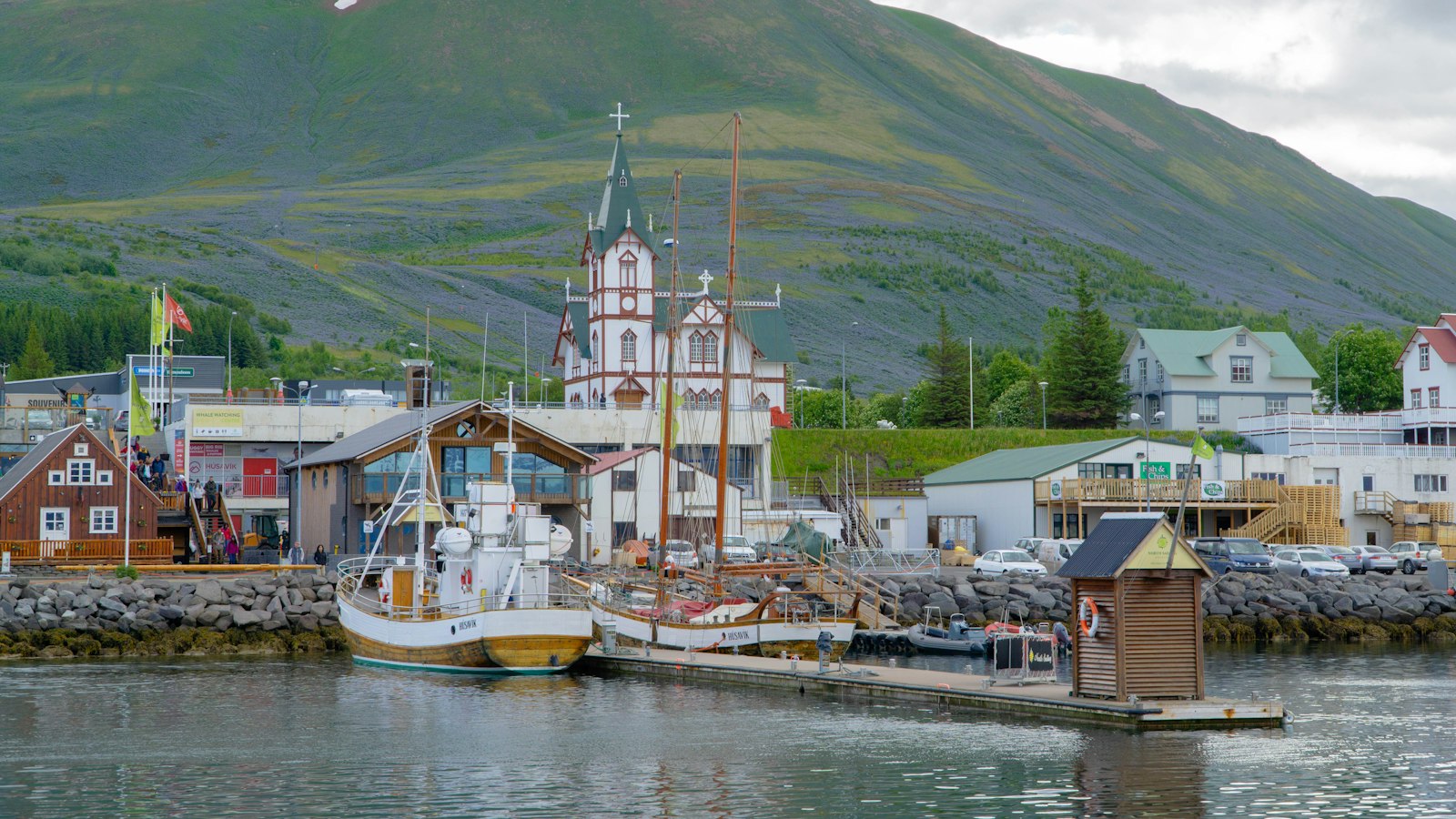
Along the northern coast of Iceland, the small town of Húsavík faces the deep waters of Skjálfandi Bay. Here, just below the Arctic Circle, a unique museum offers insight into the ocean’s largest inhabitants and the place they hold in Icelandic life.
A community story: from hotel display to research hub
The story of the Húsavík Whale Museum began on a modest scale in the summer of 1997, when a small exhibition on whales was arranged in a local hotel in Húsavík. The display quickly found a wider audience and moved to the harbor’s baiting shed as a more permanent exhibit. Rising interest led to the purchase and transformation of the town’s disused slaughterhouse, originally built in 1931, which became the museum’s new home and opened its doors to the public in 2002.
In 2004, the museum restructured as a non-profit organisation, under the Icelandic name Hvalasafnið á Húsavík. The work done here is not only for display. A wide-ranging exhibition on whale ecology was added in 2005, and since then, the museum has played a formal educational role, recognised by national education authorities in 2007.
Encountering cetaceans: education, research, and daily operations
Inside its 1,600 square metres, the museum devotes careful attention to how stories are told. The two-story building offers models, illustrations, and hands-on exhibits that introduce the marine world and the intricate life of whales. The lower floor highlights North Atlantic species, whale habitats, their evolution, and the changing history of whaling and whale watching in Iceland. Dolphins and orcas (not least the famous Keiko) receive their own sections, and visitors can view documentaries delving into the conflicts between whaling and conservation.
Upstairs, known as the “whale gallery,” a collection of authentic skeletons allows close study of nine cetacean species, including the minke whale, sperm whale, orca, humpback whale, and the remarkable narwhal whose skeleton was a gift from Greenland in 2004. The first specimen to be assembled here was a Sowerby’s beaked whale in 1998, with others added in the following years.
From its beginnings, the museum has run an international volunteer program, a rarity in Iceland in the late 1990s. Mostly biology students, these volunteers become central to daily operations, offering expert tours in many languages and assisting with exhibition updates. Each summer, they join daily whale boat trips, gathering new data that continuously updates the museum’s database, a valuable resource for cetacean research.
Research at the museum began in 1998. Its team works in agreement with local whale watching company North Sailing, allowing staff and volunteers to document North Atlantic whales using field photography, track habitats, and study whale breathing patterns. The museum also collaborates with universities and international researchers, contributing to ongoing scientific efforts.
Húsavík’s Whale Museum embodies how a remote community by the Arctic Circle has become a centre for sharing, studying, and re-thinking humanity’s relationship with whales. Its exhibits and research projects invite reflection on the past, present, and future of these mammals and their place in Icelandic society.
Sources
- Wikipedia
- Wikipedia (Icelandic) in Icelandic


