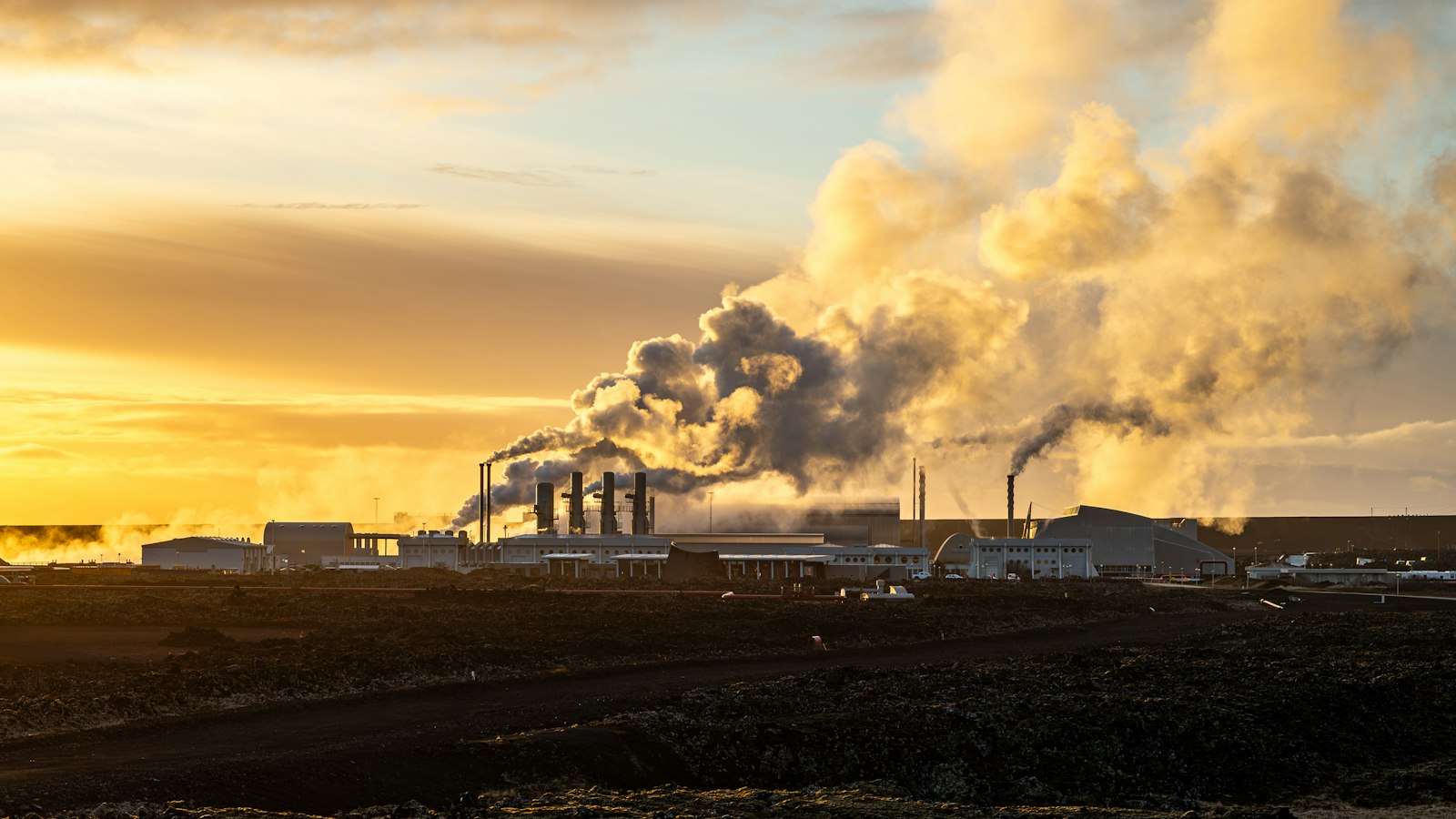
On the Reykjanes Peninsula of southwest Iceland, four kilometres north of the fishing town Grindavík, the Svartsengi power station (Icelandic: Svartsengi, meaning “black meadow”) has transformed how Icelanders live with their volcanic land. Built in 1976 by the company HS Orka, Svartsengi is recognised as the world’s first geothermal plant to combine electricity production with large-scale hot water supply for district heating.
Iceland’s geological activity presents both challenge and opportunity. The Svartsengi site draws energy from a geothermal field close to the Mid-Atlantic Ridge, providing access to superheated water and steam below the surface. Early in its operation, the plant used water-dominated boreholes. Later developments enabled a mixture of liquid and steam to be harnessed together, making the most of natural heat flows.
A new approach to Icelandic energy
Svartsengi’s innovations advanced rapidly after its first commissioning in 1976. The plant gradually expanded in six major phases (completed by 2008), with each stage adding new capacity and technology. At present, Svartsengi delivers 75 megawatts (MW) of electricity to the grid and 150 MW of thermal power to heat more than 21,000 homes across the peninsula, serving communities from Keflavík and Njarðvík to Garður, Vogar and Sandgerði. The project’s design was native to Iceland and marked the first time electricity and hot water were produced so efficiently from the same geothermal source.
The combined capacity of Svartsengi’s six interconnected units relies on a network of 13 boreholes arranged across a 150-hectare area. Some wells draw both steam and hot brine, while others yield only steam. Modern control and monitoring systems (known as SCADA) oversee the complex flows of hot and cold water, power and turbine operation, keeping this intricate facility running smoothly.
Techniques, trials and the future
The hot water produced at Svartsengi is originally fresh cold water, which is then deaerated and heated using high-pressure geothermal steam in heat exchangers before being pumped to households for heating. Over time, the power units have evolved, and new turbines from international and local cooperation have joined the original Icelandic designs. The site’s by-products include one of the country’s most recognised attractions, the Blue Lagoon, which formed originally from the station’s water discharge.
Recent volcanic events have tested the plant’s resilience. The Sundhnúkur eruptions between 2023 and 2024 posed direct threats from frequent earthquakes and lava flows. In February 2024, lava destroyed the main road and damaged a pipeline, creating a regional heating crisis until repairs were completed. Authorities responded by raising earth barriers up to 20 feet high around the plant and the Blue Lagoon, and, for the first time since the 1973 Eldfell eruption, using water cooling in attempts to slow advancing lava. Efforts to protect the station and infrastructure continue, with further barrier construction underway as of December 2024.
Plans are in progress to further extend Svartsengi, with a new unit called SVA7 being built to replace older ones and enhance hot water and electricity capacity for the future. Through innovation, adaptation and Iceland’s unique geology, Svartsengi power station remains central to both the energy story and daily life in the region.
Sources
- Wikipedia
- Wikipedia (Icelandic) in Icelandic


