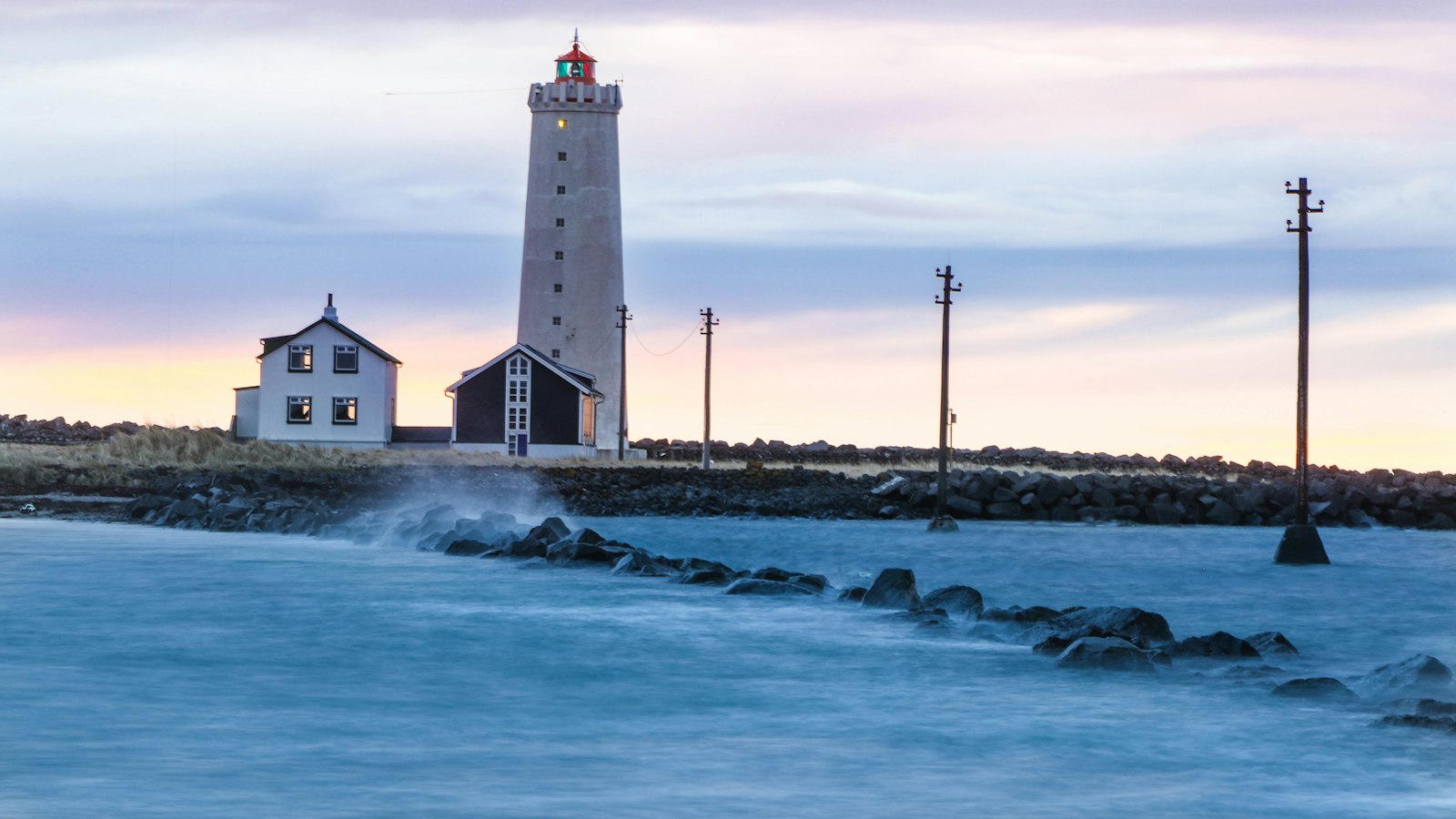
At the far western edge of the Reykjavík area lies Seltjarnarnes, a municipality set on a narrow peninsula projecting into the bay of Kollafjörður. While it is enveloped on most sides by the sea, only Reykjavík borders it on land. Despite its small size, it is the least extensive township in Iceland by area, Seltjarnarnes stands out as the nation’s most densely populated municipality.
With a population of 4,749 as of March 2025, daily life in Seltjarnarnes pulses just beyond the city’s political lines. The town took its current administrative shape following the Second World War and formally became a township in 1947. The area’s boundaries have shifted multiple times over centuries, largely as Reykjavík’s city limits expanded. Once, the old parish of Seltjarnarnes stretched all the way to islands in Kollafjörður, including Akurey, Engey, and Viðey, now part of Reykjavík.
Historically, the land here saw both traditional farming and coastal fishing, with numerous farmsteads such as Nes by Seltjörn. The sea, however, continually affects the landscape. The exposed coast is sculpted by wave erosion, with protective barriers now lining much of the shoreline. Occasionally, the geography itself has changed: Bakkatjörn, for example, was converted from a shallow bay to a pond around 1960. Both Grótta and Bakkatjörn are now protected nature reserves, attracting diverse birdlife year-round.
Education and local culture
Education finds deep roots in Seltjarnarnes. The town’s oldest school, Mýrarhúsaskóli, was established in 1875 and ranks among the country’s historical educational institutions. Initially housed in a local farm, then in a stone building opened in 1883, the school evolved to modern facilities over the decades. Today, Seltjarnarnes operates two schools, Mýrarhúsaskóli for younger pupils and Valhúsaskóli, founded in 1974, for older students. Together, they serve about 650 children from the town.
Local culture is not static. Nesstofa, among Iceland’s oldest stone houses, is home to the Icelandic Medical History Museum, recalling when Bjarni Pálsson, Iceland’s first Chief Medical Officer, worked there in the late 1700s. For science enthusiasts, the Seltjarnarnes Astronomy Society, uniquely dedicated to astronomy in the country, holds its meetings at Valhúsaskóli, with a notable dome housing its main telescope atop the school’s roof.
Modern life, sports and connections
Seltjarnarnes achieved an international milestone in 2007 as the first town globally to provide fibre-optic internet access to every resident. Local politics have long been led by the Independence Party, and several notable Icelanders have called the town home, from Jon von Tetzchner, the mind behind the Opera and Vivaldi web browsers, to Miss World 2005, Unnur Birna Vilhjálmsdóttir.
Community spirit thrives in sports, especially through the Grótta club, which fields teams in football, handball, gymnastics, and weightlifting. Grótta’s women’s handball teams claimed Icelandic championships in 2015 and 2016. The golf course at Seltjarnarnes also hosts the local Ness Golf Club, and the area remains linked to greater Reykjavík by the Strætó bus network. Construction of the Borgarlína Bus Rapid Transit system will further connect the region.
Seltjarnarnes exists where nature, history, and modern life tightly intertwine, defining its distinct place on Iceland’s edge.
Sources
- Wikipedia
- Wikipedia (Icelandic) in Icelandic


