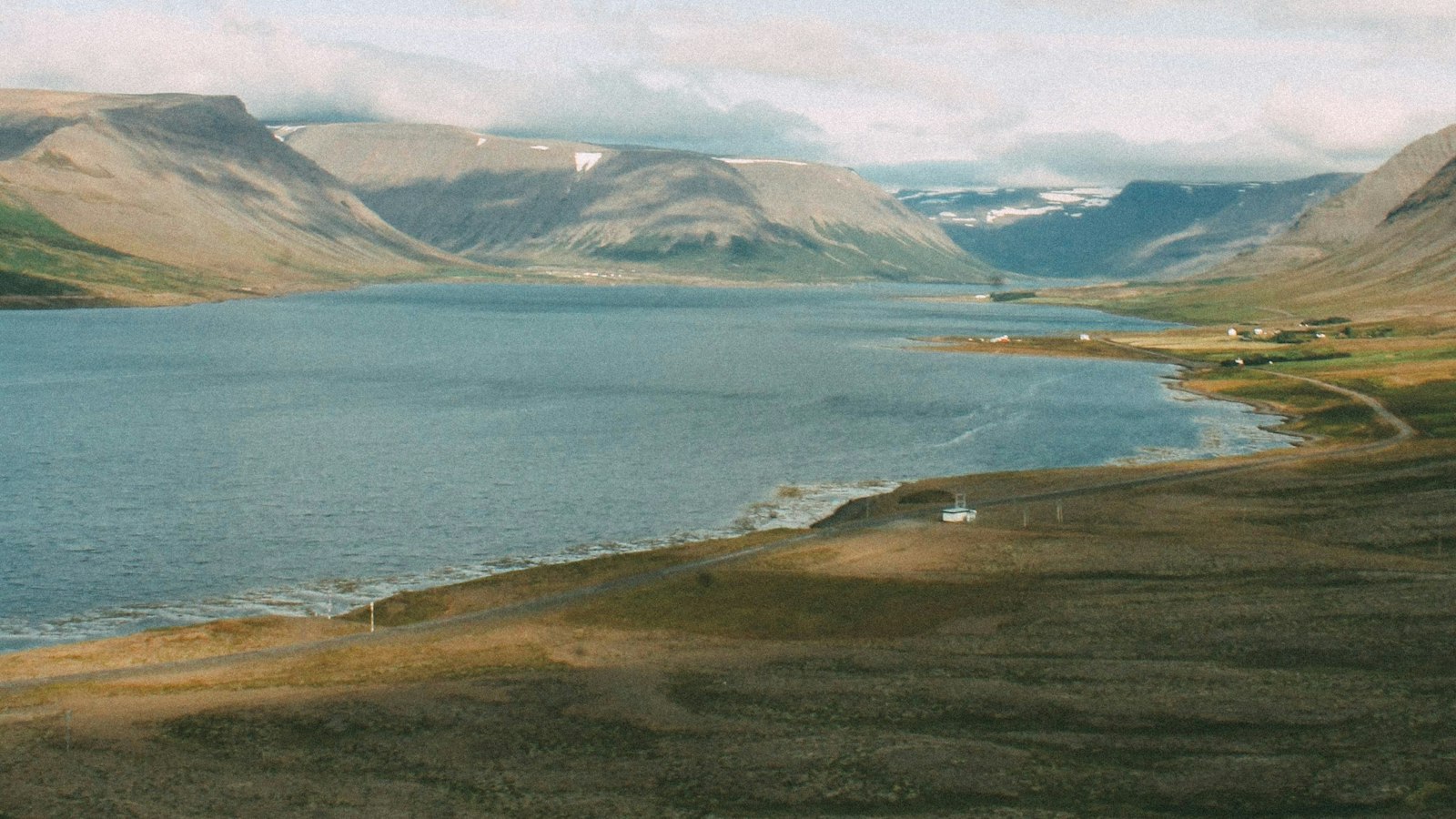
Where Iceland’s Westfjords reach their furthest point north lies Hornstrandir, a 580-square-kilometre peninsula shaped by tundra, jagged fjords, scattered bays and steep cliffs. Positioned beyond the Glacier Fjords (Jökulfirðir) and northwest of the Drangajökull glacier, it stands as the country’s northernmost mainland region.
Life in Hornstrandir has always been defined by its isolation. For centuries, scattered families lived from agriculture and fishing among the tight coves and rough terrain. By the 1950s, the last regular residents had abandoned their homes, unable to maintain their livelihoods in this demanding landscape. For decades, only the lighthouse keeper at Hornbjargsvita, on the bay of Látravík, remained, until he, too, left in 1995.
This retreat by people, however, set the stage for nature to reclaim the region. In 1975, the area was made the Hornstrandir Nature Reserve, now known for some of Iceland’s strictest conservation practices. Much of the land is privately owned, and a few descendants of former residents have returned, rebuilding old homes for seasonal visits.
A landscape shaped by fjords and sea cliffs
The southern edge of Hornstrandir is defined by the formation of five main fjords and bays, collectively known as Jökulfirðir. These include, from west to east, Hesteyrarfjörður, Veiðileysufjörður, Lónafjörður, and Hrafnsfjörður, the last forming the peninsula’s southwestern tip. A fifth, Leirufjörður, sits just south of the boundary. The coastline is a maze where land and sea meet in deep inlets and twisting shores. Beyond the fjords, bays including Hornvík, Barðsvík and Bolungavík cut into the reserve’s interior, each shaped by centuries of glacial action and weather.
The cliffs around Hornvík are among Iceland’s most dramatic. The eastern face of this bay rises more than 500 metres in sheer walls above the sea. These cliffs draw vast flocks of seabirds and have been described as attracting birds in “gigantic” numbers. Other major bird cliffs include Hornbjarg, Hælavíkurbjarg and Riturinn, sources of life and movement in this stern land.
A haven for arctic foxes and rare peace
Hornstrandir is especially cherished for its balance of fragile vegetation and thriving animal life. With hunting banned throughout the nature reserve, the Arctic fox population here is notable, and encounters are common. The lack of infrastructure and the vast area ensure a “strong sense of remoteness”: it is possible to hike for days and never cross paths with another person.
Today, Hornstrandir’s rare mixture of wild landscape, wildlife and quiet draws visitors seeking solitude and the echo of Iceland’s oldest rhythms, where nature, not human hands, shapes the land’s fate.
Sources
- Wikipedia
- Wikipedia (Icelandic) in Icelandic


