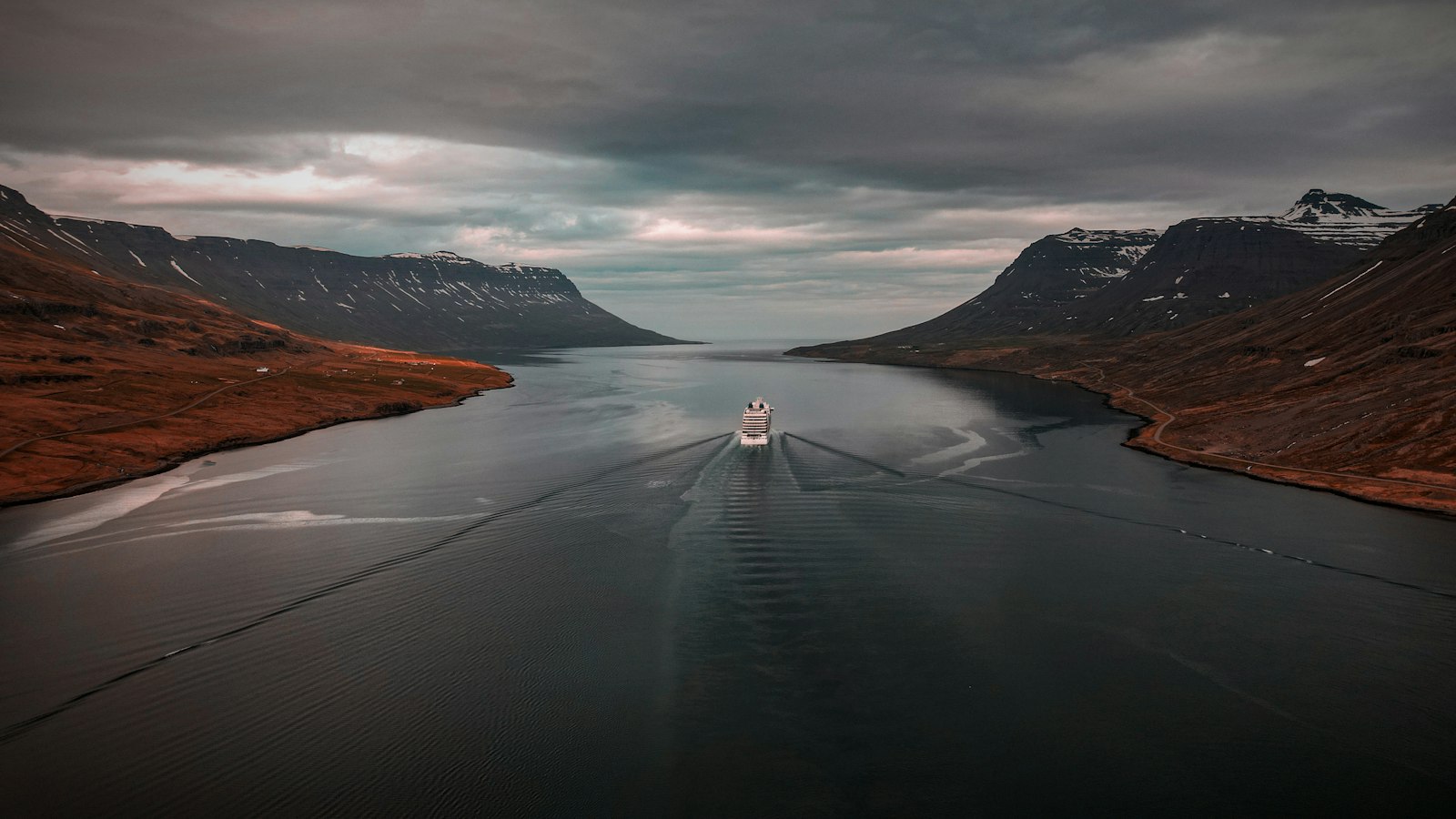
Along Iceland’s north coast, between the towns of Sauðárkrókur and Hofsós, lies Kolkuós, a site whose history mirrors the shifting fortunes of coastal communities. Though largely abandoned now, its legacy as a centre of commerce and connection is being pieced together through archaeology and surviving buildings.
Gateway for goods and gathering place
In early times, Kolkuós was known as Kolbeinsárós and served as a hub for trade within Skagafjörður. Its location by the estuary offered a naturally sheltered area for ships, mainly because of a long spit of land that acted as a natural dock. The deeper harbour might once have benefited from being partially connected to Elínarhólmi, a rocky islet nearby, though the link between land and islet has been eroded by the sea. Navigating further into the estuary was not always easy because of a flat rock blocking the way, but the port remained important. Goods arriving here were transported inland, with Hólar, later a prominent religious centre, chosen in part for its close access to Kolkuós’s harbour.
Commercial activity left traces in the form of temporary camps, shops, storage buildings, and workshops. Excavations reveal that, although people did not settle permanently, the area buzzed with seasonal trade and industry from the 10th to the 16th century. The presence of imported items such as pottery from Norway, coins from Germany and England, and bronze tools points to far-reaching connections.
Stories in the ground and changing tides
Rescue excavations began in the early 2000s, driven by rapid coastal erosion. Researchers have unearthed over 80 structures, with fireplaces suggesting various specialised uses. The finds, ranging from shark teeth to whale bone carvings, highlight the diverse activities that took place, both economic and everyday. Among the more unusual discoveries are bones of very small dogs, believed to have been prized as lap-warmers and status symbols for the wealthy in medieval Iceland. Human remains also tell stories; one grave holds a man interred with a pig, dating to just after Iceland’s conversion to Christianity in the year 1000.
By the end of the 16th century, Hofsós had surpassed Kolkuós as the key trade centre when the harbour’s quality declined. Still, the flow of goods returned in 1881, with wool export becoming the mainstay of late 19th and early 20th century commerce. Pay records show that foreign workers sometimes joined the Icelandic export teams, reflecting Kolkuós’s continued if altered, international links.
Buildings remaining from this era include the main house, constructed in the earliest years of the 20th century, as well as a slaughterhouse and animal pen from the 1910s. An association now maintains these relics, emphasizing the commitment to preserving the layered history of Kolkuós even as the landscape is reshaped by wind and waves.
Sources
- Wikipedia
- Wikipedia (Icelandic) in Icelandic


