Long before the age of printed books in Iceland, one medieval text shaped the country’s sense of its origins more than any other. Composed in the first part of the twelfth century, Íslendingabók, meaning the Book of Icelanders, stands as one of the most valuable sources on the early history of the island.
A careful chronicle by Ari Þorgilsson
Ari Þorgilsson, an Icelandic priest working in the early 1100s, was the mind behind Íslendingabók. He wrote in a style that avoided myth and religious partisanship, instead focusing on what he considered trustworthy accounts. He often identified where his information came from, seeking to provide clarity for future generations. Ari’s education in Latin influenced his precision, but he made the groundbreaking choice to write in Icelandic, even though Latin was the scholarly standard of his era.
The text survives today through two paper manuscripts, both copied in the seventeenth century by Jón Erlendsson for Bishop Brynjólfur Sveinsson. These manuscripts were produced using a now-lost medieval document, believed to have been written around the year 1200. When scholar Árni Magnússon searched for the original centuries later, it had already vanished.
Events that shaped a nation
Divided into ten succinct chapters and framed by a prologue and a genealogy list, Íslendingabók describes pivotal moments affecting Iceland’s society. It recounts the arrival of settlers from Norway during the reign of Harald I, led by Ingólfur Arnarson, who landed in what is now Reykjavík. Ari’s account notes that Iceland was once thickly wooded, all the way from the coast up to the mountains.
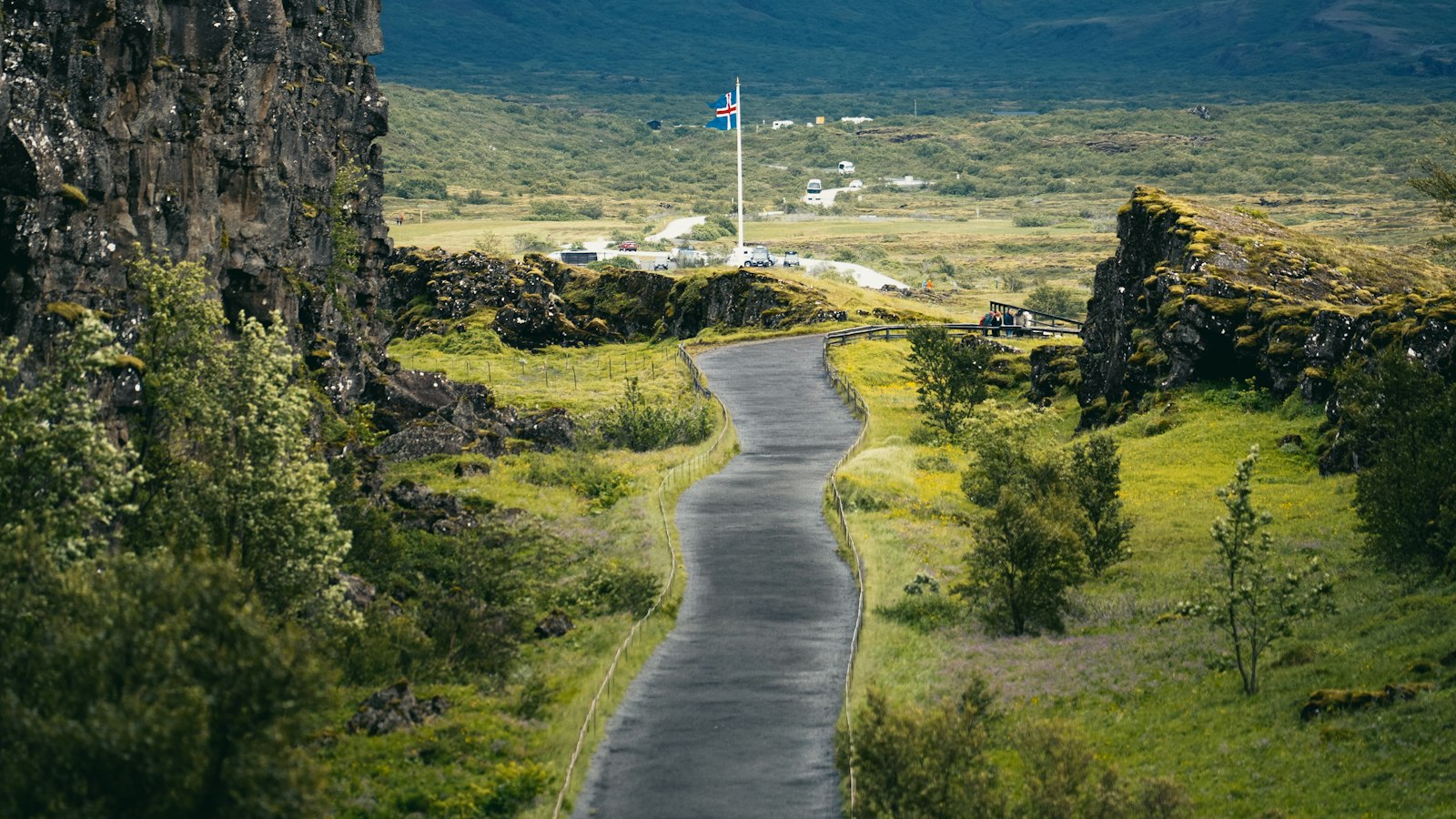
The book records how, after initial settlement, Icelanders established their legal system by adapting laws from Norway, introduced by Úlfljótr. Grímr Goatshoe (or Goatbeard) is described as travelling through the country to find a central meeting place for a national assembly. This led to the formation of the Alþingi at Þingvellir, an institution frequently described as the world’s oldest parliament.
Íslendingabók also highlights solutions to practical problems, such as the correction of the calendar by adding a week every seven years, ensuring seasonal alignment. Another section details the division of Iceland into judicial quadrants when the original local assemblies proved too complex for legal proceedings.
Elsewhere, Ari tells of journeys beyond Iceland, including the discovery and settlement of Greenland around 985 by Norse voyagers, and the traces they found of earlier inhabitants. The account of Iceland’s conversion to Christianity at the turn of the first millennium stands out: after considerable tension, a compromise led by the pagan lawspeaker Þorgeirr resulted in nationwide conversion, though some traditional practices were at first retained before being abolished.
Short, detailed, and grounded in the voices of both witnesses and elders, Íslendingabók is still judged by historians as the most authoritative narrative of Iceland’s formative centuries.
Sources
- Wikipedia
- Wikipedia (Icelandic) in Icelandic


