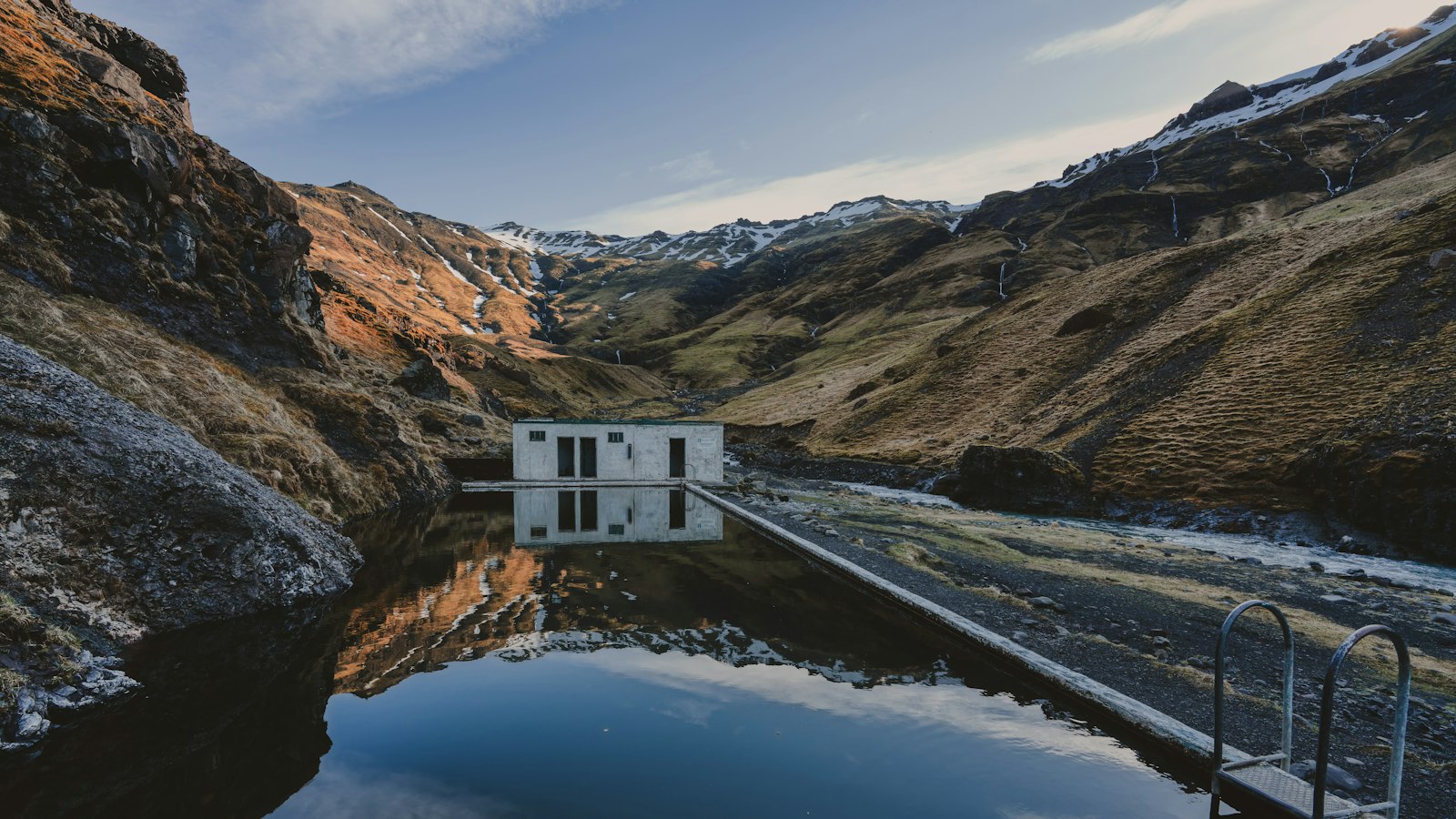
Natural hot springs are a defining feature of Iceland’s landscape. Heated by Earth’s geothermal energy, these pools are found throughout the country, standing out for their consistently warm water temperatures, which often hover around 38 degrees Celsius (100 degrees Fahrenheit). Their presence is a direct result of Iceland’s unique geology.
Geothermal origins and Iceland’s location
Iceland is situated on the Mid-Atlantic Ridge, the boundary between the North American and Eurasian tectonic plates. This position divides the country between the two plates and leads to significant volcanic activity. When water interacts with the heat from magma chambers near the surface, it becomes naturally heated and emerges as hot springs. The number and distribution of these springs across Iceland can be traced to the correlation between volcanic areas and geothermal hotspots.
Several factors determine the temperature of each hot spring. The main elements include the proximity to a heat source, the flow rate of the water, and the influx of colder water that may blend with the heated water. The interplay of these factors results in a wide variety of springs, ranging from cooler pools suitable for swimming to hotter springs meant for shorter soaks or simple viewing.
Health-related uses and social traditions
Icelandic hot springs attract visitors not just for their scenic settings, but for the potential well-being associated with bathing in geothermal water. The high mineral content of many springs (such as sulfur and silica) is often highlighted for its skin-softening effects and the potential to ease muscle tension. Immersion in warm water can help promote circulation and relaxation, and many people find the experience restorative.
Traditionally, these communal pools have played a significant social role in Icelandic life, providing a space for gathering and conversation. The combination of the physical properties of the water and the social atmosphere has contributed to the enduring popularity of hot springs across Iceland’s towns and rural areas.
Hot springs often offer a humid environment, which some find beneficial for easing congestion and improving respiratory comfort. Whether at modern facilities or remote natural pools, the experience is commonly described as calming and supportive of overall well-being.
Practical considerations for visiting hot springs
Not every hot spring in Iceland is the same. While some have comfortable temperatures suitable for bathing (typically between 36 to 40 degrees Celsius, or 97 to 104 degrees Fahrenheit), others are far too hot for safe entry. Several hot springs are free to access, though popular options with added facilities (like the Blue Lagoon) require an entrance fee.
Swimsuits are required at all public hot springs and bathing pools in Iceland, though women are not required to wear a swimsuit top. Most facilities ask visitors to shower before entering the water, as part of Icelandic bathing etiquette.