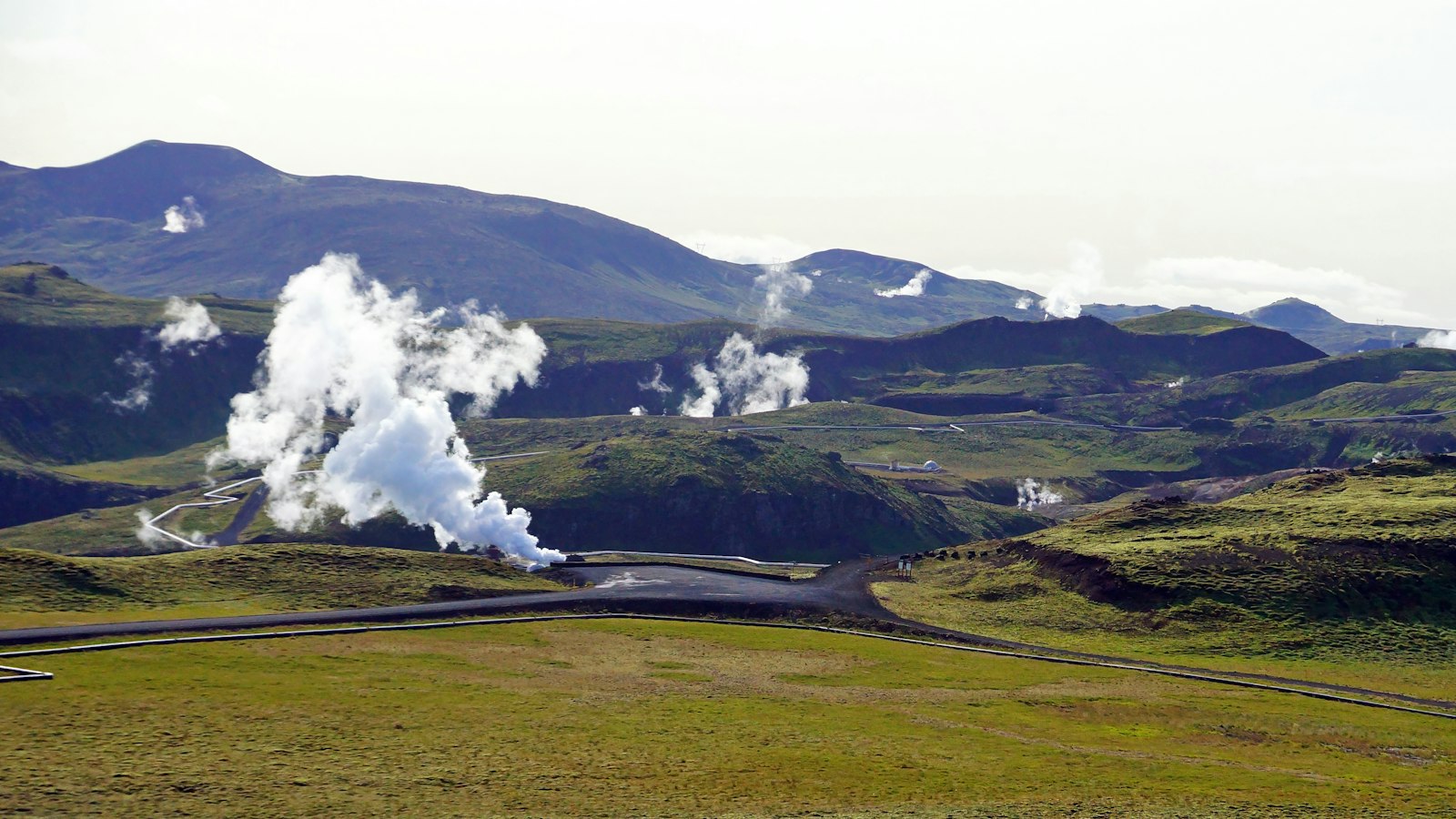
Across southwest Iceland, an innovative response to climate change is playing out beneath the surface. Carbfix, an Icelandic company established in 2007, uses the country’s distinctive volcanic rock to tackle greenhouse gas emissions with an approach grounded in geology and chemistry. The process transforms carbon dioxide (CO2) into stone, promising a lasting way to store harmful gases that would otherwise enter the atmosphere.
A subterranean transformation
Carbfix’s approach rests on the reactive qualities of basalt, a type of volcanic rock common in Iceland. Here, scientists capture CO2 emissions, dissolve them in water, and inject the resulting mixture deep underground. In these basalt formations, the dissolved gas reacts with minerals present in the rock, forming stable carbonate solids such as calcite, magnesite, and siderite. In laboratory terms, this means the captured CO2 no longer poses a threat, it has become part of the geology.
Early results were striking. In a 2012 pilot, 200 tonnes of CO2 were pumped into basalt beneath southwest Iceland. By 2016, data showed that over 95% of the injected carbon had become mineral within just two years. The process requires substantial water: 25 tonnes for every tonne of CO2, but the trade-off is near-permanent removal of the greenhouse gas.
From power plants to the future
This technology is already at work capturing emissions from some of Iceland’s geothermal power plants. At the large Hellisheiði Geothermal Power Plant, both carbon dioxide and hydrogen sulfide are collected from the emission stream, mixed with water, and injected nearly three-quarters of a kilometre below ground. Since 2014, about a third of CO2 and the majority of hydrogen sulfide produced by the plant have been captured and locked away in stone.
Carbfix is scaling up. Projects at Hellisheiði intend to capture nearly all of the plant’s emissions in the coming years, increasing the annual CO2 stored to as much as 40,000 tonnes. New methods have included direct air capture technology, in which machines draw CO2 straight from the air before it is mineralised underground. The Orca and Mammoth plants in Hellisheiði mark the world’s first commercial attempts to permanently store directly captured atmospheric CO2.
Beyond emissions capture, Carbfix’s work is an example of international cooperation in scientific research and climate solutions. Backed by support from Reykjavik Energy, European institutions, and scientific organisations in the United States and France, the project also aims to train researchers in these cutting-edge techniques.
The application and expansion of this mineralisation process is closely watched, from the geology that makes it possible to the measures taken to prevent side effects such as induced earthquakes. Carbfix’s workflow now includes careful management of injection rates to reduce seismic events, setting benchmarks for similar projects worldwide.


