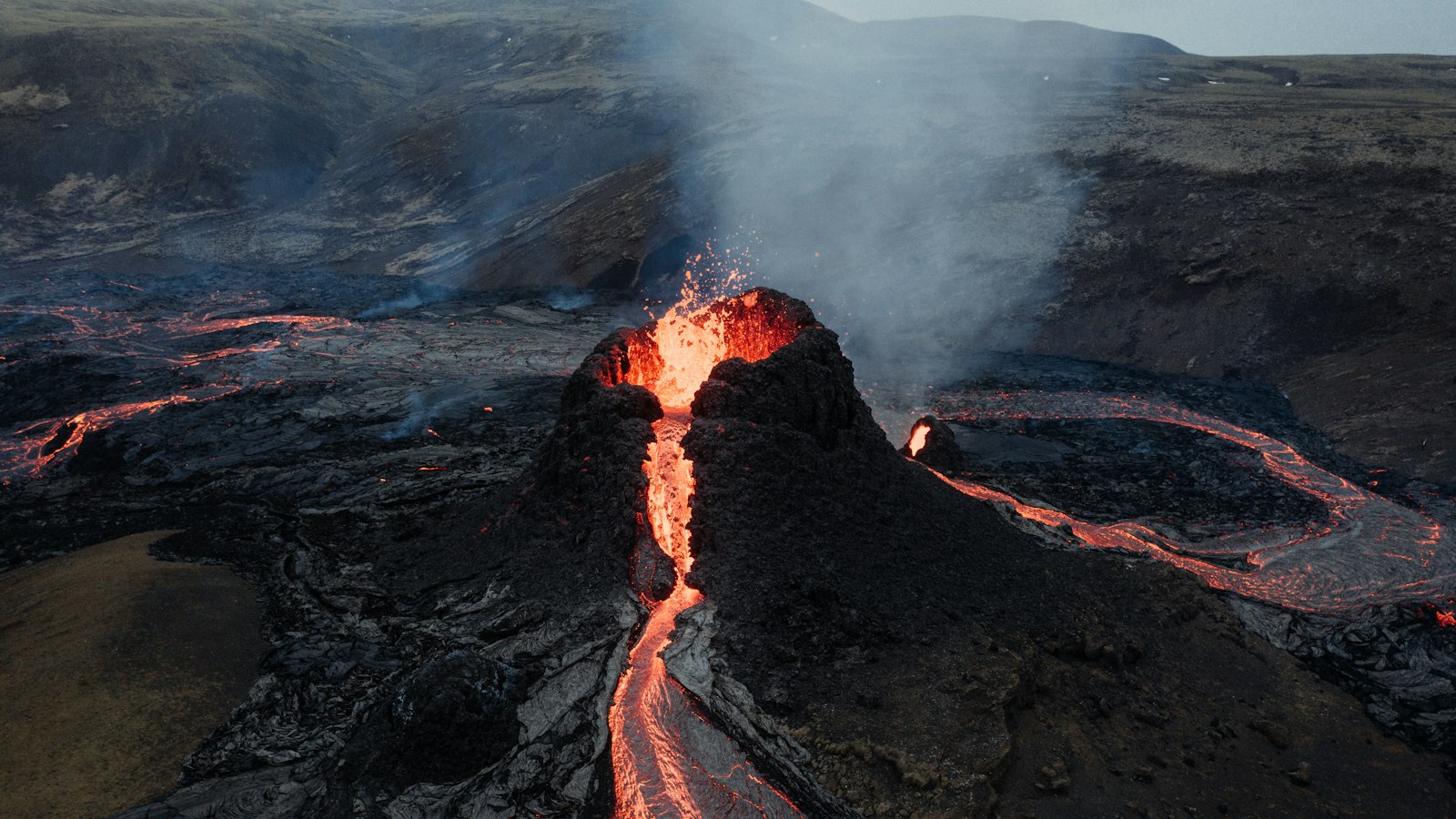
Jósepsdalur, pronounced [ˈjouːsɛpsˌtaːlʏr̥], is a compact valley with a length of about two kilometres, shaped like a gentle U and set between volcanic landscapes in the southwest of Iceland. Defined by the surrounding Bláfjöll mountains, the valley sits up on Hellisheiði, lying to the east of the prominent volcano Vífilsfell. Though remote, it is just 25 kilometres from Reykjavík, placing it within easy reach of Iceland’s capital yet worlds away in character.
A meeting point of old routes and stories
Historically, Jósepsdalur’s position beside Ölfusskarð, an ancient mountain pass, made it a waypoint between the southern lowlands near Hveragerði and Reykjavík. Generations have crossed this area, which sits within what is today the Selvogshreppur municipality, traversing from Ölfus to the capital before modern roads were built.
Alongside geographic importance, the valley has collected folk tales. One lingering story describes a troll woman living in a cave in Jósepsdalur, adding a note of supernatural to the terrain. Another, explaining the valley’s name, tells of a man named Jósep said to have lived here. According to the account, his intense swearing and blasphemy led to disaster: the devil swallowed up Jósep, his family and their farm. This dramatic saga found an echo in the poem “Jósepsdalur” by Grímur Thomsen.
Nature and activity past and present
The land’s topography has long attracted physical pursuits. Between 1936 and more recent times, ski lifts and a ski school operated in the valley, drawing winter sports enthusiasts. While skiing facilities have since moved northward into the Bláfjöll mountains proper, the landscape continues to welcome activity. Motorsport is now among the pursuits practised in Jósepsdalur’s rugged openness.
Hiking trails trace old and new journeys across the region. One route heads up Vífilsfell volcano from the valley. Another courses over the Ólafsskarð pass, then on to Leitin, a shield volcano nearby, and joins the wide-reaching Reykjavegur route. The trail system connects to historic sites such as the craters Syðri Eldborg and Nyrðri Eldborg. These craters erupted around the year 1000, producing the Kristnitökuhraun lava field in an era of deep change for Icelandic society.
In Jósepsdalur, past and present seem to meet: legends shape its identity as much as the volcanic slopes, and the spirit of movement continues from ancient routes to modern sport.


