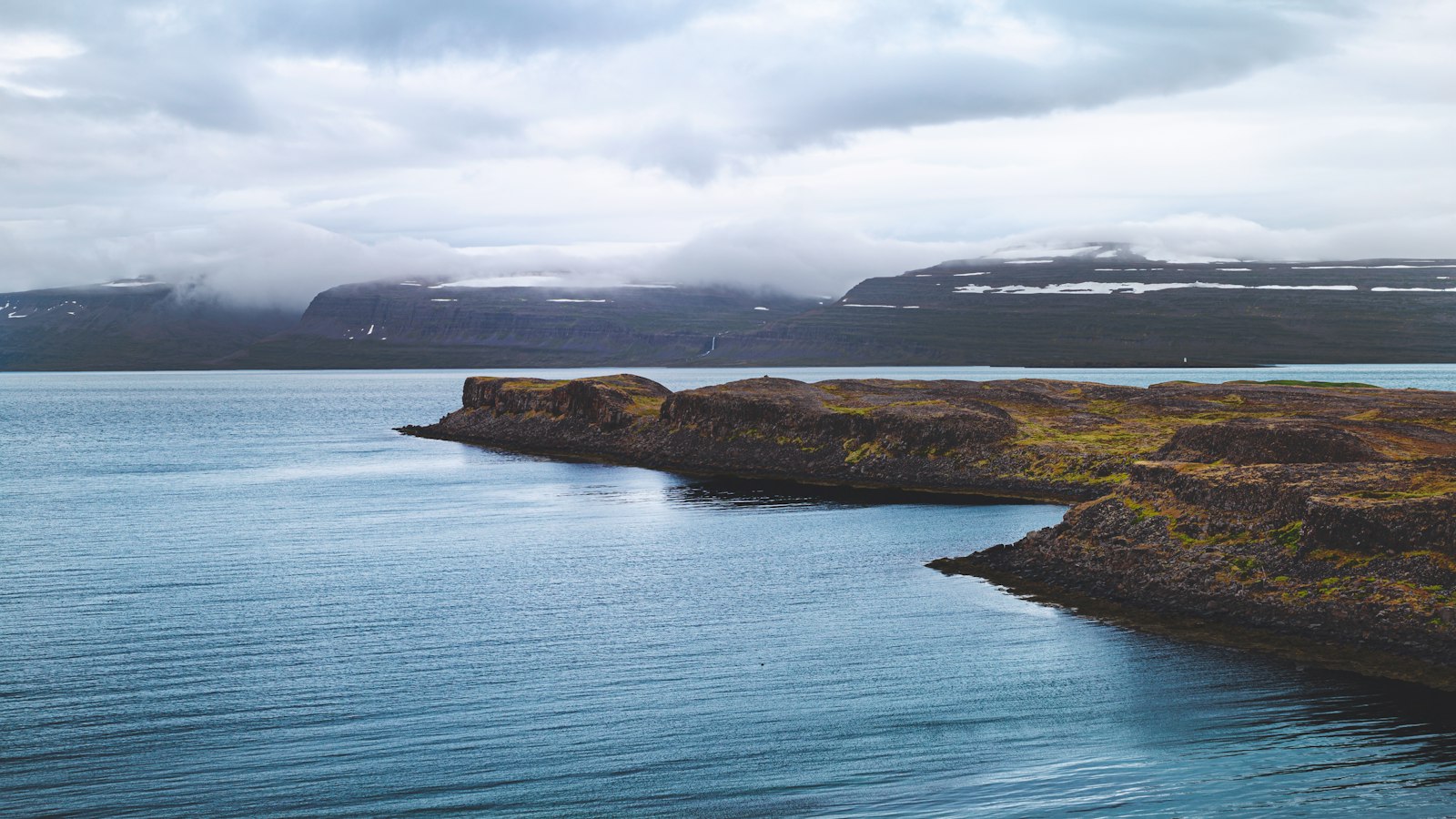
Flatey, whose name means “flat island” in Icelandic, lies among a cluster of about forty islands within Breiðafjörður in Iceland’s northwest. Most of the island is broad and level, with only a gentle ridge running along its length and barely any significant slopes. At roughly two kilometres long and half a kilometre across at its widest, it is the largest island in its group.
Formed out of basalt layers dating from the Miocene epoch, Flatey’s landscape is the result of powerful forces. During the last Ice Age, erosion from glaciers wore down old volcanic highlands, eventually creating the fjord and its islands. The hard basalt is some 11–12 million years old. Traces of older volcanic systems remain on land nearby, with unusual rock types such as rhyolite marking former volcanic centers northeast of the island.
Archaeological finds and historical records tie Flatey’s settlement back to the early medieval period. The island’s initial settler, Þrándur mjóbeinn, arrived during the Age of Settlement, drawn by the island’s proximity to fishing grounds and its natural, sheltering harbour.
Throughout its history, Flatey has stood out within Breiðafjörður for its size and accessibility. In 1172, a monastery was established at what is now called Klausturhólar on the island’s main ridge, although it stood for little more than a decade. During the Middle Ages and into early modern times, Flatey saw periods of commercial activity and population growth. It received official recognition as a trading centre in 1777, becoming the hub for surrounding islands and nearby regions on the mainland.
Foreign merchants, including Dutch and German traders, conducted business in Flatey, especially during the seventeenth century when trade monopolies were introduced in Iceland. Notably, a Dutch trading vessel armed with 14 cannons sank at the island in 1659. Two shipwrecks from the eighteenth and nineteenth centuries still rest in the waters near Flatey.
Flatey’s population changed dramatically over time. Once home to far more residents relative to its size, it began to decline due to shifting patterns in work and the economy. Today, only a handful remain through the winter. During summer, houses fill again as second-home owners, locals and some foreign visitors return.
Life on Flatey revolves around a single road that connects the ferry landing to the older part of the village, where historic, colourfully painted houses line the route. The island’s traditional economic life centred on fisheries, bolstered by rich fishing grounds all around. Sheep live on the island, and birds, especially migratory species and puffins, find sanctuary in areas that have been protected since 1975, particularly during nesting season.
The cultural legacy of Flatey is equally unusual for such a small community. Among its highlights are a church built in 1926, with its interior painted in the 1960s by visiting Catalan artist Baltasar Samper, whose mural depicts daily life on the island. Flatey also contains what is considered Iceland’s oldest and smallest library, founded in 1864, which was once home to the largest surviving medieval Icelandic manuscript, known as the Flatey Book. The intertwined story of natural resilience and shifting human fortunes continues, as the island alternates between quiet winters and social summers.
Sources
- Wikipedia
- Wikipedia (Icelandic) in Icelandic


