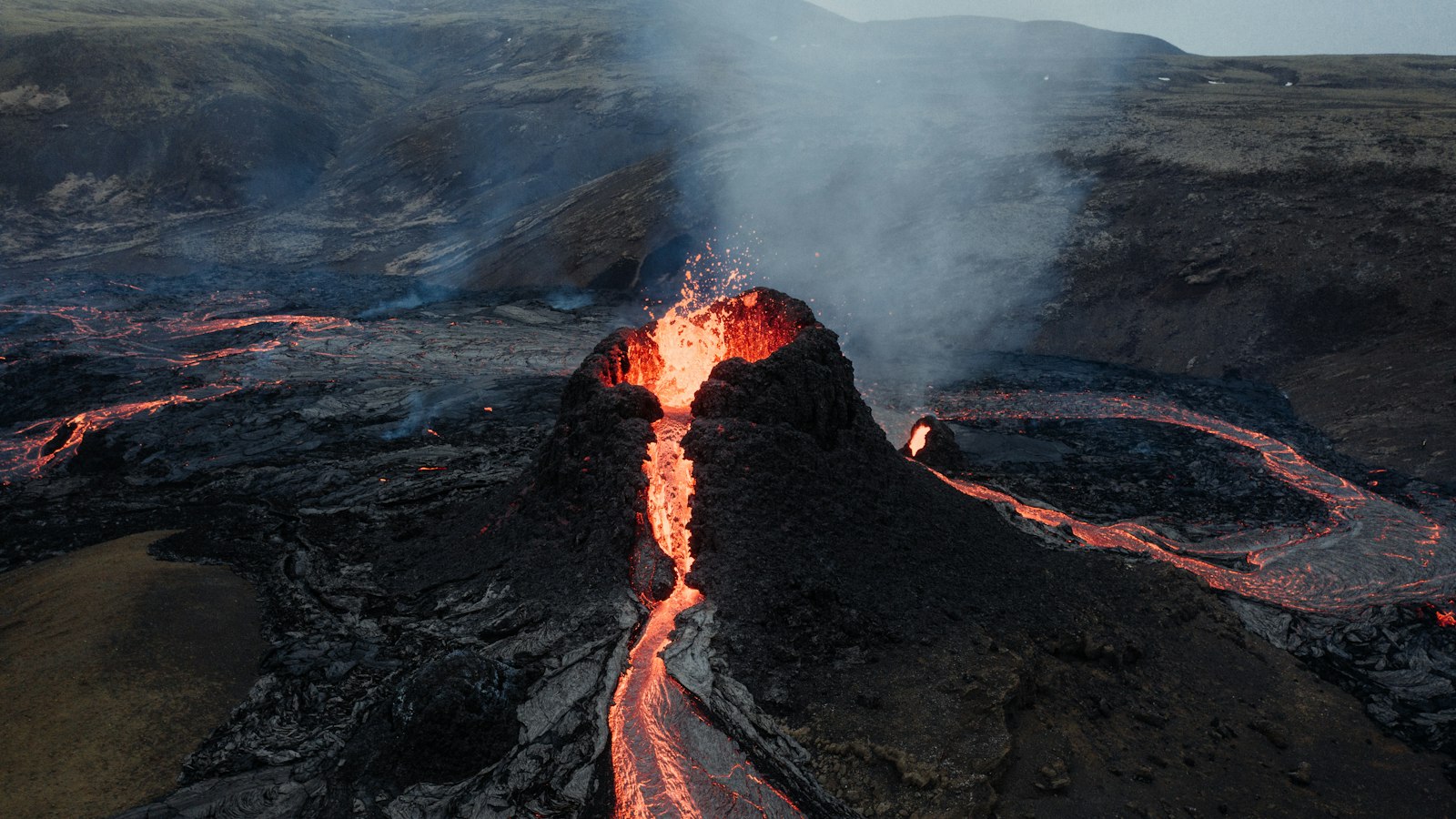
Few features shape Iceland’s surface as dramatically as fissure vents. These linear volcanic openings, sometimes stretching for many kilometres, channel molten basalt directly from deep magma reservoirs to the island’s surface. Unlike the familiar cone-shaped volcano, a fissure vent does not build a single mountain but instead generates wide sheets of lava that can forever change the landscape.
Where the ground pulls apart
The central geological stage for Iceland’s fissure vents is its position atop the Mid-Atlantic Ridge. Here, the Eurasian and North American tectonic plates are slowly moving away from each other. Along these rift zones, fissure systems open parallel to the plate boundaries. Each new volcanic event often erupts not from the same vent as before, but from a new fracture, sometimes just a few hundred metres away from its predecessor.
The earliest moments of a fissure eruption see lava pouring out along the length of the vent, initially in open channels and later through developing lava tubes. Over time, the activity usually becomes concentrated around one or more openings, sometimes forming low hills of fused lava fragments known as spatter cones. These can align to create crater rows, distinct chains of craters on the surface. Some of Iceland’s most profound geological features, such as the canyon Eldgjá and the Laki fissures, developed this way.
Fissure vents in Icelandic history
The influence of fissure vents spans from the ancient to the recent. The Laki fissures, which are linked to the Grímsvötn volcanic system, were responsible for one of history’s great lava outpourings. In 1783, over several months, Laki produced roughly 12–14 cubic kilometres of basaltic lava, leading to the formation of a vast lava plain. Perhaps even greater was the Eldgjá eruption of 934–940, part of the Katla volcanic system, which released around 18 cubic kilometres of lava.
Eruptions continue into the present era. In September 2014, a fissure eruption broke out at Holuhraun, itself a site shaped by eruptions in the previous centuries. Part of the Bárðarbunga volcanic system, this event echoed the ancient patterns of lava flow and land reformation that have played out across the rift zones for millennia.
Beneath these fissures, slab-like intrusions called dikes rise from deep magma stores. They supply magma to the surface, forging a link between Iceland’s seismic heartbeat and its visible expressions in the landscape. While the initial fissures may be hard to spot from above, the lava fields and aligned crater rows left in their wake highlight the enduring impact of these hidden geological engines.
Sources
- Wikipedia
- Wikipedia (Icelandic) in Icelandic


