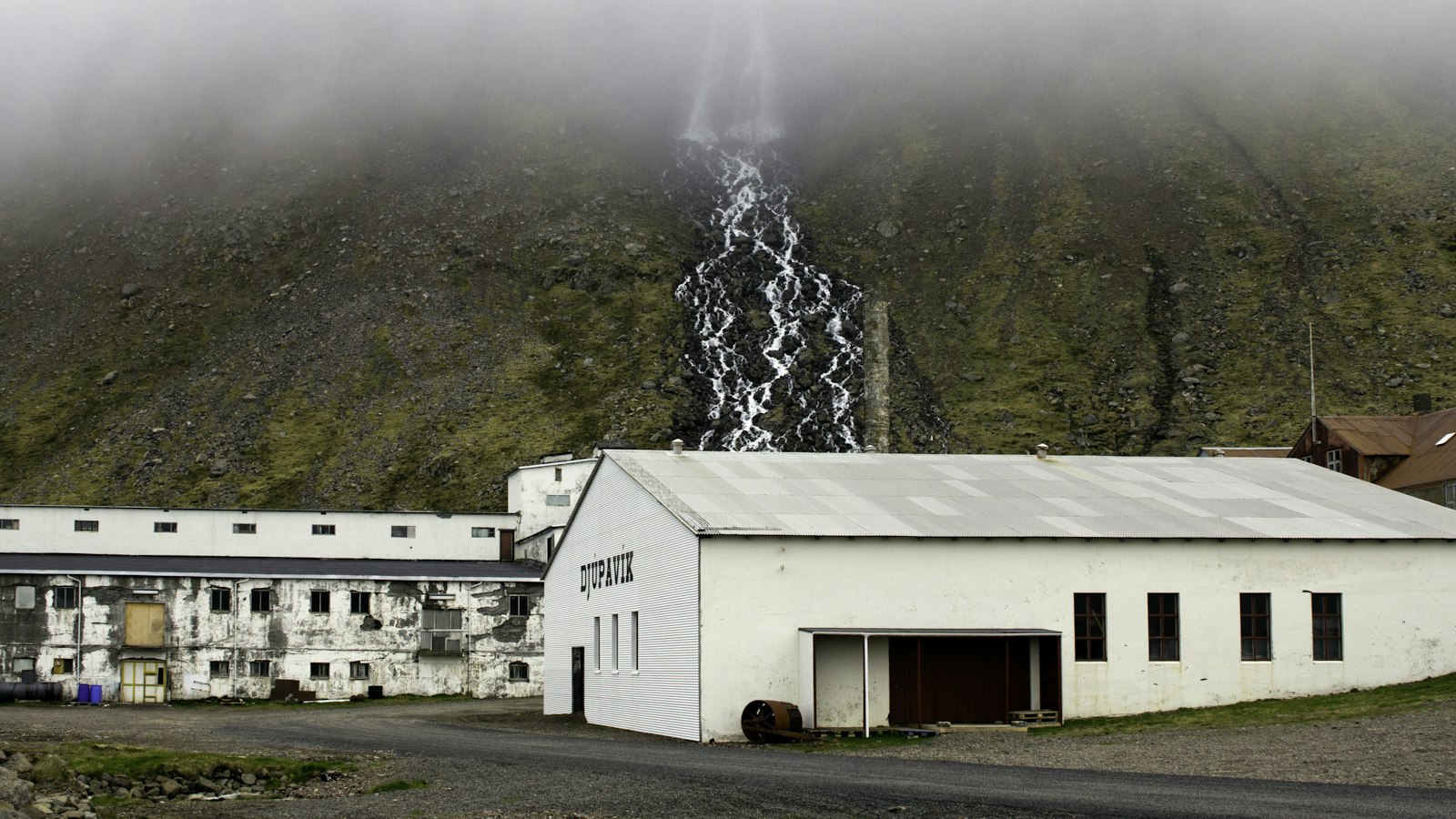
Djúpavík lies in the far northwest of Iceland, at the end of the remote Reykjarfjörður on the Strandir coast of the Westfjords. Today, it is a tiny community with only seven houses, a hotel in a former women’s dormitory, and the ghostly remains of a once-mighty herring factory. Yet, this spot, so isolated that it can be snowbound for months, played a vital part in Iceland’s economic and social history.
A forgotten industrial hub on the fjord
Before the twentieth century, the area saw centuries of small-scale farming, but by 1916, only a single family remained. The winds of change arrived in 1917, when Elías Stefánsson established a herring salting operation and Guðjón Jónsson became its first resident manager, moving to Djúpavík with his family. The enterprise struggled amid war-driven shortages and low fish catches, closing after only two years, as demand for exports plummeted with the end of World War I. For more than a decade, the site lay mostly deserted.
Everything changed in 1934, as new approaches to processing made herring oil factories valuable investments. At a meeting in Reykjavík, Djúpavík Ltd. was founded and soon obtained a substantial loan from a Stockholm bank, allowing construction of an enormous new plant. Engineer Guðmundur Guðjónsson designed the 90-metre concrete factory, in its day the largest of its kind in Iceland, and among the largest in Europe. Every supply had to arrive by ship, as there were no connecting roads.
The plant opened in 1935 as one of a dozen such factories in Iceland, but it stood out for being the first in Europe built for fully automated fish processing. Conveyor belts, steam cookers, presses, and fans whirred together in a system that carried herring from dock, to oil extraction, to meal bag. Its electricity came from repurposed engines salvaged from submarines and an Icelandic patrol vessel.
A vanished way of life
During its heyday from the 1930s to the 1950s, Djúpavík was home to around 260 people, the majority seasonal workers attracted by plentiful factory jobs. Most men worked in the factory’s noisy, coal-fueled interior, while women handled the herring in harsh outdoor conditions. Women’s pay was based on the number of barrels processed, and despite earning less than men, it could exceed the wages available for domestic work in Reykjavik. Accommodation was strictly separated: women slept in the dormitory, while men lodged aboard a docked ship or in other communal spaces. Dances offered rare moments of leisure and social life, though careful steps were taken to keep living spaces segregated.
Declining herring stocks after 1944 brought on the factory’s slow collapse. The plant finally shuttered in 1954, and after a brief attempt to process other fish, Djúpavík’s population dwindled. By the early 1980s, only a single family remained year-round.
Since 1984, Djúpavík’s story has shifted from industry to preservation. The former dormitory was converted into a hotel, and the factory buildings have slowly been restored, mainly through family effort. The original machinery now serves as a reminder of the region’s ambitious, turbulent past, ensuring that this isolated corner of Iceland continues to connect with both its own history and the wider world.
Sources
- Wikipedia
- Wikipedia (Icelandic) in Icelandic


