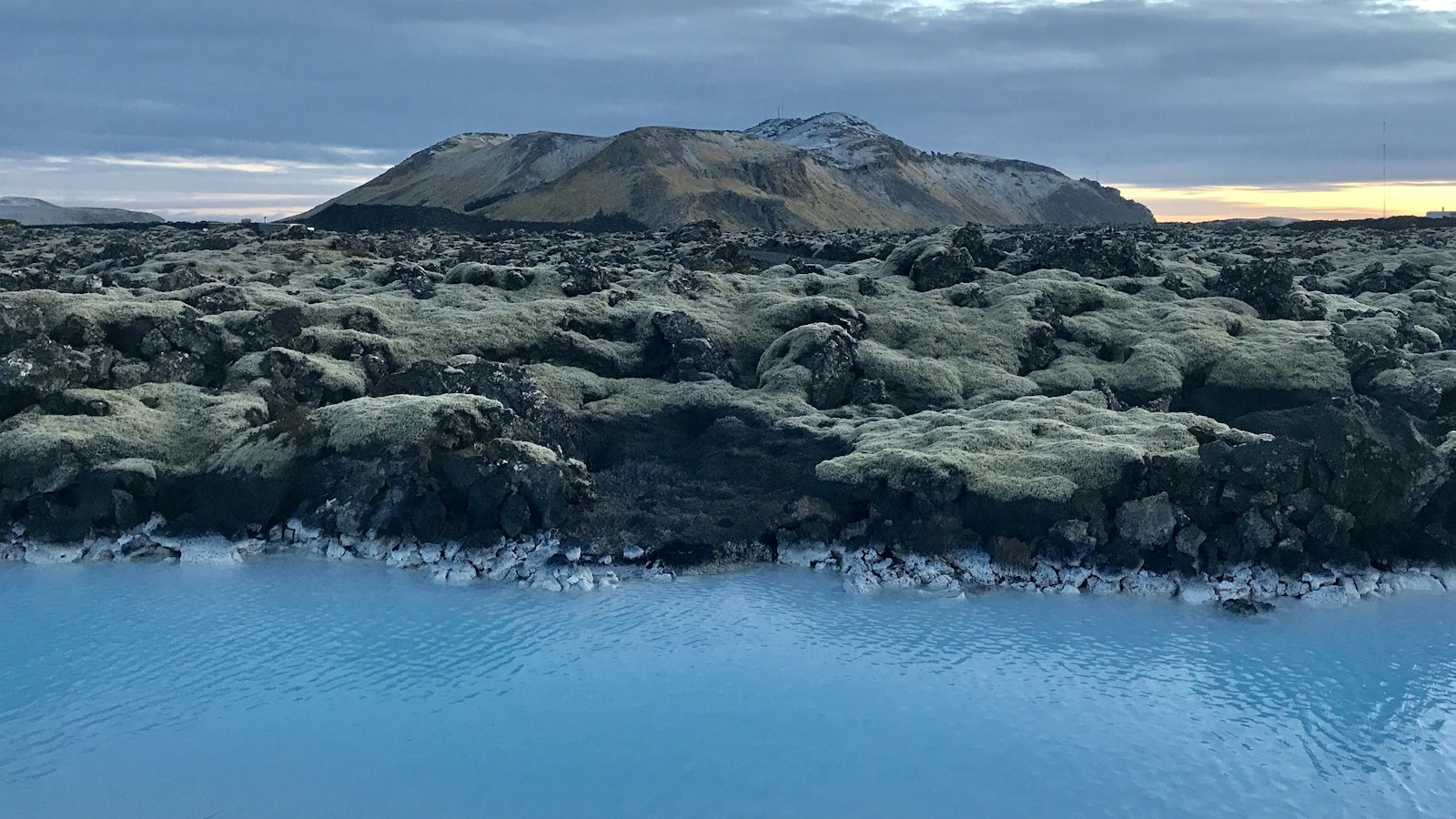
Bláfjöll, whose name means “blue mountains” in Icelandic, form a small but significant mountain range on the southwestern edge of Iceland. Situated on the Reykjanes peninsula about 30 kilometres from Reykjavík, the range is a familiar landmark for inhabitants of the capital and neighbouring communities.
Geographically, Bláfjöll is characterised by a double massif divided on either side of the valley known as Jósepsdalur on Hellisheiði. The entire range stretches roughly nine kilometres in length. The western mass includes notable peaks like Vífilsfell and Bláfjallahorn, which reaches as high as 702 metres, while the eastern end extends from Sauðadalahnúkur to Kerlingarhnúkur. The highest summit in the range is Hákollur, standing at 685 metres.
A landscape shaped by ice and fire
Bláfjöll’s very existence is tied to Iceland’s complex volcanic past. The mountains are recognised as Pleistocene subglacial volcanoes, which means they were originally formed under glaciers before the last ice age receded. Today, they are part of the Brennisteinsfjöll volcanic system, a reminder of southwest Iceland’s dynamic geological landscape.
The slopes of Bláfjöll are best known today as the most popular ski area for Reykjavík’s residents. Iceland’s largest ski resort is set on these slopes, which range in altitude from 460 to 700 metres. Opened in the 1970s, the area initially drew skiers to Kóngsgil, later expanding into other runs like Suðurgil and Eldborgargil. There are 15 kilometres of slopes suitable for beginner and intermediate skiers and snowboarders, along with 15 ski lifts including both tow and chair lifts. Facilities include huts with accommodation and restaurants, and the resort also supports night skiing and cross-country trails.
Protected nature on the capital’s doorstep
Bláfjöll holds more than opportunities for sport. Since 1973, a portion of the mountain range has been under nature protection as the Bláfjallafólkvangur, or “blue mountains people’s park.” This area preserves parts of the landscape and makes it accessible for low-impact outdoor activities beyond the ski season. The mountains lie on the border of several municipalities, including Reykjavík, Kópavogur and Ölfus, reinforcing their connection to daily life in the capital region.
Despite their proximity to the bustle of Reykjavík, the Bláfjöll appear changing and remote, shaped by distant volcanic eruptions and today adapted for winter recreation. The mountains remain an enduring feature of southwest Iceland, blending ancient geology with modern Icelandic culture and leisure.
Sources
- Wikipedia
- Wikipedia (Icelandic) in Icelandic


