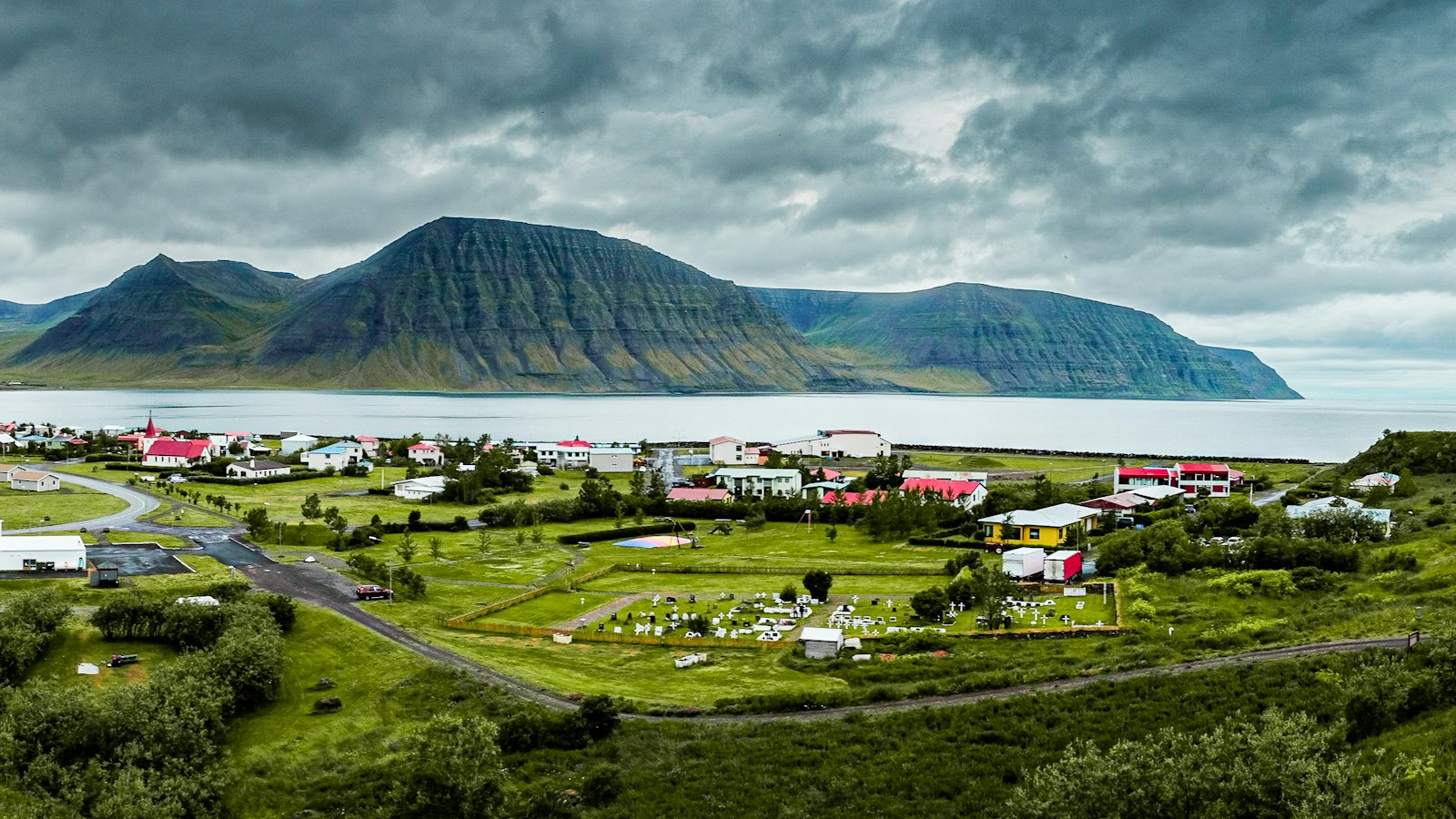
Each Easter weekend, the small town of Ísafjörður in Iceland’s Westfjords transforms into a meeting point of sound and community thanks to Aldrei fór ég suður. Taking its name from a song by Bubbi Morthens, the title means “I never went south,” reflecting a local pride and a commitment to celebration outside the capital. Since 2004, this festival has been a fixture in the Icelandic calendar, building a reputation for its welcoming spirit and broad musical reach.
Roots in collaboration and community
The origin of Aldrei fór ég suður began far from Ísafjörður’s harbour, when musician Mugison (Örn Guðmundsson) and his father, Guðmundur Kristjánsson, returned from performing at a London music festival in 2003. Inspired to bring some of that spirit home but determined to do it on their own terms, they launched the first event the following year. From the start, the festival stood apart for its radical approach: attendance has always been free, and performers, ranging from major names to new acts, are unpaid. This philosophy of openness and collective effort is felt across the whole weekend.
The festival’s location within Ísafjörður has shifted over the years, but it is currently based around the harbour area, making use of available local venues. Aldrei fór ég suður’s link to radio and television is another of its signatures: every edition is broadcast live across Iceland, reaching listeners and viewers on Rás 2 and RÚV. This allows the event to resonate far beyond the Westfjords, connecting communities near and far to the yearly gathering.
A stage for the renowned, and the unexpected
Over two decades, Aldrei fór ég suður has hosted an impressive variety of artists. Some of Iceland’s most internationally recognised musicians, including Sigur Rós, Of Monsters and Men, Emiliana Torrini, and FM Belfast, have appeared on its stages. It is not uncommon to see a mix of established names such as Hatari, Bríet, or Emiliana Torrini, alongside up-and-coming bands, niche performers, and genre-spanning collaborations. This diversity reflects the festival’s grassroots origins and its place as a testing ground for creativity.
When the COVID-19 pandemic disrupted gatherings across Iceland and the world, the festival transitioned to online and television broadcasts in 2020. One year later, in 2021, it paused entirely for the only time in its history. These changes reinforced how deeply its spirit is tied to bringing people together, in-person or over the airwaves.
Seen from the outside, Aldrei fór ég suður is more than a music festival. It is a reflection of Icelandic community, shaped by resourcefulness, neighbourly energy and a shared love of music. By refusing commercialisation and insisting on accessibility, it offers a distinctive experience, echoing the rhythms and friendships of Ísafjörður itself.
Sources
- Wikipedia
- Wikipedia (Icelandic) in Icelandic


