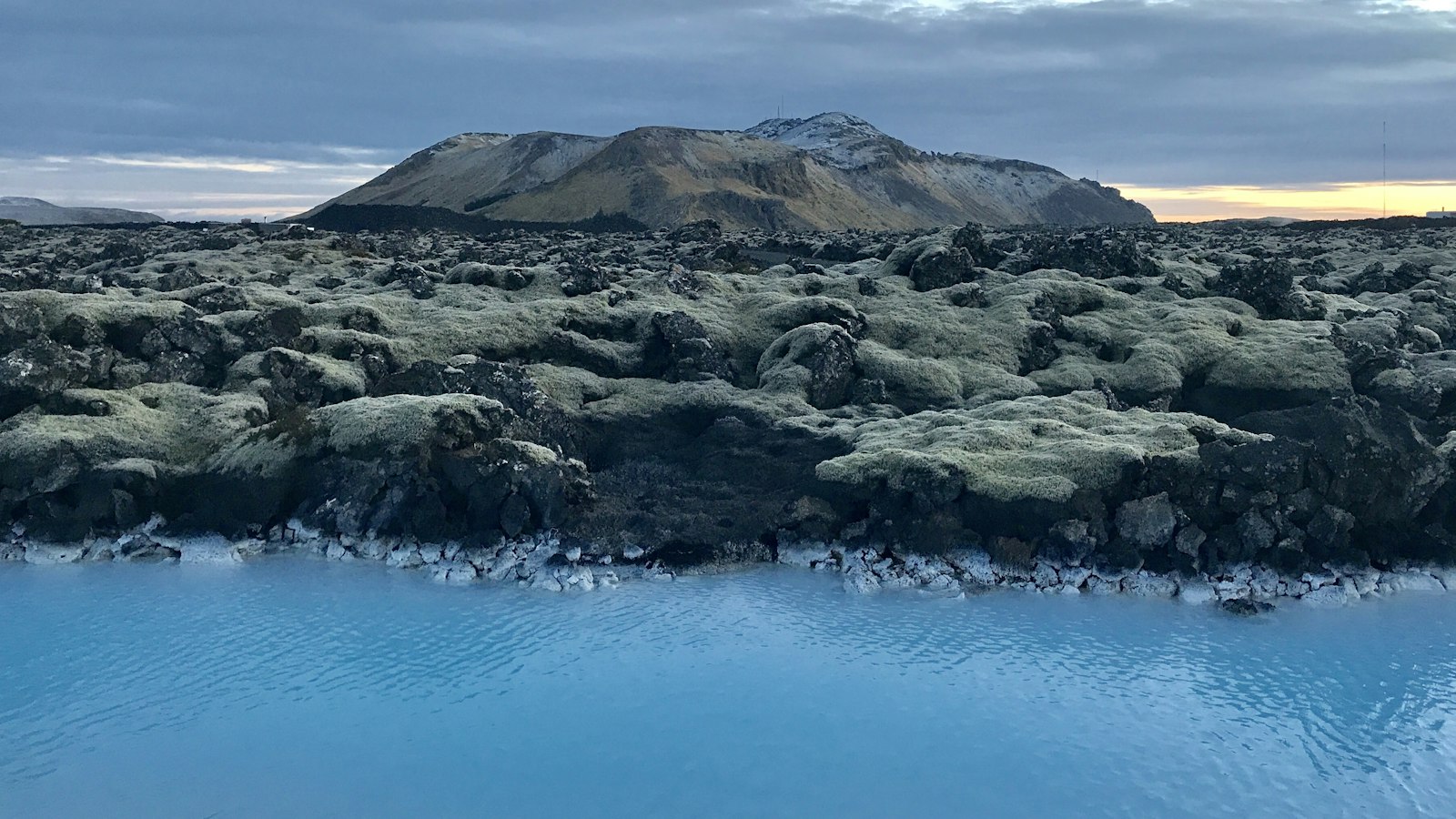
In late 2023, Iceland’s Reykjanes Peninsula entered a fresh phase of volcanic unrest not witnessed in centuries. Just north of the coastal town of Grindavík, a series of eruptions began at the Sundhnúksgígar crater chain, a stretch of ground whose history mirrors the restless interaction of fire and earth in Iceland’s southwest.
What unfolded was not a solitary eruption but a sequence of nine volcanic events between December 2023 and August 2025. These eruptions, part of the Eldgosin við Sundhnúksgíga 2023–2025, arrived after an intense earthquake swarm began in the Eldvörp–Svartsengi volcanic system at the end of October 2023. By November, tens of thousands of tremors had rattled the peninsula, culminating in land subsidence and the evacuation of Grindavík when a graben, a valley formed by the extension of the ground, split across the landscape.
From earthquake swarms to lava flows
The first eruption broke out on 18 December 2023, lasting three days, and was quickly followed by more. Each event was preceded by the accumulation of magma, molten rock, 4 to 5 kilometres below Svartsengi, with subsequent land uplift and deflation as magma surged upward. Eruptions were varied in scale and impact: the second, in January 2024, opened a fissure mere metres from Grindavík, destroying houses and forming yet another graben. The third, in February, disrupted hot water supplies for days when a pipeline from Svartsengi power station was damaged.
Over the following months, eruptions carved out new features and sent lava over roads and power lines. The largest event so far occurred in August 2024, releasing over 61 million cubic metres of lava and causing 40 centimetres of land subsidence, but it spared infrastructure due to its location. Notable was the November 2024 eruption, when the Blue Lagoon’s parking lot disappeared beneath fresh lava and defences near the area came under threat. The cycle continued through to July–August 2025, each eruption testing the region’s developing safety measures and resilience.
A volcanic cycle steeped in history
The Sundhnúksgígar crater row itself is ancient, dating back about 2,420 years, its lava once flowing all the way to the sea near Grindavík. The highest peak, Sundhnúkur (literally “passage peak”), stands at 134 metres and has long served as a distinct navigation mark for sailors arriving at Grindavík’s rocky harbour.
What makes the recent activity significant is its place within a broader cycle. The Reykjanes Peninsula has seen alternating centuries of volcanic activity and calm, with the last major eruptive period (the Reykjanes Fires) ending in 1240. The 800-year quiet that followed only began to stir in 2019, with renewed earthquakes and eruptions across the region. Scientists note that such volcanic cycles typically last four to six centuries, shift locations every few decades, and can feature breaks of a hundred years or more.
As of mid-2026, ground uplift and magma accumulation continued, suggesting the story is not yet complete. The magma reservoir beneath Svartsengi continues to refill, and experts consider further intrusions, and potentially more eruptions, likely in the years to come. These events offer a striking illustration of the geological dynamism that has shaped, and continues to shape, southwestern Iceland.
Sources
- Wikipedia
- Wikipedia (Icelandic) in Icelandic


