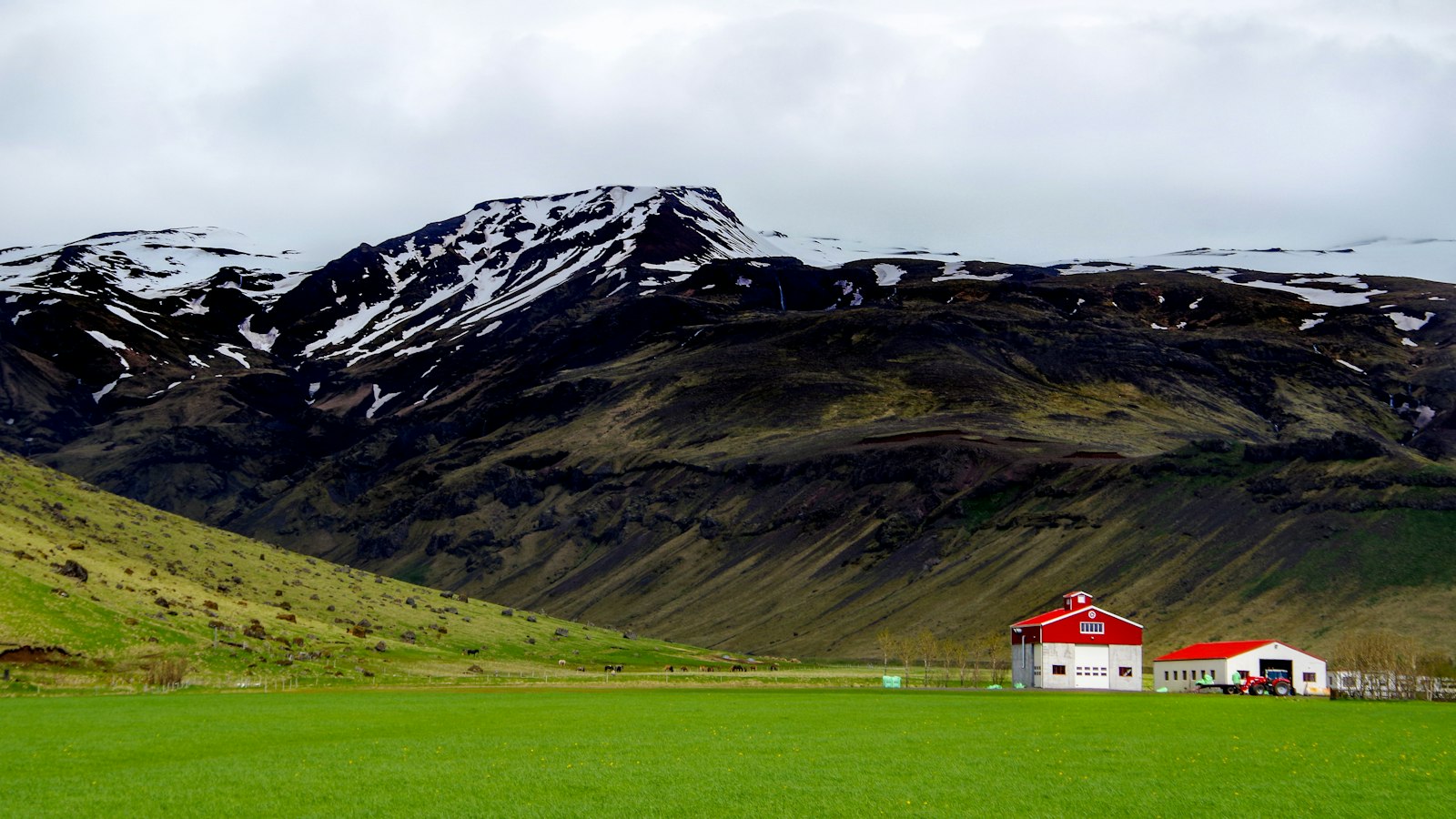
In the quiet valley of Haukadalur in the Dalasýsla region stands one of Iceland’s most meaningful historic sites: Eiríksstaðir, the former homestead of Eiríkr Þorvaldsson, better known as Erik the Red. Here, in this northern landscape, layers of earth have kept the story of a family whose journeys eventually reached the shores of North America.
A saga of settlement and exile
According to medieval Icelandic texts such as Landnámabók (the Book of Settlements) and the Saga of Erik the Red, Eiríkr Þorvaldsson made Eiríksstaðir his farmstead with his wife, Þjóðhildur Jǫrundardóttir, having first lived in Vestfirðir (the Westfjords). The family’s time at Eiríksstaðir was short-lived. After a violent dispute that began when his slaves were killed and escalated to Eiríkr killing two men in revenge, he was forced to leave the valley. This event set Eiríkr on his fateful journey westward, which ultimately led to his founding of the Norse colony in Greenland.
Eiríksstaðir is also believed to have been the birthplace of his son, Leif Eiríksson, who would later become known as the first European to reach North America, Vinland, now widely understood as a part of modern-day Canada, some 500 years before Columbus.
Uncovering daily life through archaeology
The site now known as Eiríksstaðir lies within the grounds of the present-day Stóra-Vatnshorn farm. Archaeological interest began in the late 19th century, when local scholars mapped and excavated the ruins. More comprehensive investigations took place in the 20th century, with a significant excavation between 1997 and 2002 led for the National Museum of Iceland. These excavations identified two structures from the Viking Age, the 9th or 10th centuries, making Eiríksstaðir an early settlement site.
The principal building was a modest turf-walled longhouse, around 14 metres long and 50 square metres in area. A long central hearth suggests that daily life centred around warmth and shared meals, with occupants seated along the sides. The construction was simple, and archaeological evidence suggests the site was not occupied for a long period. In 2000, a pit-house was uncovered near the main structure, containing imported stone spindle whorls from Norway; the archaeologist Guðmundur Ólafsson interpreted this small building as a dyngja, or women’s workroom, a reminder of the gendered spaces in medieval Norse society.
Memory and reconstruction
To mark the millennium since Leif Eiríksson’s journey to Vinland, an open-air museum was established near the ruins in 2000. The replica longhouse is constructed using traditional methods, echoing the original and offering a sense of how a frontier Norse home might have looked and felt a thousand years ago. The protected remains of the real farm, lying just 100 metres away, continue to hold their secrets in the turf, linking the story of Viking expansion to a quiet Icelandic landscape.
Sources
- Wikipedia
- Wikipedia (Icelandic) in Icelandic


