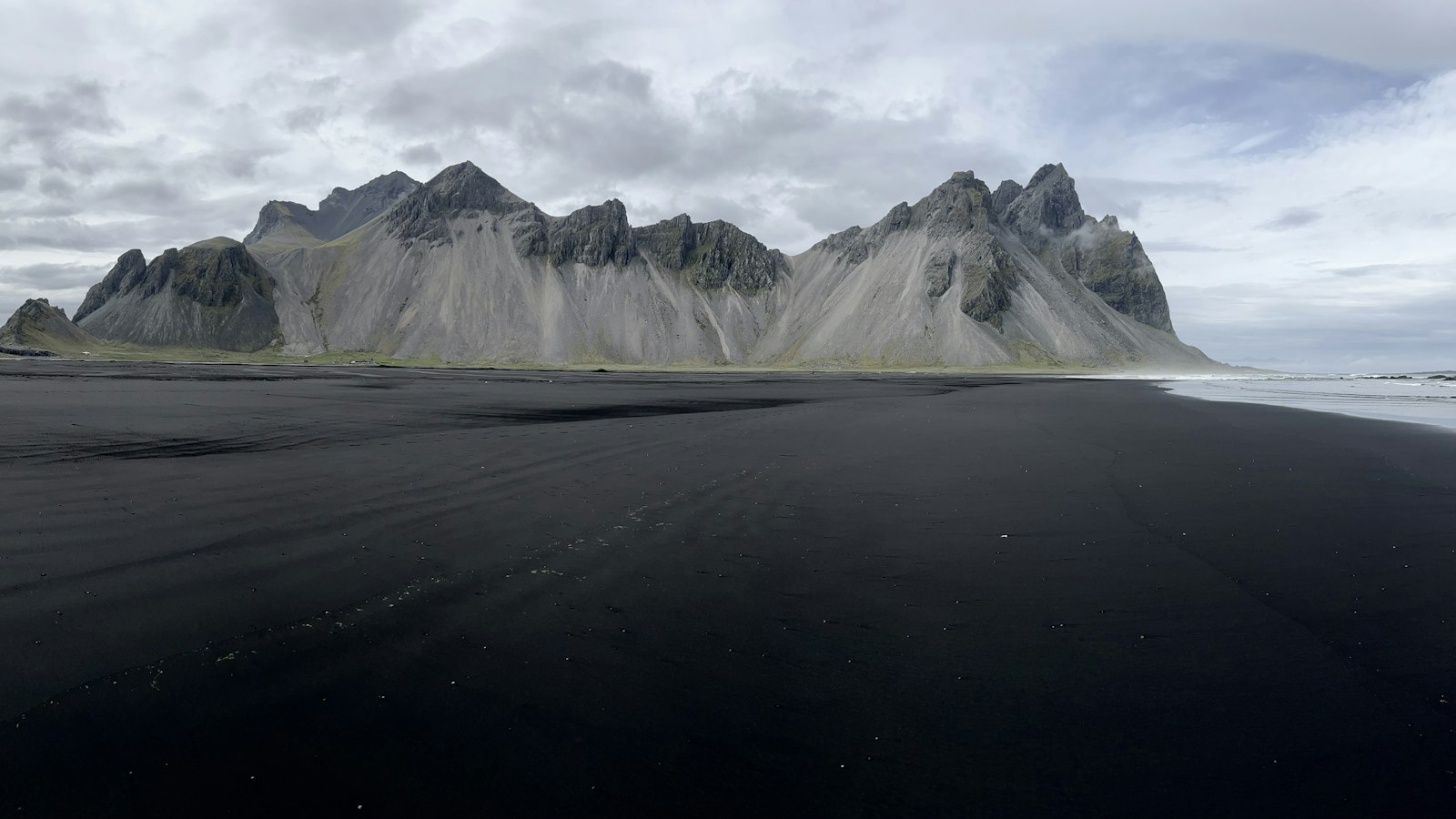
Amid the stark beauty of southern Iceland, Hafursey stands as an inselberg, an isolated mountain that measures 4.8 kilometres long and 3 kilometres wide. Rising 582 metres above the surrounding plains, it is distinct for both its history and its origins beneath the ice.
A mountain formed under glaciers
Hafursey’s geologic story began in the Ice Age, when volcanic eruptions occurred beneath thick glaciers. Unlike Surtsey, the famous island that appeared in the sea, Hafursey’s origins were glacial. It is made of palagonite, a type of rock formed from lava interacting with ice and water. Though it is close to the Katla volcano, Hafursey draws magma from its own source, not directly from Katla. The eruptions that created Hafursey were probably similar to those that formed islands, but the eruption site was buried under ancient ice sheets.
For a time after the Ice Age, Hafursey stood as a temporary island. Remnants of this are still visible in its shape and location. Its relative isolation is the root of its name. Over the centuries, the mountain has been shaped not just by eruptions but by powerful glacial floods, known in Icelandic as jökulhlaups. These sudden releases of meltwater from the Kötlujökull, a side glacier of Mýrdalsjökull, have repeatedly reworked and eroded the terrain around the mountain. The outflow from Kötlujökull during these floods can reach between 100,000 and 200,000 cubic metres of water per second, sweeping across the black sands of Mýrdalssandur below.
Division, pasture, and shelter
Hafursey is roughly triangular, separated by the Klofgil gorge running southeast to northwest. The western portion forms its highest point, Skálafjall, at 582 metres. A second peak, Kistufell, rises to 525 metres in the north. The land around the mountain is notably fertile, and in earlier centuries, nearby farmers from the now-abandoned Hjörleifshöfði farm drove their sheep here for summer grazing.
One cave in Hafursey, called Stúka, was used by travellers for shelter, especially before the construction of a hut at the start of the twentieth century. The main route to southeast Iceland once ran across Mýrdalssandur at Hafursey’s foot, making such refuges essential for those crossing the plains. Today, the area’s quiet isolation contrasts with its historical role as a passage for both people and livestock.
Hafursey’s distinctive look has also caught the eye of filmmakers. The area provided a backdrop for scenes in the Star Wars spinoff film Rogue One released in 2016, confirming its continuing presence in Iceland’s landscape and culture.
Sources
- Wikipedia
- Wikipedia (Icelandic) in Icelandic


