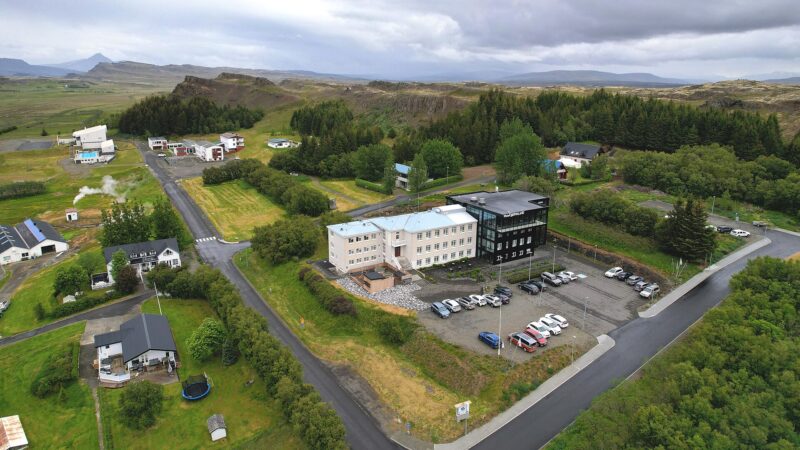
Among Iceland’s oldest manmade structures, Snorralaug in Reykholt, Skorradalshreppur, stands out for both its age and its literary associations. The pool is one of only a few surviving historic bathing springs in the country and has been protected as an archaeological site. Located in the West Iceland region, it reflects centuries of bathing tradition and remains tied to the memory of one of Iceland’s most famous medieval writers.
Historical ties and archaeological features
References to a bathing pool in Reykholt appear in medieval sources, including Landnámabók (The Book of Settlements) and Sturlunga saga. The spring is closely linked to Snorri Sturluson, who lived from 1178 to 1241, with the first records mentioning its use dating back to his era. The pool is thought to have been constructed in the 13th century and features regularly in old documents detailing bathing customs at Reykholt. Historical evidence also suggests that hot water for the pool came from the hot spring Skrifla, via an underground channel approximately 120 metres long. Remnants of tunnels once led from the pool directly to Snorri Sturluson’s house, some of which have been partly excavated.
Structure and preservation
Snorralaug measures about 4 metres in diameter, with depth varying due to its uneven stone floor. Steps descend into the pool, which is built with cut spring stones. The pool is one of four such historic bathing pools in Iceland still in usable condition. Restoration work is commemorated by an inscription on a stone from 1858, left by Reverend Vernharður Þorkelsson. The first descriptive account of Snorralaug appeared around 1724, indicating its significance and continuing interest even centuries after its origin.
Sources
- Wikidata
- Wikipedia (Icelandic) in Icelandic
Facts last reviewed 18 October 2026. Published 19 October 2026.