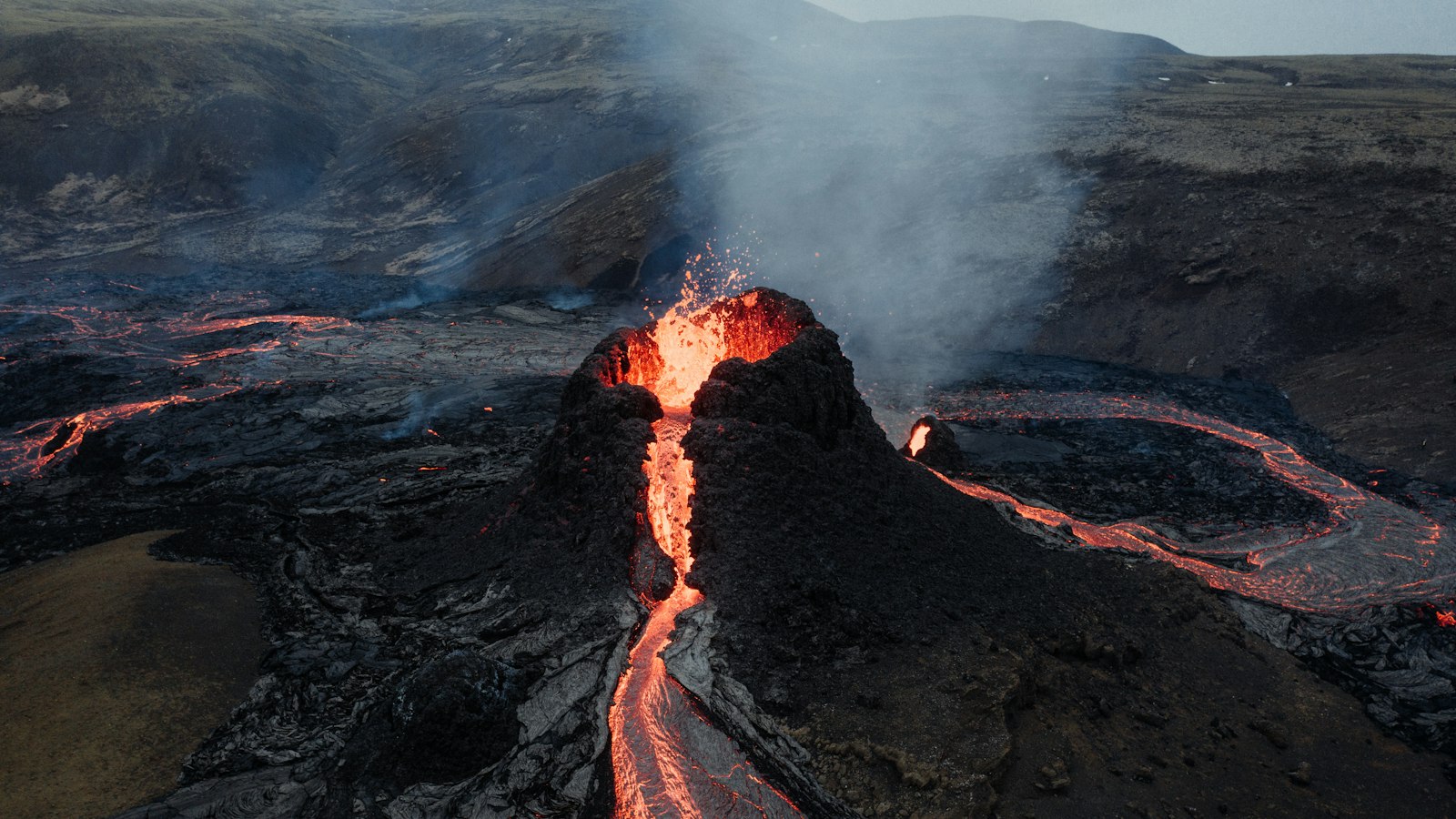
Iceland, with its restless volcanoes and dramatic lava fields, appears at first glance to hold few clues about ancient life. Compared to continents with rich beds of dinosaur bones and petrified trees, the island’s geologically young surface seems almost silent. Yet, hidden between basalt layers, rare fossils narrate a quiet story of lost forests, vanished insects and shifting climates.
Forests beneath the lava
Most of Iceland was shaped by volcanic eruptions, building thick layers of basalt across the landscape over millions of years. Between these hard volcanic layers, bands of reddish silt and sandstone mark ancient soil horizons where life once flourished. Fossilized plant remains are often preserved in these bands. According to geological estimates, an average of five to ten thousand years passed between flows, allowing forests and other vegetation to establish roots before the next eruption.
Plant fossils found in Iceland can be traced as far back as the Miocene, about 15 million years ago. Fossil sites cluster in the west and the Westfjords, where deep sedimentary layers record episodes of milder climates. Some of the richest deposits come from places like Þórishlíðarfjall mountain in Selárdalur and Surtarbrandsgil in Brjánslækur, where ancient leaves and stems are still recognisable. Even more remarkable are the finds of lignite, a type of fossilised wood or peat, rich with conifer remnants such as pine, giant sequoia and larch as well as deciduous trees like beech, chestnut, magnolia and elm.
The mixed forests revealed by these fossils suggest that Iceland once enjoyed a much warmer, temperate, almost North American-style climate. In some locations, paleobotanists have discovered fossil leaves of trees that now grow only in distant deciduous forests across the Atlantic. This points to a time when cooler periods had not yet made the island the windswept landscape seen today, and when a land bridge may have connected proto-Iceland to North America.
Clues from insects and animals
Animals, unlike plants, left far fewer traces. The basalt-rich soils are low in calcium, causing most hard remains to dissolve rapidly. No non-avian dinosaurs have ever been discovered here, by the time Iceland rose from the sea, dinosaurs were already long extinct. Fossils of large land animals are scarce, but there are notable exceptions. In Þuríðargil, Vopnarfjörður, geologists found the shoulder area and scapula of a young deer in sediments dating from more than three million years ago, a rare window into pre-Ice Age wildlife.
Insect fossils are more common in some Miocene and Pliocene deposits. Lignite beds at Brjánslækur preserve beetles, and delicate impressions of scale insects, chironomids (non-biting midges) and aphids have been found elsewhere. The oldest known specimen of the giant bark aphid, Longistigma caryae, was discovered in Hrútagil, Mókollsdalur. Today, this species only lives in North America, deepening the story of ancient biogeographical connections.
Sediments from the Ice Age brought more dramatic changes. Plant pollen from trees such as pine and alder gives way to traces of birch, willow and heather, showing forests shrinking as the island became cooler. Fossilised freshwater animals and marine invertebrates are abundant in Ice Age and younger sediments, especially at sites like the Tjörnes peninsula.
Today, of the nearly 440 species of vascular plant growing wild in Iceland, almost all appear to have arrived from Europe, with just a handful from America. The fossils embedded in the basalt offer a reminder of a much greener past, one where volcanoes paused long enough for forests and strange insects to thrive.
Sources
- Wikipedia
- Wikipedia (Icelandic) in Icelandic


