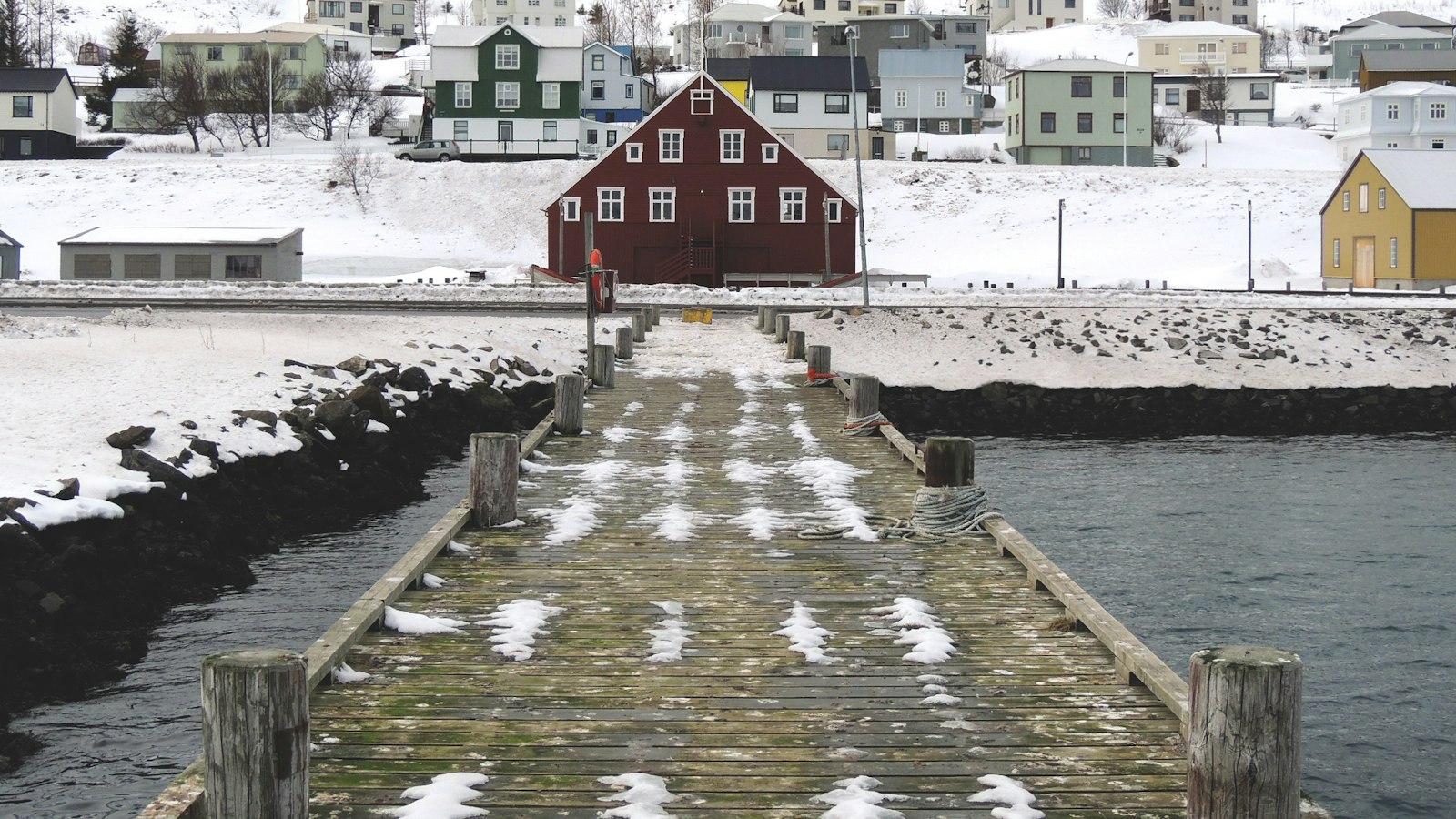
Eyrarbakki is a small village found on Iceland’s southern shoreline, where just over 570 people call home. Settled atop the rugged expanse of the Great Þjórsá Lava field, the village has roots reaching deep into Iceland’s history of seafaring, commerce, and culture.
A port that shaped a region
For many generations, Eyrarbakki served as the most significant port in southern Iceland, drawing farmers from a broad region stretching between Selvogur and Lómagnúpur. Ships docked here, linking the south to the wider world, making it a vital hub for goods and trade under the era of Danish royal monopoly. The town’s importance was such that it once far surpassed Reykjavík in size and influence, and there was even talk in past centuries of Eyrarbakki one day growing into the nation’s capital.
By the early twentieth century, changes in transport and the construction of a bridge over the nearby Ölfusá River shifted commercial activity elsewhere. The harbor, never ideal for large ships, became less busy as other options opened up, and the village’s role as a trading centre faded after about 1925.
Historic houses and coastal culture
Streets here are like a living museum, with carefully maintained houses echoing the days when Eyrarbakki flourished. The oldest building, Húsið (“The House”), stands from 1765, a Norwegian timber kit home now serving as the Árnesinga Folk Museum. Many homes have found new life as summer retreats, preserving the character of the village.
The village church, completed in 1890, is notable for its altarpiece painted by Queen Louise of Denmark, whose family lines connect to royal houses across Scandinavia and Britain. Eyrarbakki’s primary school, opened in 1852, is recognized as Iceland’s oldest.
A remarkable story also ties Eyrarbakki to the wider world. In 985, Bjarni Herjólfsson set sail from this coast intending to reach Greenland. After wandering through fog, he glimpsed a land then unknown, now identified as North America. While Bjarni did not land, he described the discovery to Leif Eriksson, who later used Bjarni’s ship to sail there himself.
Weather charts have been produced in Eyrarbakki since the late nineteenth century, with formal records started in 1922, reflecting the village’s ongoing connection to Iceland’s unpredictable climate. The average temperature only just passes 4 °C (39.4 °F) each year. Despite generally cool conditions, Eyrarbakki witnessed a rare high of 27.5 °C (81.5 °F) in July 2008 and extreme cold at −19.8 °C (−3.6 °F) in December 1964.
Modern Eyrarbakki is quieter but still carries its legacy. While the last major fish-processing plant closed in the 1990s, the largest prison in Iceland operates nearby, providing local employment. The village also supports farms, including those with Icelandic horses, while visitors come to experience its preserved homes and coastal history.
Sources
- Wikipedia
- Wikipedia (Icelandic) in Icelandic


