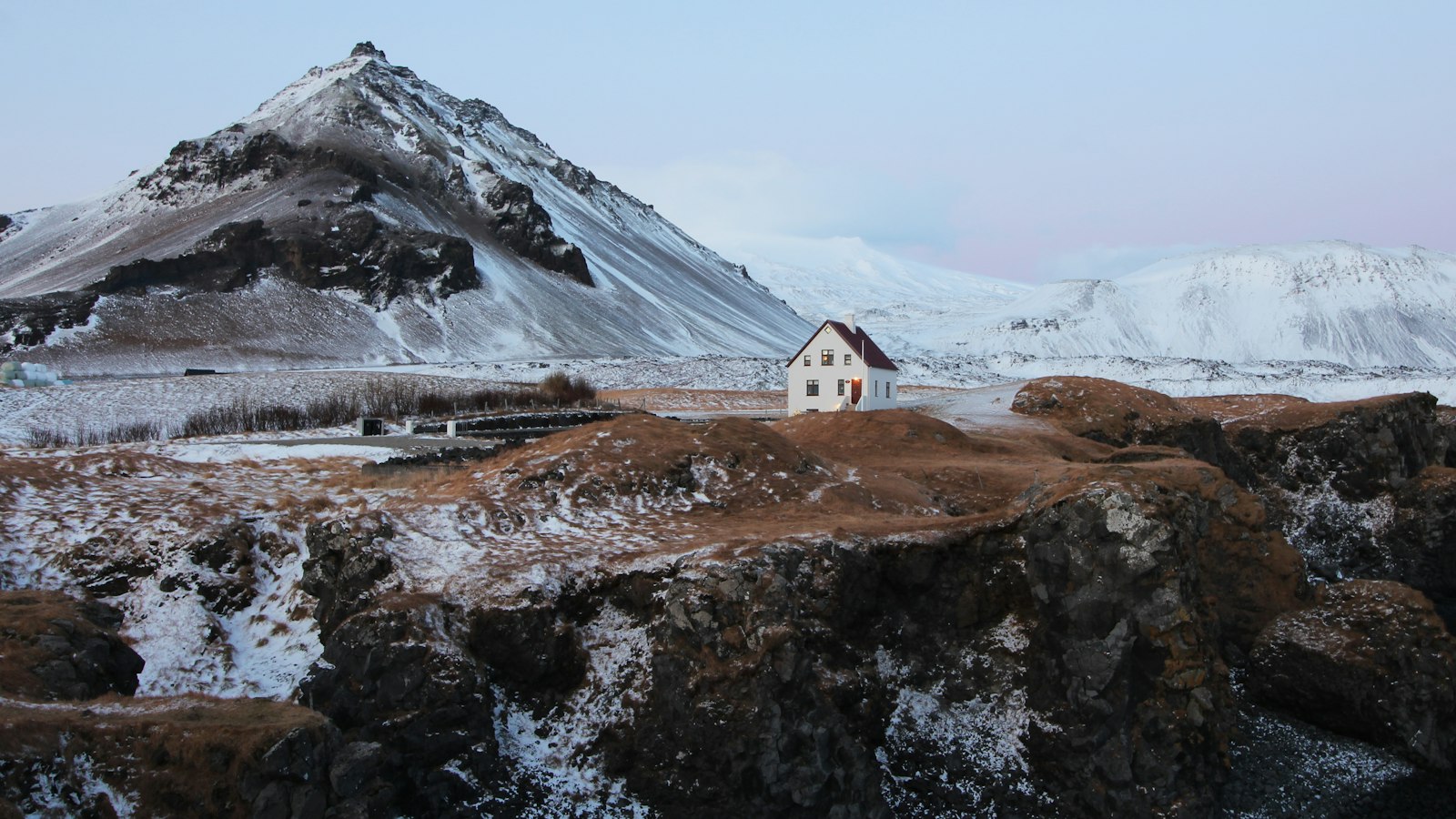
On the banks of the river Kaldakvísl in Mosfellsdalur stands Gljúfrasteinn, once the family home of Halldór Kiljan Laxness and now a writer’s home museum. The Nobel Prize-winning author and his wife, Auður Sveinsdóttir, moved into the house after its construction in 1945, choosing a spot close to Laxness’s childhood home, Laxnes. The name Gljúfrasteinn comes from a prominent nearby stone that inspired a short story from Laxness when he was just 19 years old.
The house itself is a product of collaboration with some distinguished Icelandic creatives. Architect Ágúst Pálsson designed the structure, while Birta Fróðadóttir was responsible for the interiors. Today, much of the house remains nearly as it was when the family lived there, complete with the author’s personal library and many original furnishings donated by Auður when the house was sold to the Icelandic state in 2002.
A home at the centre of Icelandic culture
During Halldór Laxness’s life, Gljúfrasteinn became much more than a private residence. It was a focal point for both formal and informal gatherings, particularly after Laxness was awarded the Nobel Prize for Literature in 1955. Dignitaries and distinguished international guests, from royalty such as King Gustaf VI Adolf of Sweden and his grandson King Carl XVI Gustaf, made their way to Gljúfrasteinn during visits to Iceland.
The wood-panelled living room gained a reputation for its excellent acoustics, prompting the Laxness family to host numerous concerts over the years. Renowned musicians from Iceland and abroad played here, and performers from the Soviet Union often stopped at Gljúfrasteinn during their travels, in part due to Laxness’s own role as chairman of the Icelandic-Soviet Friendship Association in the 1950s.
Art and legacy preserved
One of the home’s most remarkable features is its art collection. Works by some of Iceland’s most celebrated 20th-century artists fill the walls, these include Jóhannes Kjarval, Nína Tryggvadóttir, Louisa Matthíasdóttir, Svavar Guðnason, Karl Kvaran, and Ásmundur Sveinsson. The house also contains art from international artists, such as Danish painter and sculptor Asger Jorn and Norwegian painter Jakob Weidemann.
A replica of Laxness’s Nobel Prize medal is on display within the museum, while the genuine medal is safeguarded at the Central Bank of Iceland. Since opening to the public in September 2004, Gljúfrasteinn continues to serve as a place for contemplation of literature, art, and the historical moments that played out within its walls.
Sources
- Wikipedia
- Wikipedia (Icelandic) in Icelandic


