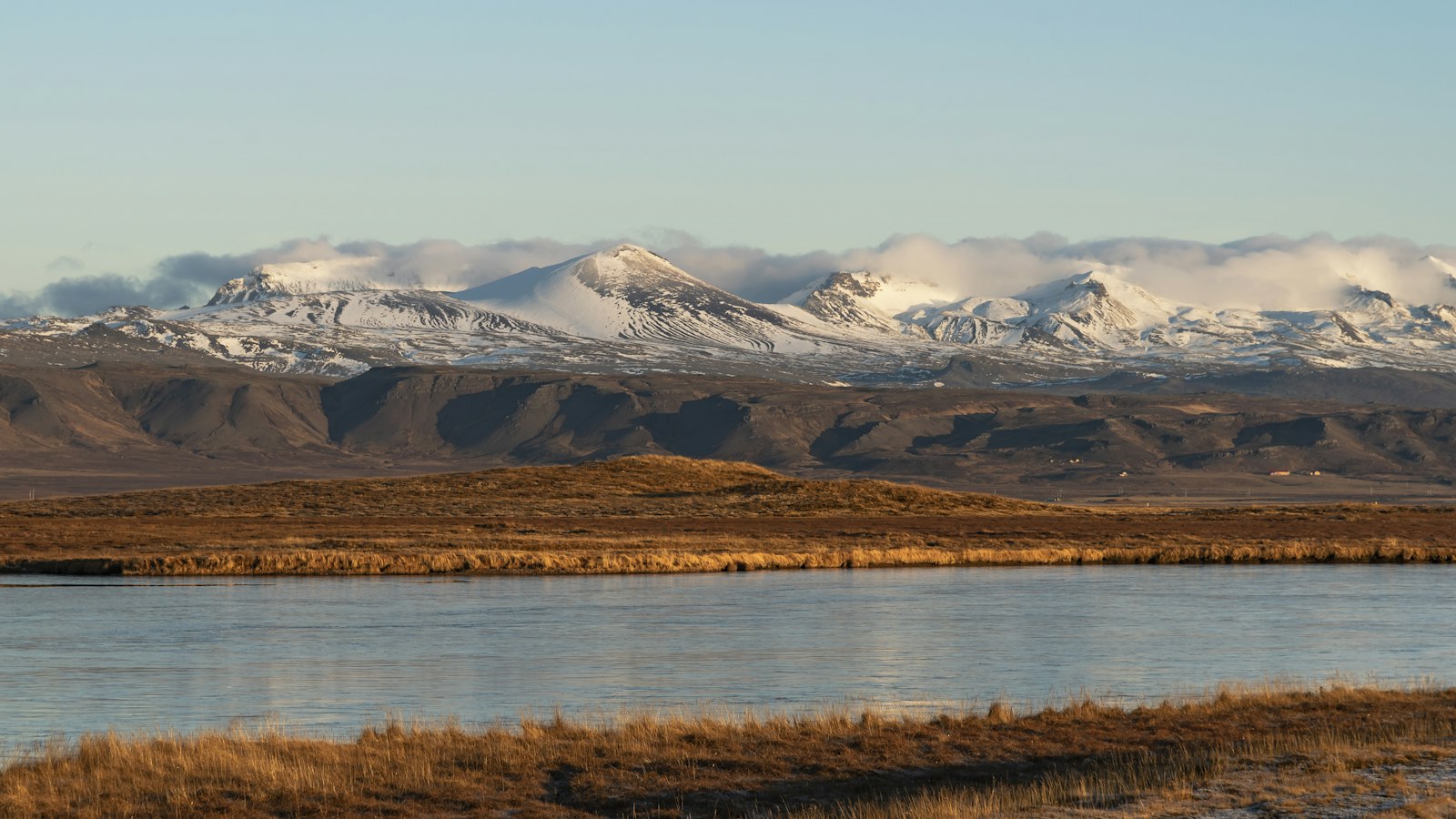
Rising from the far west of the Snæfellsnes peninsula, Snæfellsjökull stands as a glacier-capped stratovolcano, aged roughly 700,000 years. Its summit, which reaches 1,446 metres above sea level, often gleams in clear weather and can sometimes be glimpsed from Reykjavík, nearly 120 kilometres over Faxa Bay. The mountain’s distinctive profile is familiar to many Icelanders and has echoed through both scientific and cultural history.
Snæfellsjökull’s history is recorded in the layers of ice and rock that shape its form. At its core is an active central volcano, responsible for more than 20 eruptions in the period following the last Ice Age. The largest eruptive events ranged from massive explosive episodes to flowing lava, with the most recent major eruption estimated around 200 CE. Evidence of earlier, powerful events lies scattered in the landscape, notably three Plinian eruptions which spread volcanic ash widely about 8,500, 4,000 and 1,800 years ago.
The mountain sits atop a foundation of ancient, five-million-year-old flood basalts, though its own rocks are no more than 800,000 years old. Pyroclastic cones and lava fields surround the glacier, with flows like the Væjuhraun lava marking more recent volcanic activity. On its flanks and beneath the glacier, craters have released a mix of both basaltic and more silica-rich lava, producing both the broad Búðahraun field and the steep upper slopes seen today.
This volcano is enclosed within Snæfellsjökull National Park, established in 2001 and later expanded to cover 183 square kilometres. The park protects not only the mountain but also nearby landscapes dotted with lava fields, pillars and coastal sites such as Djúpalónssandur and Arnarstapi.
Despite its icy crown, the glacier has been shrinking over the last century, with its surface area halving since mid-20th century records. Remarkably, August 2012 saw the mountain’s summit exposed without its usual snow, a first in documented history. The three highest domes of Snæfellsjökull, Vesturþúfa, Miðþúfa and Norðurþúfa, are easily identified by those with sharp eyes, especially on clear days when the glacier’s boundaries and crater bowl stand out sharply against the sky.
Snæfellsjökull is woven into Iceland’s storytelling. Literary fame came with Jules Verne’s 1864 novel, where the mountain became the imaginary gateway to the centre of the Earth. Icelandic Nobel laureate Halldór Laxness placed parts of his novel ‘Under the Glacier’ in its shadow, cementing its role as a site of both myth and contemplation. Its notoriety even extends to radio, featuring in British broadcaster Jarvis Cocker’s explorations of the mystical ties between landscape and imagination.
Beyond literature, Snæfellsjökull occasionally emerges in Icelandic public life. A playful campaign once proposed the volcano itself as a candidate for the presidency, a reminder of the affection and humour the mountain inspires.
Sources
- Wikipedia
- Wikipedia (Icelandic) in Icelandic


