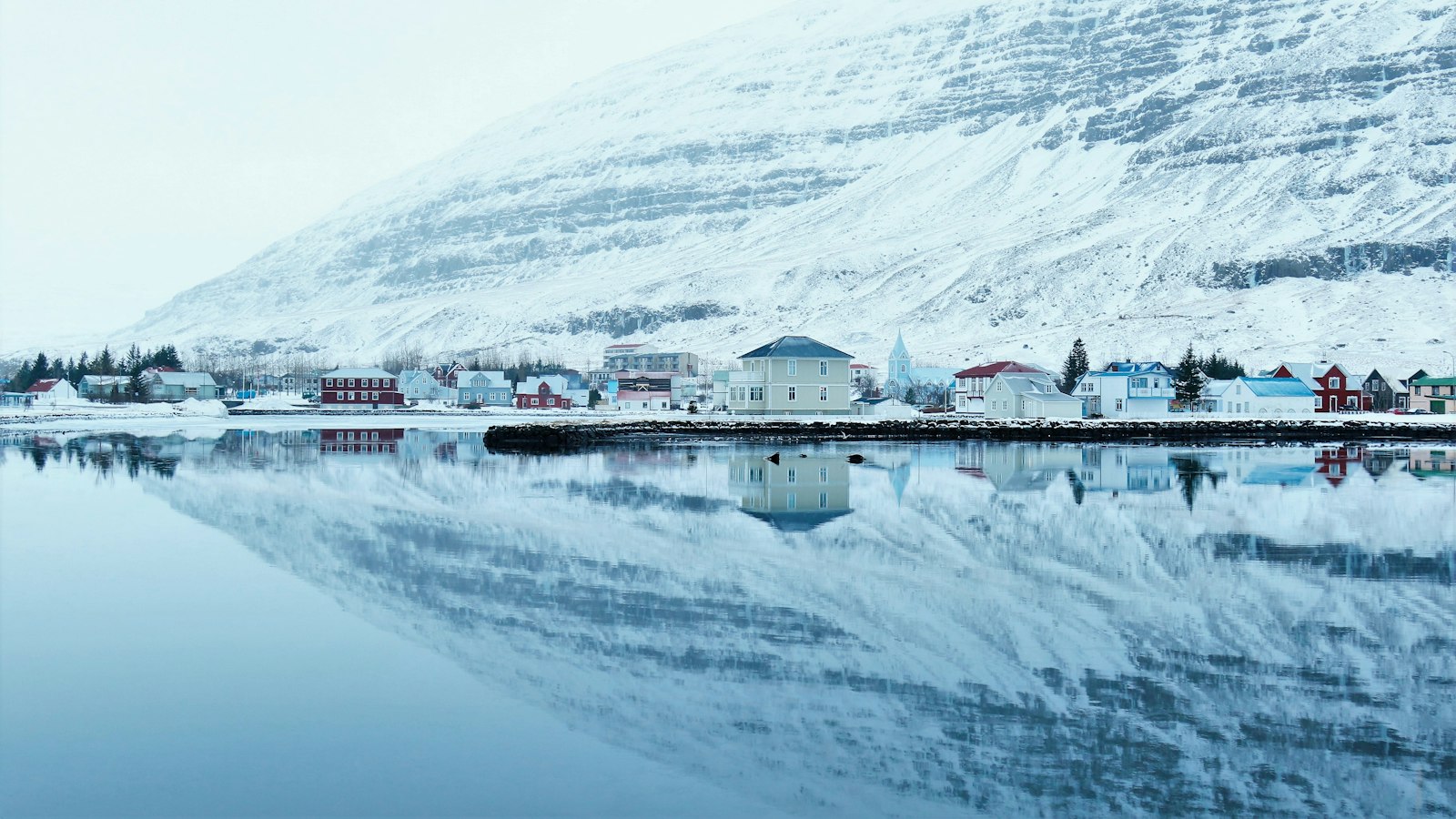
Tucked in the sweeping valley of Blönduhlíð in Skagafjörður, north Iceland, Miklibær is a site where layers of history, legend and daily parish life meet. Although today it is known for its church and graveyard, its origins and stories reach far back into Iceland’s storied past.
Medieval strife and the church’s role
Miklibær enters written Icelandic history in 1234, mentioned in the Sturlunga Saga, a major source for the turbulent period known as the Age of the Sturlungs. Kolbeinn ungi Arnórsson, a powerful chieftain, is said to have taken possession of Miklibær after killing Kálfur Guttormsson and his son Guttormur. As successive struggles for power raged in Iceland during the thirteenth century, the small settlement became connected with the Battle of Örlygsstaðir, the biggest armed clash of the era. Sturla Sighvatsson, a leading figure in these conflicts, spent the night before the battle at Miklibær with part of his retinue. When defeat loomed, Sturla’s brothers Kolbeinn and Þórður fled back to the church at Miklibær, desperately seeking sanctuary. Their last refuge could not protect them; both were captured and executed, a fate that befell many others involved in these violent disputes.
Tales of devotion, despair and haunting
The parish’s later history is marked by stories that veer from the real to the legendary. Oddur Gíslason, who served as priest from 1768, is remembered for his personal life as much as his clerical work. His housekeeper Solveig’s unrequited affection for Oddur ended in tragedy after he married someone else, her repeated attempts at suicide led to her death in 1778. Solveig was buried outside the churchyard, in keeping with the customs of the time regarding suicide. Over the years, townsfolk claimed her spirit haunted the grounds.
Oddur himself vanished in 1786 after setting out to perform mass in Silfrastaðir. His mysterious disappearance was swiftly woven into tales suggesting Solveig’s ghost had spirited him away, along with his horse. Despite these stories, Oddur’s horse was found soon after, and a letter written in 1789 revealed that Oddur’s body was later discovered in the Gegnir stream below Miklibær.
The graveyard still marks resting places of figures from all walks of life. Among them is poet Hjálmar Jónsson, known as Bólu-Hjálmar, buried alongside his wife Guðný. Another thread connecting Miklibær with wider Scandinavian culture is Gottskálk Þorvaldsson, a priest’s son born here in 1741 who fathered the renowned sculptor Bertel Thorvaldsen.
The present church at Miklibær, designed by master builder Jörundur Pálsson, was completed in 1973. It replaced the previous structure, which had been lost to fire. Each phase of building seems to mark a new layer in Miklibær’s ongoing presence as a cultural and communal centre, quietly echoing centuries’ worth of conflict, faith, and the occasional tale that blurs the line between documented fact and enduring folklore.
Sources
- Wikipedia
- Wikipedia (Icelandic) in Icelandic


