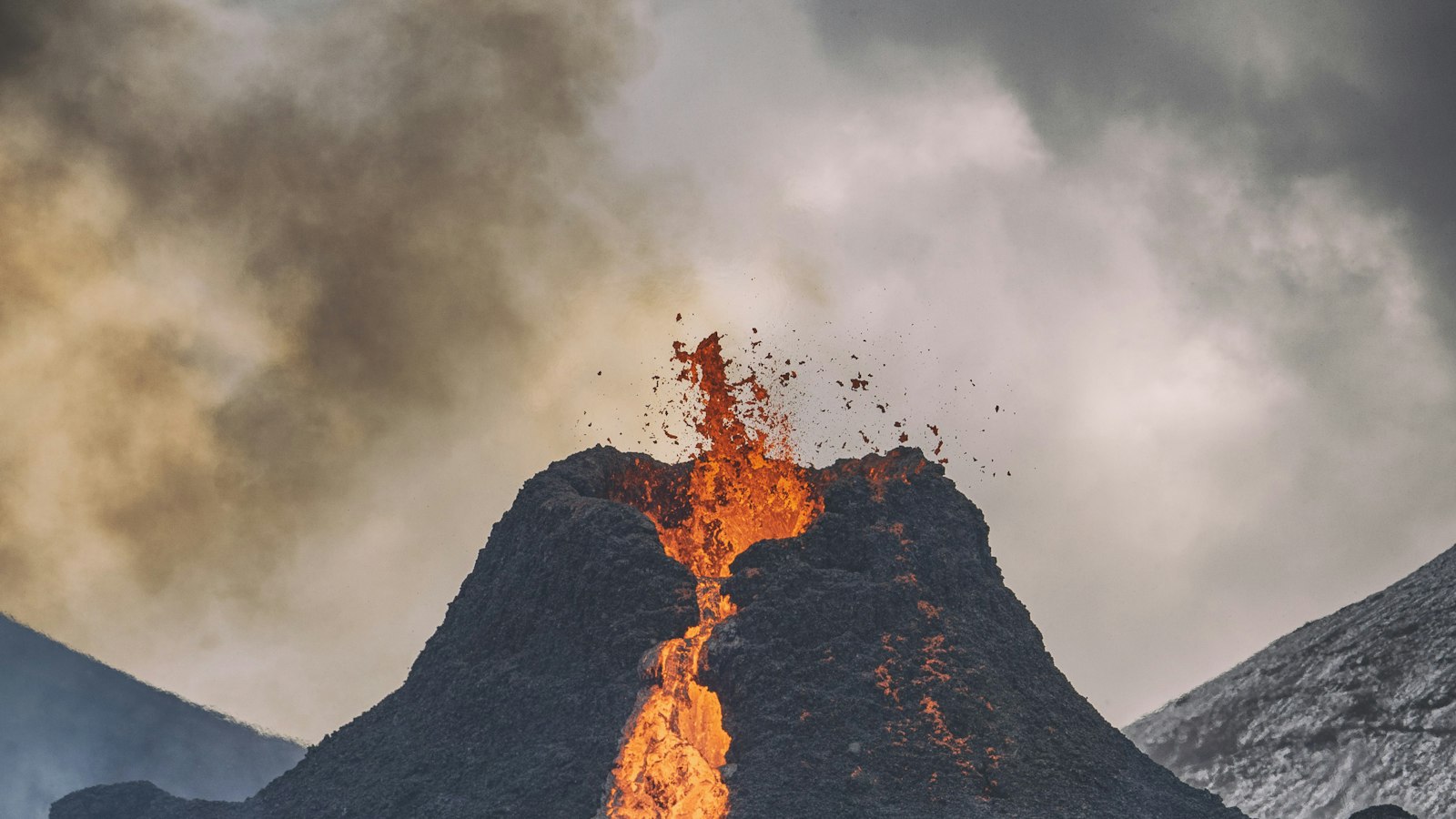
Amid the highlands of southern Iceland, between the glaciers Vatnajökull and Mýrdalsjökull, the Lakagígar fissure stretches for nearly 27 to 29 kilometres, a testament to a cataclysmic volcanic event. Known in English as the Laki fissure, Lakagígar, meaning “Craters of Laki,” is part of the larger volcanic system centred on Grímsvötn. It lies close to Kirkjubæjarklaustur village and the striking fissure of Eldgjá.
The eruption of Laki began suddenly on 8 June 1783, following tremors that opened a 25-kilometre fissure dotted with over 130 crater vents. For eight months, until February 1784, the formation belched out about 14 cubic kilometres of basalt lava and immense clouds of ash and toxic gases. This event, known in Iceland as Skaftáreldar (the “Skaftá fires”), ranks among the largest volcanic eruptions ever recorded on the island, and indeed, across the world.
Iceland’s hardest years: Móðuharðindin
The aftermath for Iceland was dire. The eruption released roughly eight million tonnes of fluorine and 120 million tonnes of sulfur dioxide, shrouding the land in volcanic haze, or “móða.” These toxic gases poisoned the grass and soil, killing about 80 percent of sheep, half of cattle and horses, and destroying most crops. Milk yields collapsed by half. The famine that followed, known as Móðuharðindin, the “Mist Hardships”, led to the death of at least a fifth of Iceland’s human population, as about 8,000 perished from hunger.
The church farm at Kirkjubæjarklaustur narrowly escaped destruction from the advance of lava, which halted not far from the parish church where Jón Steingrímsson, the local minister, became famous for delivering the so-called fire mass (eldmessa). Since then, the turning point of the flow has been called Eldmessutangi, “Fire Mass Point.”
A haze encircles the globe
Laki’s effects extended far beyond Iceland. The eruption sent a gigantic cloud of sulfur-rich particles into the atmosphere, causing a mysterious haze and darkened sky across Europe by June 1783. Reports from the time describe ships moored in port, unable to navigate, and a blood-red sun. Across Western Europe, thousands died of respiratory ailments as the air thickened with sulfur dioxide. The haze turned summers desperately hot, while the following winter (1783–1784) brought harsh cold and widespread crop failure.
The climatic disruption spanned continents. North America endured its coldest and longest recorded winter. The River Nile’s flow weakened, contributing to famine in Egypt and low rainfall across the Sahel in Africa. In Asia, the already severe Tenmei famine in Japan may have been worsened, and there were odd weather anomalies reported as far as India and China.
The Laki eruption demonstrates how events in Iceland’s volcanic heart can ripple across the world, reshaping societies and environments far from its snowy craters.
Sources
- Wikipedia
- Wikipedia (Icelandic) in Icelandic


