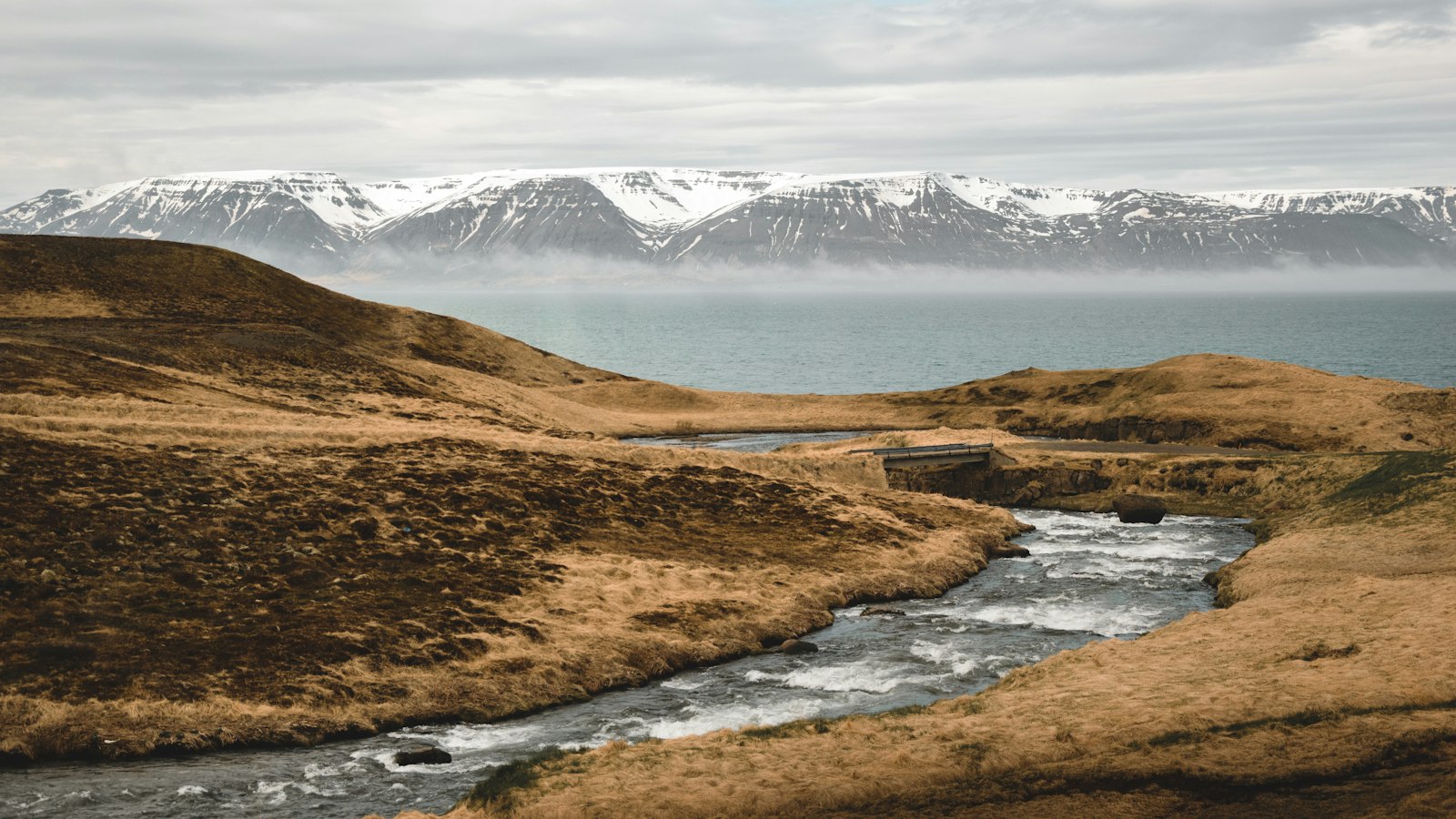
The arctic bellflower, Melanocalyx uniflora, stands out for its tenacity and subtle beauty in the demanding climates of the northern hemisphere. In Iceland, where volcanic terrain and subarctic weather dominate, this unassuming perennial has carved out its own unique place. Its life story stretches across arctic lands from North America and Greenland to Siberia, Scandinavia and Iceland itself.
Botanical traits and survival strategies
Melanocalyx uniflora, also called arctic harebell or alpine harebell, is a rhizomatous perennial in the bellflower family Campanulaceae. Short and slim, it commonly grows between 5 and 14 centimeters high. Yet, records from early twentieth-century explorations on the Canadian Arctic coast show rare individuals can reach 22 centimeters. Each plant anchors itself with a large, ridged taproot that gives rise to several underground stems. These horizontal stems send up leafy rosettes at the soil surface, while bearing scale-like leaves below ground.
On the surface, the leaves are hairless and shaped from oval to spear-like, about 2 centimeters long, with edges that range from smooth to gently toothed. The bellflower’s solitary blue bloom emerges on the tip of each stem. While flowering and for a brief spell after, the stem curves so the blossom hangs downward in a delicate arc. As the season progresses and the seed capsule forms, the stem straightens, displaying the developing seeds upright.
A wanderer of northern continents
The global range of Melanocalyx uniflora is nothing short of remarkable. In Europe it grows in Iceland as well as the Fennoscandian Peninsula, which includes Norway, Sweden and Finland. It extends to the Faroe Islands, Svalbard, and the Novaya Zemlya islands of northern Russia. In Norway, a population of the plant survives as far south as 62° north, but it is more typical of northern regions.
On the Asian side, the arctic bellflower branches deep into the Russian Far East, including places such as the Kamchatka Peninsula and the Beringian regions neighboring Alaska. In North America, it thrives from Alaska to Greenland, entering the northernmost reaches of Manitoba, Québec and Labrador. Along the Rocky Mountains, it has been found as far south as Colorado and New Mexico. Despite this broad dispersal, it remains a fairly scarce plant, with a preference for soils or rocks high in alkaline minerals.
In Icelandic meadows, Melanocalyx uniflora is also a known host of Pleospora herbarum, a fungus common in the arctic but otherwise unremarkable. This relationship illustrates the bellflower’s role within a unique northern ecological web.
The recognition of this plant has an old scientific heritage. Carl Linnaeus, a pioneer in taxonomy, first described the species during his Lapland expedition in 1732 and included it in Flora Lapponica in 1737. The plant was later moved to its present genus in 2020, though some scientific sources still refer to it by its older name, Campanula uniflora.


