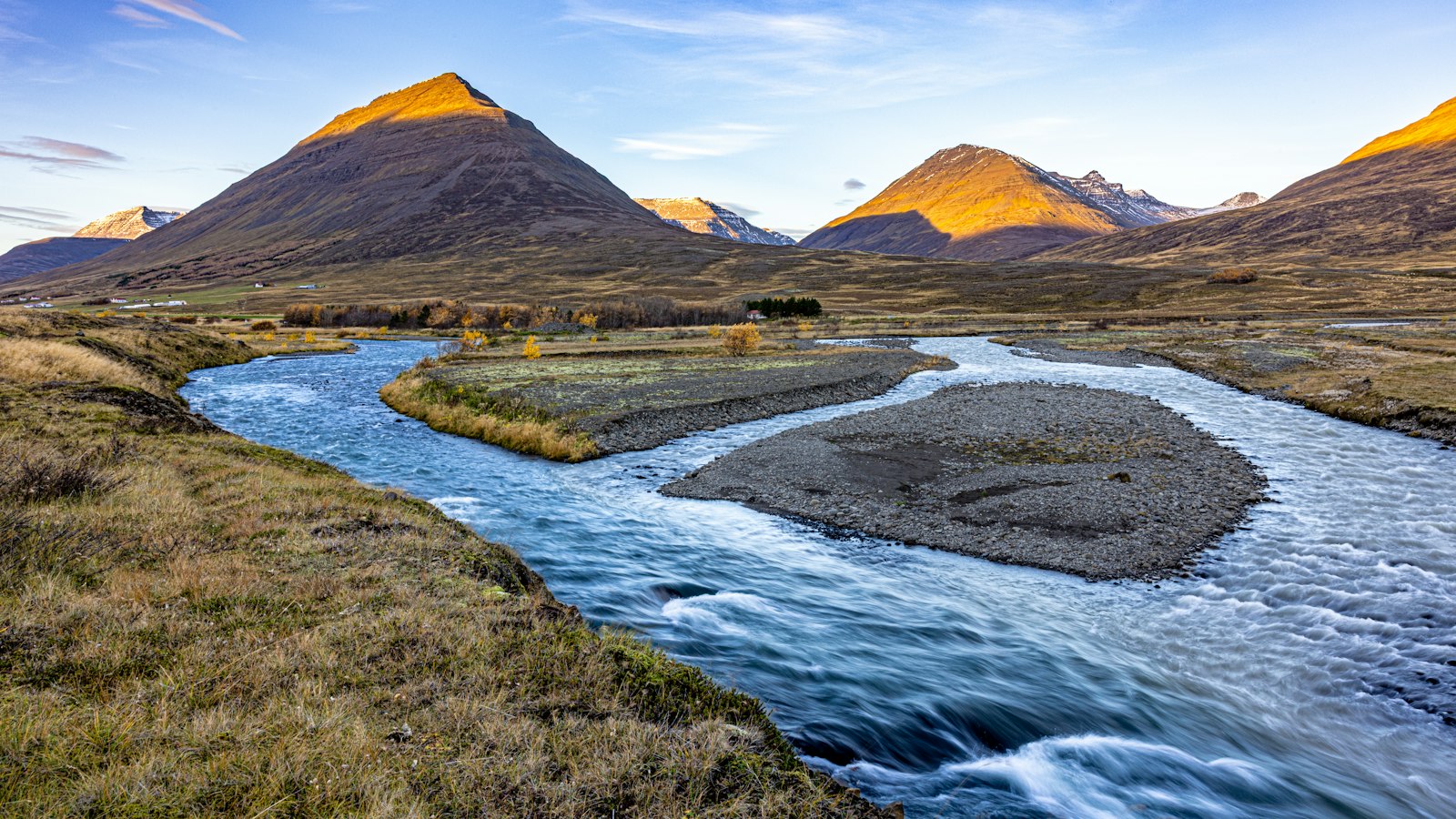
On the inner western edge of Skagafjörður in northern Iceland, a peak known as Mælifellshnjúkur dominates its surroundings. At 1,138 metres above sea level, it is among the tallest and best-known mountains in the area, markedly taller than its neighbours. On clear days, people claim that this summit can be spotted from as many as ten different districts.
The mountain’s distinctive silhouette holds a cultural significance stretching back to the island’s settlement. The earliest Icelanders in neighbouring regions considered it a daily clock: when the sun was above the mountain, they determined it was midday. This practical use is reflected in its name, which translates to “measurement peak.” Mælifellshnjúkur’s role as a point of reference extended to weather prediction, with locals judging that a fog bank around its middle, while the summit remained visible, would signal dry conditions for the following day.
Folklore and features shaped by ice and fire
The peak looms above an historic farm and church site named Mælifell, once a vicarage and itself the subject of early settlement stories. According to the medieval text Landnámabók, Kráku-Hreiðar Ófeigsson, who settled in nearby Tungusveit, chose this place as the site of his final days.
Nature provides its own kinds of stories in the snowfields clinging to Mælifellshnjúkur’s eastern flank. Into summer, melting patches form a shape resembling a horse seen sideways. This ‘snow horse’ became practical folklore: as it vanishes above the mountain’s shoulders, it was said that travel was possible to Stórisandur, a vast desert area of the highlands. Historically, a southern route leading to Stórisandur and the road called Kjalvegur passed near here, crossing the Mælifellsdalur valley to the west.
Geological origins
Scientifically, Mælifellshnjúkur is notable for its age and structure. Made primarily of palagonite, a type of rock formed by volcanic activity under glaciers, Mælifellshnjúkur stands on much older basalt layers. Geological research, such as that by Jakob H. Líndal in 1940, established that this mountain arose from eruptions beneath a thick Ice Age glacier, during a relatively brief period of volcanic unrest in Skagafjörður. Other distinct features of the region, including Drangey island, Málmey island, and Þórðarhöfði, were born from related eruptions during this era. The mountain itself has existed for about one million years.
Today, Mælifellshnjúkur remains an essential part of both the landscape and collective memory of Skagafjörður, shaping daily life, navigation and weather wisdom for generations.
Sources
- Wikipedia
- Wikipedia (Icelandic) in Icelandic


