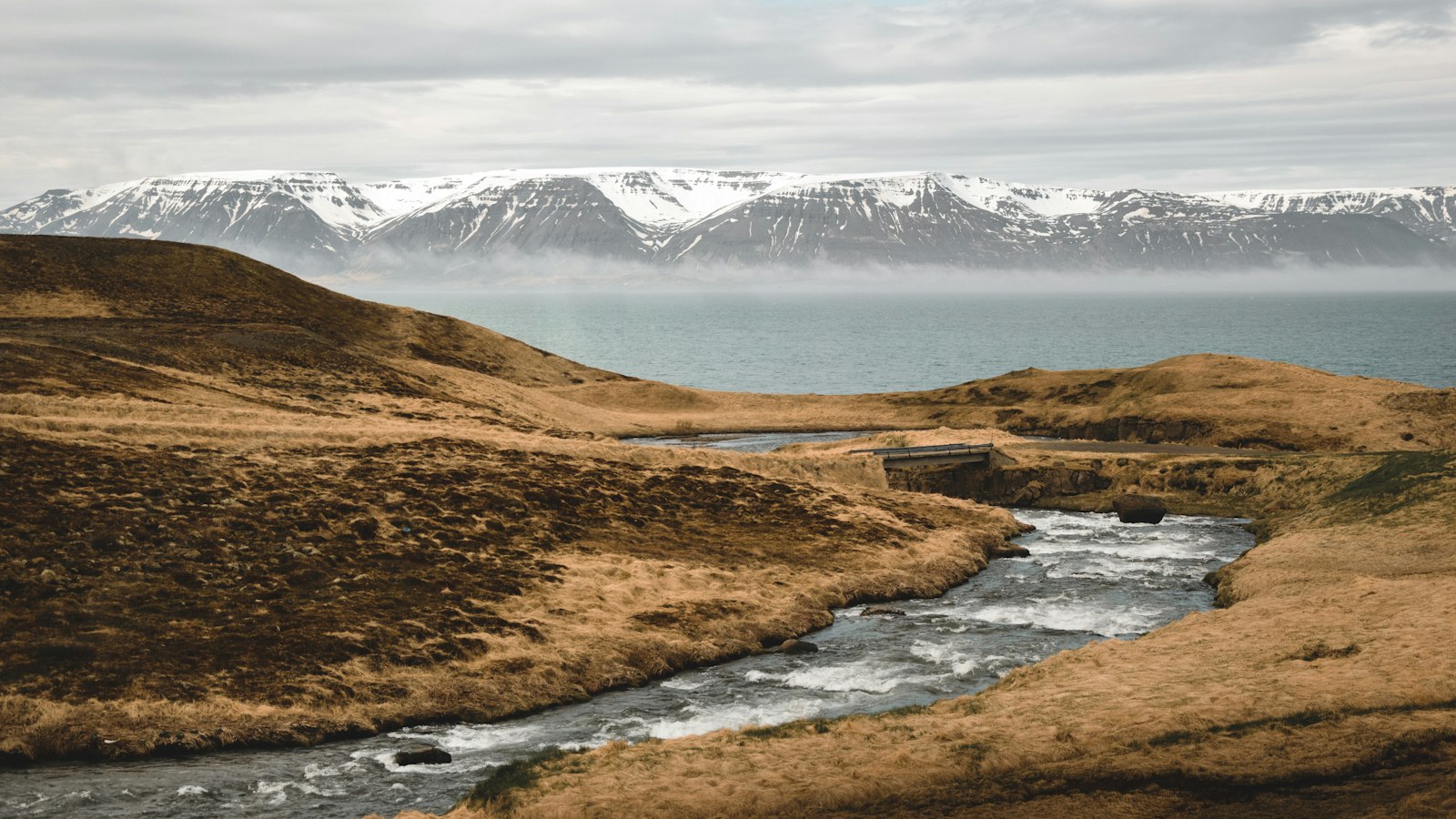
Far in the north of Iceland, Vesturdalur, meaning “west valley”, branches off from the inner reach of Skagafjörður and carves its way toward the heart of the central highlands. Together with its twin Austurdalur, which runs parallel, it creates a dramatic landscape framed by high, steep mountains and marked by evidence of centuries of human activity.
Geography and rivers
At the entrance of Vesturdalur lies Goðdalir, a traditional church site that stands as the lowest settlement on the western side. Beyond this point, the Vestari-Jökulsá river cascades from the adjacent Hofsdalur valley, which itself stretches for a considerable distance into the highlands to the south. Vesturdalur is narrow and essentially unpopulated today. Down its length, another river, Hofsá, flows, a mostly spring-fed creek named after the old farm Hof (Hof í Vesturdal). The farm’s first settler, Eiríkur Hróaldsson, once claimed all the land reaching south to the imposing Hofsjökull glacier.
On the eastern slopes of Vesturdalur, a handful of farms punctuate the valley wall: Bjarnastaðahlíð, Litlahlíð, and Gil. Deeper into the valley stands the abandoned farm Þorljótsstaðir, which, for many years, was the last inhabited outpost, though even farther settlements existed in earlier centuries. Within this area, the valley narrows and its floor becomes lush with vegetation. Excellent grazing led to a pattern of habitation over the centuries, traces of which are still visible in the landscape.
Legends and the quiet traces of life
A notable feature near the valley floor is the site known as Hraunþúfuklaustur, the remains of a structure that folklore identifies as a former monastery. According to these local stories, the monastery ceased to exist during the Black Plague and later lost its significance. Over the years, objects such as a church bell have been discovered at the site, reinforcing its aura of mystery. However, there are no historical records confirming the existence of a monastery or permanent community there before documented human habitation. Some have speculated that these ruins could instead be remnants of simple huts built for shelter by those passing through the highlands.
Today, Vesturdalur’s silence is a reminder of its layered past. The valley’s unpopulated nature and visible traces of former farms hint at the cycles of settlement and abandonment shaped by Iceland’s climate and geography. The legends that persist add another dimension, suggesting a place where history and story cannot be cleanly separated.
Sources
- Wikipedia
- Wikipedia (Icelandic) in Icelandic


