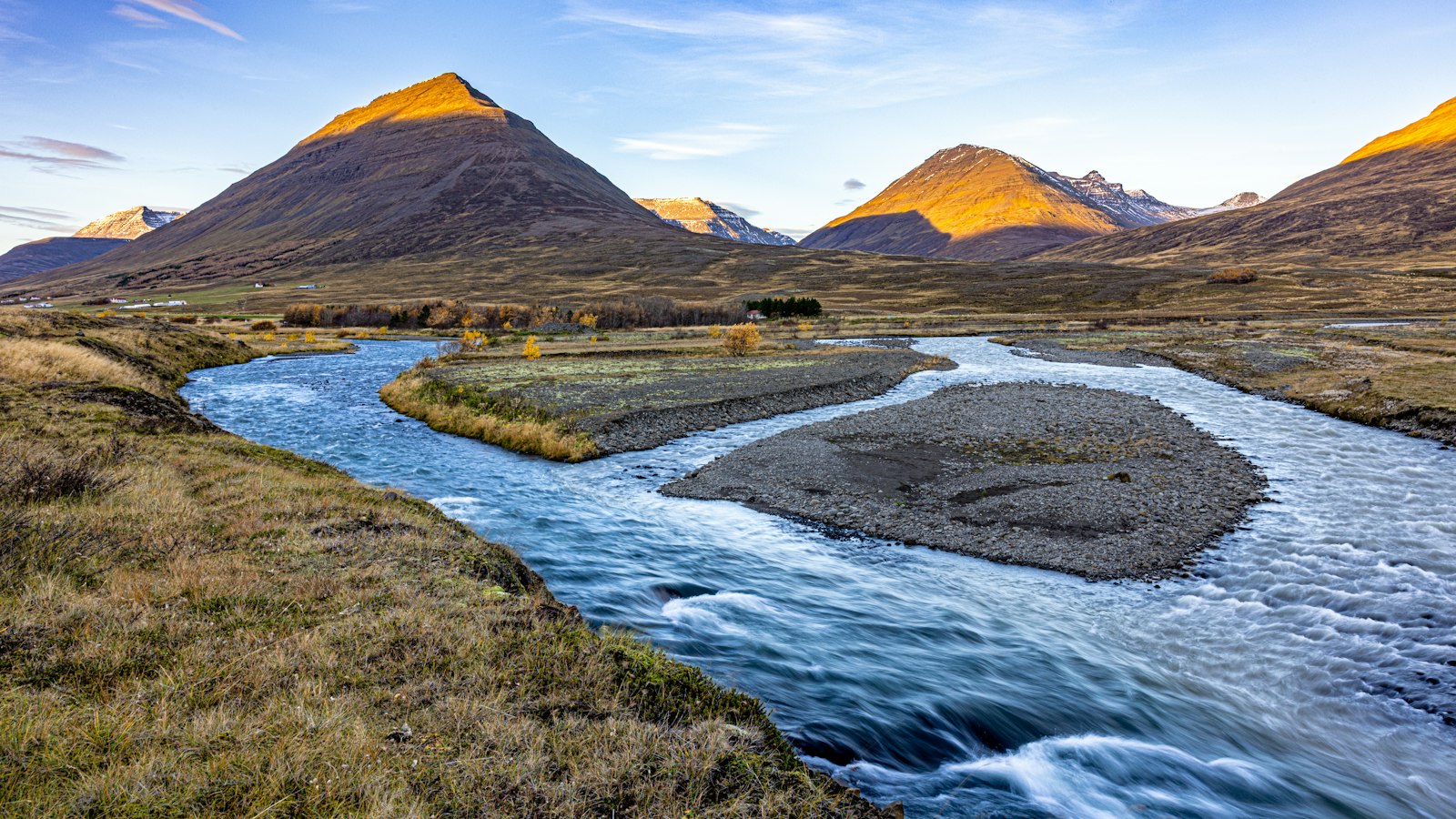
The river known as Héraðsvötn, a glacial watercourse whose name was once Jökulsá, winds its way through the wide plains of Skagafjörður in northern Iceland. Its waters originate high among the glaciers, flowing down through valleys and gathering force as they sweep through the countryside. Over the years, Héraðsvötn has gained a reputation as one of the deadliest rivers in the country, a testament to the natural power that shapes Iceland’s landscapes.
Rivers merging and splitting
Héraðsvötn is born at a point just past the farm Tunguháls where two major rivers, Austari-Jökulsá (the Eastern Jökulsá) and Vestari-Jökulsá (the Western Jökulsá), come together. Additional tributaries, such as Norðurá, Húseyjarkvísl, and numerous smaller streams, feed into the river, increasing its size and strength.
After winding northward through the open landscape, the river does not maintain a single mouth. In the middle of the region called Blönduhlíð, Héraðsvötn splits into two distinct branches. Each fork heads toward the sea on opposite sides of Hegranes, a peninsula that divides the plain. These forks are called Vestari-Héraðsvötn (Western Héraðsvötn) and Austari-Héraðsvötn (Eastern Héraðsvötn), and they transport roughly equal volumes of water to the ocean. Where the river meets the fjord, the branches are named the western and eastern estuary.
History and names
Older generations referred to the river system as Jökulsá, or “glacier river,” pointing to its origins in the meltwater flowing down from distant ice. In official documents and daily use, however, the river is now most often known as Héraðsvötn. Locals sometimes call it Vötn or Vötnin, the waters, underscoring its importance to the region.
The shifting channels and regular flooding have made life along the river both fruitful and hazardous for the communities in Skagafjörður. The river’s branches bring nutrients to farmland but have also led to tragedy, earning Héraðsvötn its reputation for danger. Its role in shaping the local environment, and its history as a dividing and unifying force, make it a distinct feature of northern Iceland’s landscape.
Sources
- Wikipedia
- Wikipedia (Icelandic) in Icelandic


