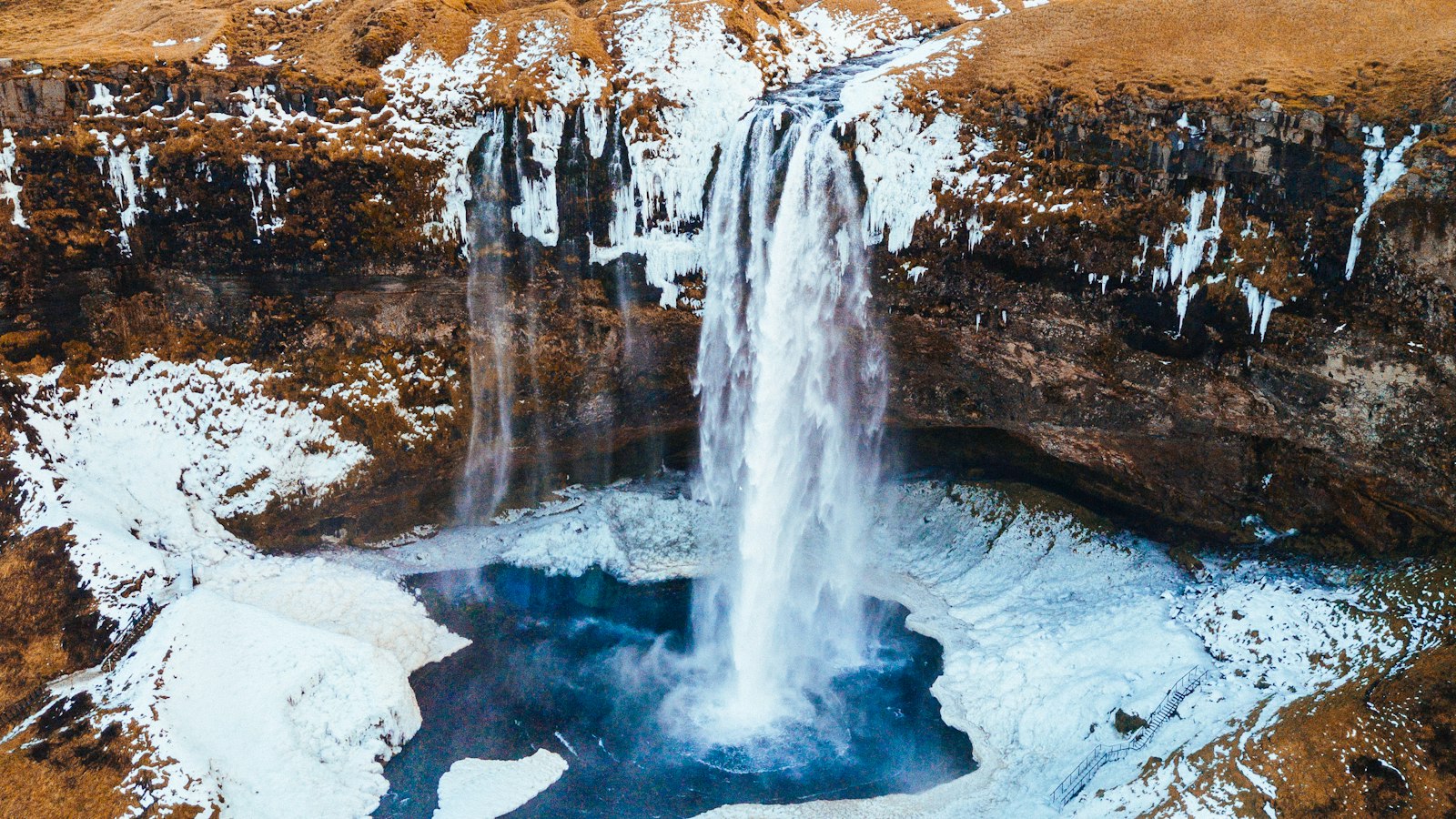
In the Icelandic language, ‘Fossá’ combines two simple words: ‘foss’ for waterfall and ‘á’ for river. This unassuming name is, in fact, a hallmark of the country’s landscape, found on waterways whose main distinction is the presence of dramatic and frequent waterfalls. Scattered throughout Iceland, rivers called Fossá flow from glaciers, over mountains and into bays and fjords, each following a unique course through a terrain shaped by powerful geological forces.
A familiar name in varied landscapes
Perhaps the most renowned of these is the Fossá in Fossárdalur near Þingvellir, travelling south towards Hvalfjörður. Along this journey the river forms several waterfalls, including one near Route 47 that has become a well-known stopping point. By the roadside, the sound of water signals the river’s close relationship with Icelandic daily life and travel.
Beyond this, the name Fossá echoes across the country. In the Eastern Region, one Fossá drains into Berufjörður bay, fed by the lakes and streams around Lake Líkárvatn. Another in the same region begins in the Hallberutindur mountains before reaching Reyðarfjörður. Further west, Fossá rivers reach the sea through the bays of Breiðafjörður, flowing through places such as Ólafsvík and gliding past the Sandkúlar hills.
From glacier to fjord, a national pattern
Many Fossá rivers trace their sources to glaciers or high elevations. In the north, a Fossá originates on the slopes of Þingmannaháls near the vast Blöndulón reservoir and merges with the Svartá river before both reach Húnafjörður bay. Another tumbles down from the Fossárjökull glacier, joining the Hörgá before entering Eyjafjörður bay near Akureyri.
Some Fossá rivers have close connections to Iceland’s lakes and valleys. In Vestfirðir, one flows from Fossavatn lake and meets the Langá river, which itself spills into Skutulsfjörður fjord. In the south, a Fossá begins high near Mýrdalsjökull glacier and winds toward the Tungufljót, ultimately joining the mightier Kúðafljót river.
Elsewhere, Fossá rivers take shorter journeys. In the Suðurland region, one descends from the base of Úlfljótvatns-Selfjall hill and enters Úlfljótsvatn lake, not far from a popular camping area. Another merges with the Þjórsá river near Bjarnalón lake, in a valley where waterfalls like Hjálparfoss are found. The consistent appearance of the name Fossá suggests a shared recognition of the country’s dramatic hydrology, a place where even a modest river can create spectacle.
For those tracing the name on a map, each Fossá is a point of connection between Iceland’s natural features and the Icelandic language. With every waterfall and each river course, the recurrent Fossá endures as an enduring feature of the island’s elemental story.


