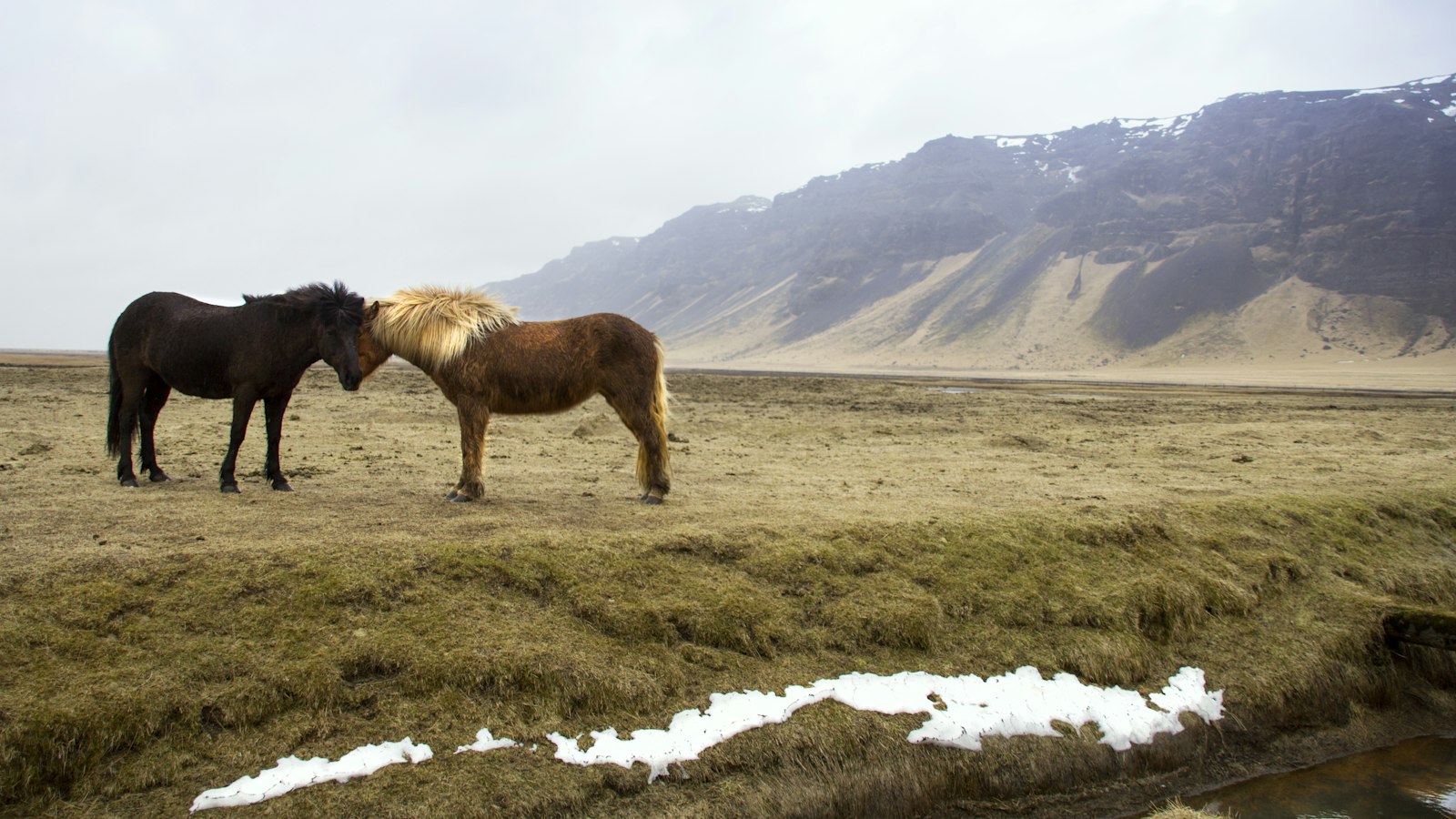
Storytelling has always been woven into the fabric of Icelandic life, with fairy tales carrying echoes of the island’s wild landscapes and ancient beliefs. Among these stories, the adventures of Gullfaxi, a horse whose name means “Golden-Mane”, and Gunnfjöður, or “Battle-Plume” the sword, hold a special place in Icelandic folklore.
An unusual manuscript journey
The tale known as “The Horse Gullfaxi and the Sword Gunnfjöður” first appeared outside Iceland in German thanks to Josef Poestion’s 1884 collection of Icelandic fairy tales, but its path to print was more complicated. Unlike other stories in Poestion’s book, which were gathered from the famed oral and written collections of Jón Árnason, this story was not derived from any published anthology at the time. Instead, it came from a manuscript compiled between 1857 and 1870, now held by the National and University Library of Iceland.
When Andrew Lang included an English version in 1903’s The Crimson Fairy Book, the story began to find a wider audience. Later, retellings appeared under titles like “Sigurd, the King’s Son” and, in another English version, featuring the heroic Sigurd (Icelandic: Sigurður). Variations have appeared ever since, often featuring characters and magical objects with different names, but with strangely familiar roles, a golden-maned horse, a prized sword, and an otherworldly quest.
Magic, giants and clever helpers
Like many fairy tales, this story intertwines the everyday with the fantastical. The king, left with only his son Sigurd after the queen’s early death, brings a new woman, Ingiborg, into his family. But Sigurd’s life is soon entangled with magic and danger, as visiting troll-women (in Icelandic, tröllkona) cast a spell that leaves him both scorched and compelled to seek his fate with them.
Ingiborg, Sigurd’s stepmother, offers practical help, gifts of gold rings and a ball of string to guide his way, and wise advice on facing the giantesses. Each encounter brings Sigurd new strength, until he befriends Helga, the daughter of a giant. Through her magical glove, which can transform Sigurd into a bundle of wool to hide him, he eventually discovers the horse Gullfaxi and the sword Gunnfjöður in a locked room, won only through persuasion and trust.
These objects are no ordinary treasures. The sword bears the promise that its bearer will find happiness. Accompanied by a stick, stone and twig, each holding more magic, Sigurd escapes the vengeful giant: he raises a forest behind him and, when his pursuer presses on, unleashes a hailstorm to defeat him.
The tale’s final act brings Sigurd back to rescue Ingiborg, misunderstood and in peril, before restoring harmony to the royal family. A grand marriage feast ends the saga.
The echoes of Gullfaxi
Stories with magical horses and enchanted swords appear frequently in Icelandic folklore, under names like Glófaxi and Gunnfjöður, or Gullskó and Dynfjöður. Though the details and heroes shift, the motifs remain: courage, wit, and the intervention of magical helpers shape the destiny of Iceland’s legendary storytellers.


