Few birds are as closely tied to Iceland’s shifting seasons as the purple sandpiper, known locally as sendlingur. This hardy shorebird, Calidris maritima, is adapted for survival in some of the harshest environments of the North Atlantic. Throughout the year, it moves between ice-streaked coasts and remote upland tundra, reflecting a life shaped by extremes.
A master of rock and tide
The purple sandpiper is a compact bird, measuring 20–22 centimetres in length with a wingspan between 42 and 46 centimetres. With its yellow legs and a mostly dark bill that is yellow at the base, it sports a plumage that offers more than a hint of purple gloss on its upper body. Seasonal changes see it adopt warmer brown hues in summer, becoming well-camouflaged against stony mountain outcrops and the tangled, seaweed-strewn shores it frequents during winter. Weighing between 50 and 105 grams, the sandpiper’s thickset form and subtle coloration are ideal for Iceland’s variable climate.
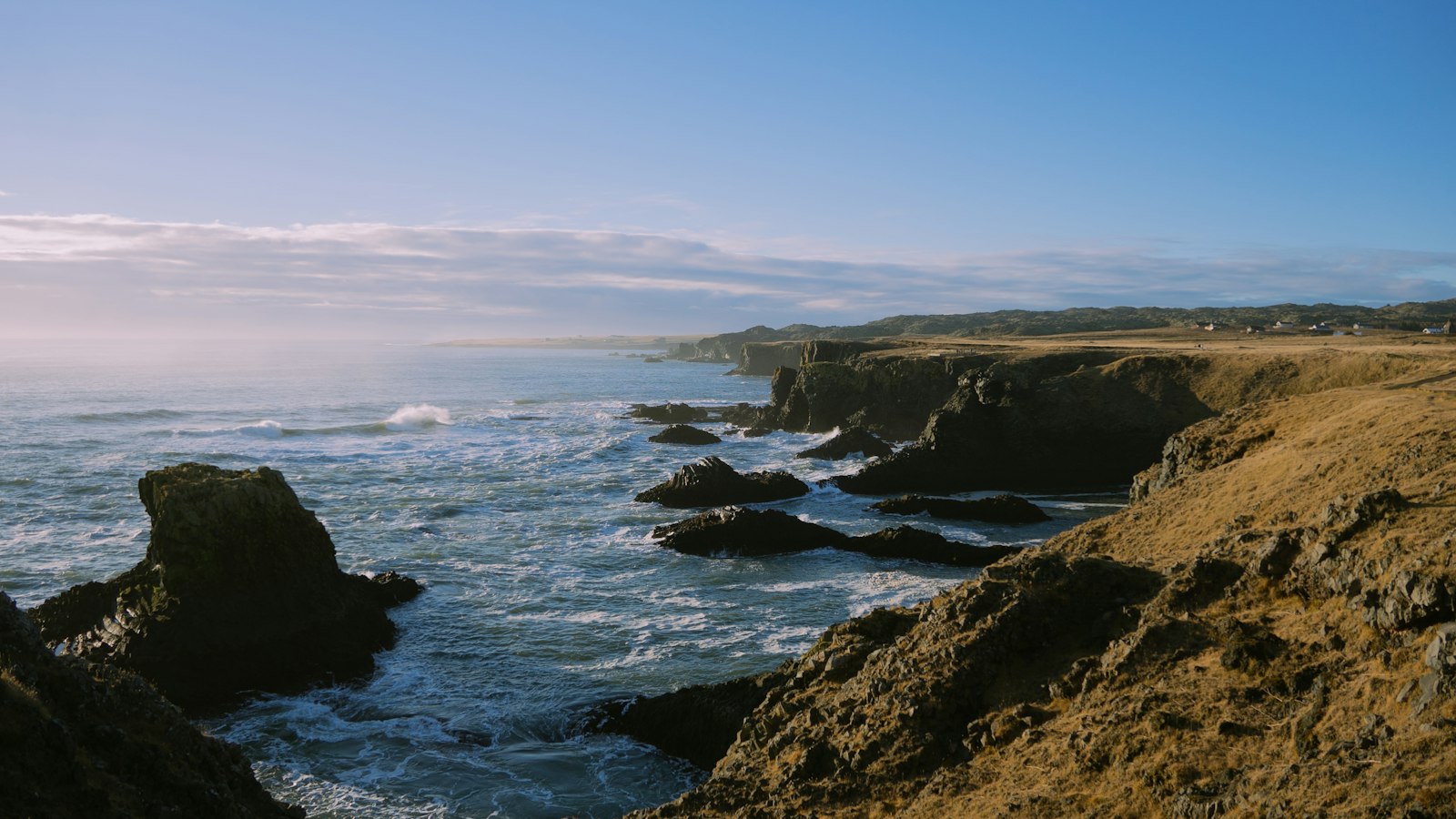
This species is found right across the arctic and subarctic, ranging from northern Canada eastward through Greenland, Iceland, Svalbard and into Scandinavia and Russia. In Iceland, it is one of the most widespread shorebirds. Each winter, flocks gather on rocky, seaweed-lined coasts around the island, occasionally forming dense groups at the water’s edge. Unlike most migratory waders, many Icelandic purple sandpipers both breed and overwinter in the country. In spring, they leave the shoreline for the hills, becoming perhaps the only wader in Iceland regularly seen in all parts of the country in winter.
Survival between mountain and sea
The nesting habits of the purple sandpiper reflect its adaptable nature. Breeding begins in June, often high in Iceland’s mountains but also in upland moors and exposed peninsulas. Nests are basic scrapes on bare ground or moss, usually close to water and stones. Clutch sizes are typically four pale eggs with dark spots, about four centimetres long. Both parents initially incubate, but often the male takes on the greater share, eventually tending the chicks alone if needed. The young are able to feed themselves shortly after hatching.
Diet is dictated by the landscape and season. Winter flocks forage among boulders and seaweed for molluscs, including various periwinkles and mussels, as well as marine worms and amphipods. In summer uplands, they switch to insects, beetles, snails and crustaceans. The species is notably approachable and sociable, sometimes mingling with flocks of other coastal birds.
Though the broader European population has declined since the early 2000s, Iceland remains a stronghold for the purple sandpiper. Estimates suggest as many as 10,000 pairs present in summer and up to 100,000 individuals during winter months. Globally, the species is listed as of “Least Concern” due to its vast range and numbers.
Sources
- Wikipedia
- Wikipedia (Icelandic) in Icelandic


